Most questions about silicone sealant come down to one thing: which type. The answer decides which silicone sealant survives the job, and which fails early. The answer has three layers — cure chemistry, performance series and, and the standard behind the grade. This guide walks through all three, so a buyer can translate a project requirement into a model number instead of guessing.
Layer one: cure chemistry
The first split is chemical: how the sealant cures. Two families dominate the market:
| Cure type | By-product | Where it is used | Where it must not be used |
|---|---|---|---|
| Acetoxy (acidic) | Acetic acid | Fast-cure glass and glazing work | Mirror backing, coated glass, electronics |
| Neutral (oxime / alkoxy) | Non-corrosive alcohols / oximes | Facade, concrete, metal, mirror, structural | — |
The chemistry is why “neutral cure” is not one product but two — oxime and alkoxy release different by-products and behave differently on some substrates. That distinction is covered in our cure chemistry guide, and the mirror-substrate case in the mirror backing guide.
Layer two: performance series
Once the chemistry is chosen, the range is organised by what the sealant has to survive. Our range is four series covering 17 models:
- Weatherproof and structural (8 models) — curtain wall, structural glazing, window and door perimeters.
- Sanitary and home decoration (3 models) — kitchen, bathroom, mirror, wet areas, with anti-mould grades.
- Industrial and new energy (3 models) — appliances, solar PV module frames, general assembly.
- Acetoxy (3 models) — fast-cure glass and glazing work.
The full model list with packaging and standards is on the full silicone sealant range.

Layer three: the standard behind the grade
Each type earns its place in a specification through the standard it is tested against. The ones a specifier will meet most often:
| Standard | Covers | Example model |
|---|---|---|
| GB 16776-2025 | Structural silicone sealant | PR-999 |
| GB/T 14683-2017 | Weatherproof building sealant | PR-666, PR-638 |
| JC/T 485-2007 | Window and door sealant | PR-333 |
| JC/T 885-2016 | Anti-mould (Grade 0) | PR-218 |
| GB/T 24267-2009 | Fire-rated sealant | PR-238 |
| RoHS | Appliance-grade | PR-268 |
Each report is batch-specific and issued by a third-party CNAS / CMA accredited laboratory — how to read one is in the buyer’s guide to lab reports.
Packaging types
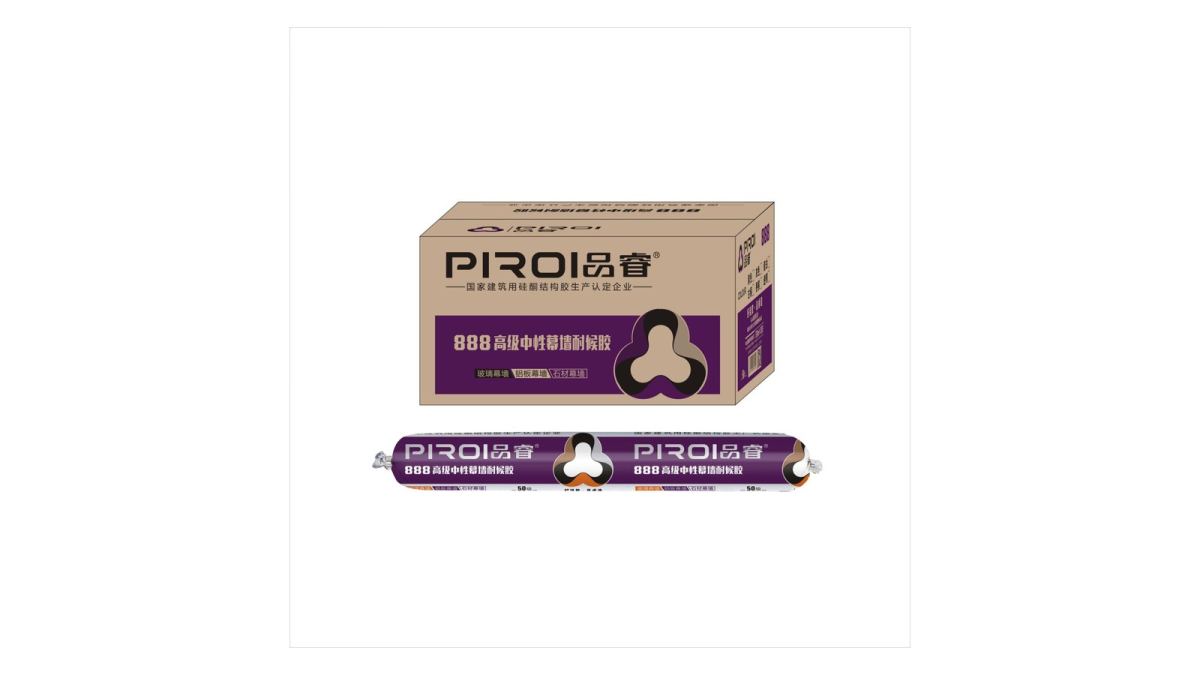
The same grade can ship in different formats, and the format matters for how the buyer’s customers apply it:
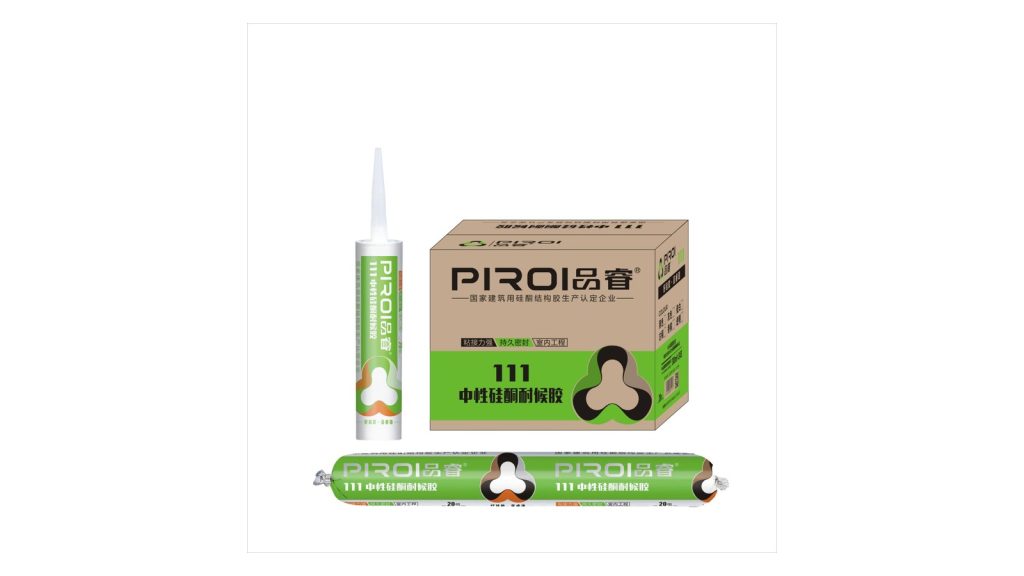
- 300 mL cartridge — caulking gun, the standard for installers.
- 590 mL sausage pack — higher-volume tooling for facade and curtain wall work.
- Bulk / drums — for factory use and high-volume applicators.
The packaging decision (cartridge vs sausage vs drum) is covered in the packaging guide, and shelf life and storage in the storage guide.

How a buyer translates a job into a type
- Name the substrate — glass, metal, concrete, mirror, coated profile.
- Name the exposure — indoor, outdoor, UV, wet, fire-rated, food-contact.
- Name the movement class — Class 25, Class 50, or structural (load-bearing).
- Match to a series — weatherproof, sanitary, industrial, or acetoxy.
- Confirm the standard and the report — the batch report is the proof.
When the requirement is stated that way, the model number is the easy part. Our technical team confirms the grade against the substrate and movement before the order — faster to resolve on paper than after the material is on site. MOQ, lead time and private label terms are on the MOQ and lead time guide.
If the requirement is a stock item, OEM or private label programme, the same grade can be packaged, labelled and documented on your terms — samples with the batch report are the fastest way to confirm the type before the first order.