Key Takeaways for Sealant Buyers
- A Chinese test report (检验报告) is issued by a third-party laboratory and carries legal weight. A technical data sheet (TDS) is written by the supplier and can say anything. Always ask for the report.
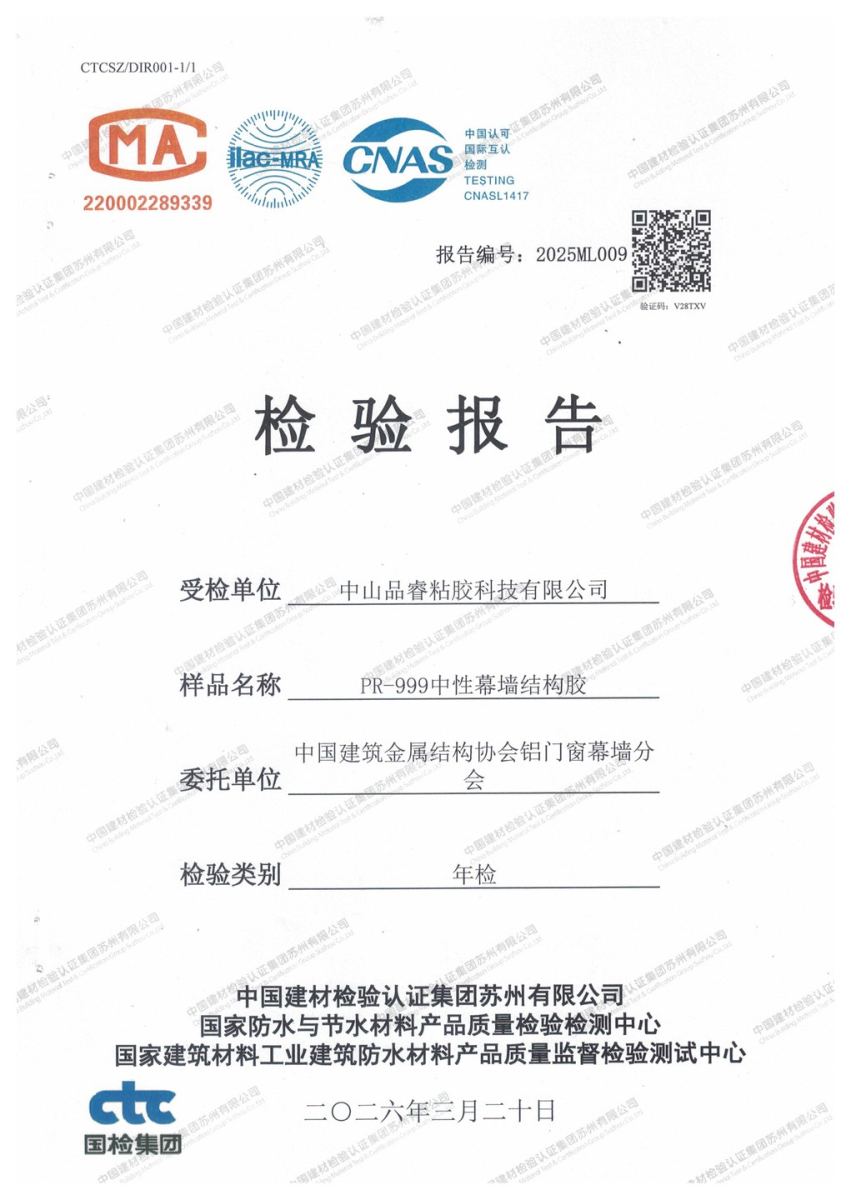
- Three marks prove a report is real: CMA, CNAS and ilac-MRA. Without them, the document is a self-declaration.
- Eight numbers matter commercially — and alkane plasticizer (烷烃增塑剂) is the one most buyers never check. It is the single fastest way to identify a cheap, oil-extended formulation.
- Five warning signs identify a weak report in under two minutes. If you see two or more, request a re-test before placing a container order.
Most overseas buyers receive a stack of PDFs from a Chinese silicone sealant supplier and do the same thing: they look at the price, glance at the pictures, and file the reports away. The reports are in Chinese, the tables are dense, and nothing tells you which of the thirty rows actually matters.
That is a problem, because the report is the only document in the entire transaction that a supplier cannot invent. Prices are negotiable, photos are reusable, and a TDS is marketing. A test report carries a laboratory’s accreditation, a traceable report number, and a legal signature.
This guide gives you a ten-minute routine for reading one — what to check first, what to ignore, and the specific numbers that separate a structural-grade formulation from oil-extended filler.
1. First, Understand What Kind of Document You Are Holding
Chinese suppliers use two documents that look similar and mean completely different things. Buyers mix them up constantly, which is exactly how weak products get through.
| Document | Chinese name | Who writes it | Legal weight |
|---|---|---|---|
| Test report | 检验报告 / 检测报告 | Third-party accredited laboratory | Legally traceable. Falsifying one is a criminal offence in China. |
| Technical data sheet | 产品参数 / TDS | The supplier’s own sales or technical department | None. It is a claim, not evidence. |
A TDS is still useful — it is usually more complete and easier to read than a report. But it should agree with the report. When the two disagree, the report wins, and the disagreement itself is a red flag worth asking about.
Two report types you will see
委托检验 (commissioned testing) — the manufacturer pays a laboratory to test a specific sample. This is what you get for most product lines. The report covers exactly the items requested, nothing more.
年检 (annual inspection) — a periodic inspection required for structural sealants used in Chinese curtain wall projects, administered through the Aluminum Window & Curtain Wall Branch of the China Building Metal Structure Association. Passing it places the product on a published qualified-product list. For structural sealant, this is a stronger signal than a one-off commissioned test, because it is renewed and publicly verifiable.
2. The Three Marks That Prove the Report Is Real
Look at the top of the cover page. A legitimate Chinese test report carries one or more of these marks:
| Mark | Full name | What it means to you |
|---|---|---|
| CMA | China Metrology Accreditation (中国计量认证) | The laboratory is legally authorised to issue reports used in Chinese regulatory and legal proceedings. |
| CNAS | China National Accreditation Service (中国合格评定国家认可委员会) | The laboratory’s competence is independently assessed against ISO/IEC 17025. |
| ilac-MRA | International Laboratory Accreditation Cooperation — Mutual Recognition Arrangement | Results are recognised by accreditation bodies in over 100 economies. This is the mark that matters most to overseas buyers. |
All three appear on reports from CTC Suzhou (China Building Material Test & Certification Group), which issues most of the architectural sealant reports in this industry, and on reports from the Guangzhou Institute of Microbiology for mould-resistance testing.
CNAS-accredited reports can be verified independently through the CNAS website using the report number. If a supplier cannot tell you which laboratory issued the report and under what accreditation, treat the document as unverified.
3. The Eight Numbers That Actually Matter
A full structural silicone sealant report runs to four or five pages and lists more than twenty test items. Commercially, eight of them decide whether you are buying a real formulation or filler. Everything else is secondary.
| # | Item | Unit | Typical requirement | Why it matters |
|---|---|---|---|---|
| 1 | Density 密度 |
g/cm³ | 1.30 – 1.60 for neutral sealant | Indicates filler loading. Very low density suggests solvent or excess plasticizer; unusually high density suggests heavy calcium carbonate filler replacing silicone polymer. |
| 2 | Tack-free time 表干时间 |
h | ≤ 3 for neutral, ≤ 72 for window/door grades | How long until the surface stops being sticky. Determines whether a production line can handle units the same shift. |
| 3 | Extrusion rate 挤出性 |
mL/min or s | ≥ 150 mL/min for curtain wall grades | How fast the sealant flows out of the cartridge. Low values mean the applicator fights the gun — longer labour hours on every job. |
| 4 | Sag resistance 下垂度 |
mm | ≤ 2 or ≤ 3, often 0 in practice | Whether the sealant stays in an overhead or vertical joint instead of running down the facade. A zero reading is normal for a well-formulated product. |
| 5 | Shore A hardness 邵氏硬度 |
— | 20 – 60 | Hardness of the cured rubber. Too soft means poor compression resistance; too hard means the joint cannot absorb movement. |
| 6 | Tensile adhesion strength 拉伸粘结强度 |
MPa | ≥ 0.60 for structural grades | The actual bond to the substrate under pull. This is the number that keeps glass panels on a building. |
| 7 | Elongation at maximum tensile strength 最大拉伸强度时伸长率 |
% | ≥ 100 for structural grades | How far the sealant stretches before breaking. Higher values mean the joint tolerates more thermal and seismic movement. |
| 8 | Alkane plasticizer 烷烃增塑剂 |
— | Not detected (不应检出) | The most important row on the page. Cheap sealants are extended with white mineral oil. It migrates out over time, staining stone and aluminium, and the joint loses adhesion. A report that omits this test has not proven the product is free of it. |
Item 8 deserves emphasis. Oil-extended sealant passes every other test on the list on the day it is manufactured. The failure appears two to five years later, as a dark stain creeping down a facade or a joint pulling away from its frame. If a supplier’s structural sealant report does not include an alkane plasticizer result, ask why before you commit to a container.
4. Worked Example: Reading a Real Structural Sealant Report
Below are the actual measured values from report 2025ML009, issued to us by CTC Suzhou for PR-999 neutral structural silicone sealant under GB 16776-2025. Use it to calibrate what “good” looks like.
| Test item | Unit | Standard requires | Measured | Read this as |
|---|---|---|---|---|
| Density | g/cm³ | Nominal ±0.05 | 1.33 | Normal polymer loading, no heavy filler |
| Sag resistance (vertical) | mm | ≤ 3 | 0 | No flow in vertical joints |
| Tack-free time | h | ≤ 3 | 1.0 | Skin forms in about an hour |
| Extrusion rate | s | ≤ 10 | 1.7 | Very fast gunning |
| Shore A hardness | — | 20 – 60 | 41 | Mid-range, appropriate for structural |
| Tensile adhesion strength (23 °C) | MPa | ≥ 0.60 | 0.85 | 42% above the minimum |
| Elongation at max tensile strength | % | ≥ 100 | 205 | Twice the minimum movement capacity |
| Tensile adhesion strength (90 °C) | MPa | ≥ 0.45 | 0.71 | Holds up hot |
| Tensile adhesion strength (−30 °C) | MPa | ≥ 0.45 | 1.44 | Gets stronger when cold — typical of silicone |
| Tensile adhesion after water / UV exposure | MPa | ≥ 0.45 | 0.93 | No significant weather degradation |
| Shear strength | MPa | ≥ 0.60 | 0.89 | Resists in-plane movement |
| Heat ageing — mass loss | % | ≤ 6.0 | 4.3 | Low volatile content |
| Heat ageing — cracking / chalking | — | None | None | Surface survives heat cycling |
| Alkane plasticizer | — | Not detected | Not detected | No mineral oil extender |
Two things stand out. First, the measured values sit comfortably above the minimums rather than exactly on them — a formulation designed to pass with margin, not to pass by luck. Second, the alkane plasticizer result is “not detected”. That single row is the difference between a structural sealant that will still be bonded in fifteen years and one that will need replacing in five.
5. Five Signs of a Weak Report
You can screen a report in under two minutes. Any two of these together is a reason to request a re-test or a different supplier.
1. No CMA / CNAS mark
A report without accreditation marks is a piece of paper from a private company. It has no regulatory standing and cannot be verified.
2. Only two or three test items
A structural silicone sealant report under GB 16776 covers ten or more items. A report listing only appearance, extrusion and tack-free time has tested the easy things and skipped the expensive ones.
3. “Report value” instead of a pass/fail
Look at the technical requirement column. If it says 报告检测值 (“report value”) for tensile or shear strength, the laboratory recorded a number without judging it against a limit. The number may be fine — but nobody has certified it.
4. The report is more than two years old
Formulations change, raw material suppliers change, and production equipment changes. Ask for a report covering a batch produced within the last twelve months.
5. Sample name does not match the product code
This is the most common problem we see in competitor documentation — a report for one model presented as evidence for another. Check the sample name (样品名称) against the carton you are being quoted.
Bonus: no alkane plasticizer row
If the report simply omits the test, the supplier has not proven the product is oil-free. On a structural or stone-facing project, that omission alone justifies asking for a new report.
6. GB, ASTM and ISO: Which Standard Should You Ask For?
Chinese sealant standards and the international equivalents are not interchangeable, and a report under one does not automatically satisfy the other. If your project specification names ASTM or ISO, say so early — the supplier may need to arrange additional testing.
| Application | China | International equivalent | Note |
|---|---|---|---|
| Structural sealant for curtain wall | GB 16776 |
ASTM C920 Type S · ETAG 002 |
GB 16776 is mandatory for Chinese structural glazing projects and includes an annual inspection regime. |
| General building sealant | GB/T 14683 |
ISO 11600 · ASTM C920 |
Movement class and modulus class must be matched to the joint design, not just the product type. |
| Fire-retardant sealant | GB/T 24267 |
ASTM E814 / UL 1479 (penetrations) · ASTM E1966 / UL 2079 (joints) |
These test different things. GB/T 24267 classifies the material’s flame behaviour; ASTM E814 and UL 2079 certify a complete firestop system. See our dedicated article on this distinction. |
| Mould-resistant sealant | JC/T 885 |
ASTM G21 · ISO 846 | JC/T 885 grades growth from 0 to 4. Grade 0 means no growth at 50× magnification after 28 days. |
| Electronics / appliance | — | RoHS Directive 2011/65/EU · REACH | Required for appliance and electrical component applications in the EU. |
7. Frequently Asked Questions
Q: Can I accept a supplier’s own test data instead of a third-party report?
For a sample evaluation, yes — in-house data is a useful early filter. For a container order, no. In-house testing has no external verification, and the cost of a third-party report is small relative to the value of a container. Any supplier serious about export will already have reports on file and will send them without hesitation.
Q: The report is in Chinese. How do I verify the numbers without a translator?
Three fields are enough to cross-check any report: 样品名称 (sample name), 检验结果 (test result) and 单项评定 (item assessment — should read 合格, meaning “pass”). If the item assessment column is empty or reads /, that item was measured but not judged against a limit. Ask the supplier to translate the requirement column and confirm which items carry a formal pass.
Q: How often should a supplier re-test?
For structural sealant, Chinese regulation requires annual inspection, so a current-year document should always be available. For other product lines, annual or biennial testing is normal practice. If the newest report you can obtain is more than two years old, ask what has changed in the formulation or raw material supply since it was issued.
Q: What if the supplier’s report shows a value slightly below the standard minimum but marks it “pass”?
This happens, and it is worth reading carefully. Some Chinese standards express certain requirements as “reported value” rather than a fixed limit, and a laboratory may record a measurement without a pass/fail judgement. Other times it indicates a genuine transcription or translation issue. Send the specific row back to the supplier and ask them to explain the requirement in the standard. A supplier who cannot explain their own report is telling you something.
Q: Does a report guarantee the batch I receive will match it?
No. A report describes the sample submitted, not every future batch. That is why batch-level documentation matters: ask for a Certificate of Analysis (COA) for the specific production batch in your shipment, and confirm the supplier retains samples. We archive retained samples for 18 months per batch precisely so that any dispute can be traced back to the actual material shipped.
8. A One-Page Checklist You Can Use Today
Next time a supplier sends you a folder of PDFs, work through this list before you look at the price again.
| ✓ | Check |
|---|---|
| ☐ | Report carries CMA and CNAS marks (ilac-MRA preferred) |
| ☐ | Sample name matches the exact model code you are being quoted |
| ☐ | Report date is within the last 12–24 months |
| ☐ | Density, tack-free time, extrusion rate and sag resistance are all present |
| ☐ | Tensile adhesion strength and elongation are present, with a stated requirement |
| ☐ | Alkane plasticizer row exists and reads “not detected” |
| ☐ | Item assessment column reads 合格 (pass) for the structural items |
| ☐ | Standard referenced matches your project specification (or a bridging test is arranged) |
| ☐ | Supplier can issue a batch COA with the shipment |
If a supplier passes all nine, you are dealing with someone who takes documentation seriously. If they pass five, you have questions to ask. If they pass three, you have your answer.
Specified Silicone Sealants
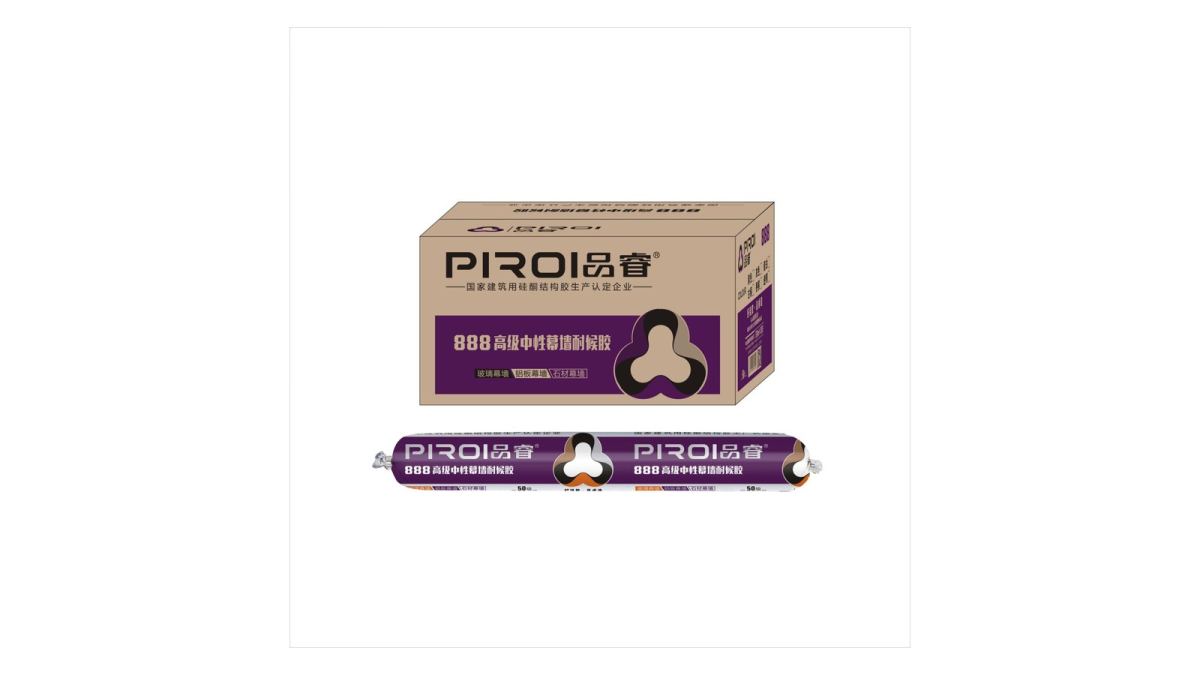
Structural
Neutral Structural Silicone Sealant for Curtain Wall
The model used in the worked example above — GB 16776-2025, alkane plasticizer not detected, listed No. 94 in the 2026 annual inspection catalogue.
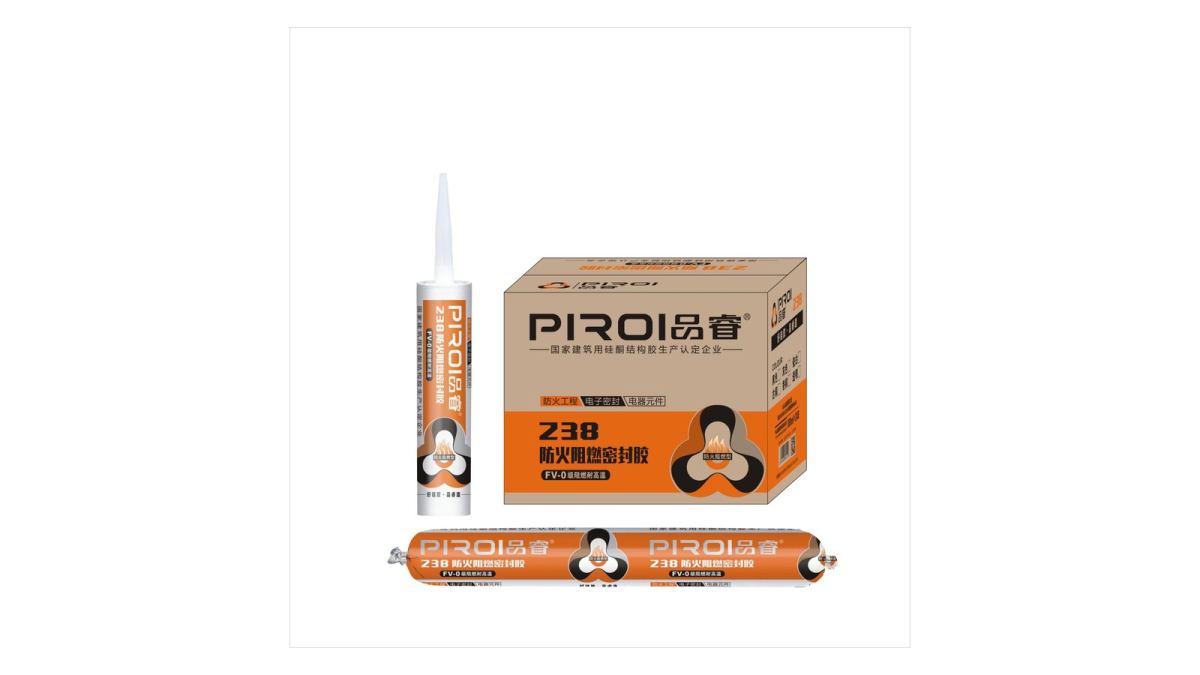
Fire Rated
Fire-Rated Silicone Sealant
Classified SR FV-0 (3.0 mm) under GB/T 24267-2009, with a measured flame time of zero seconds across all five test specimens.
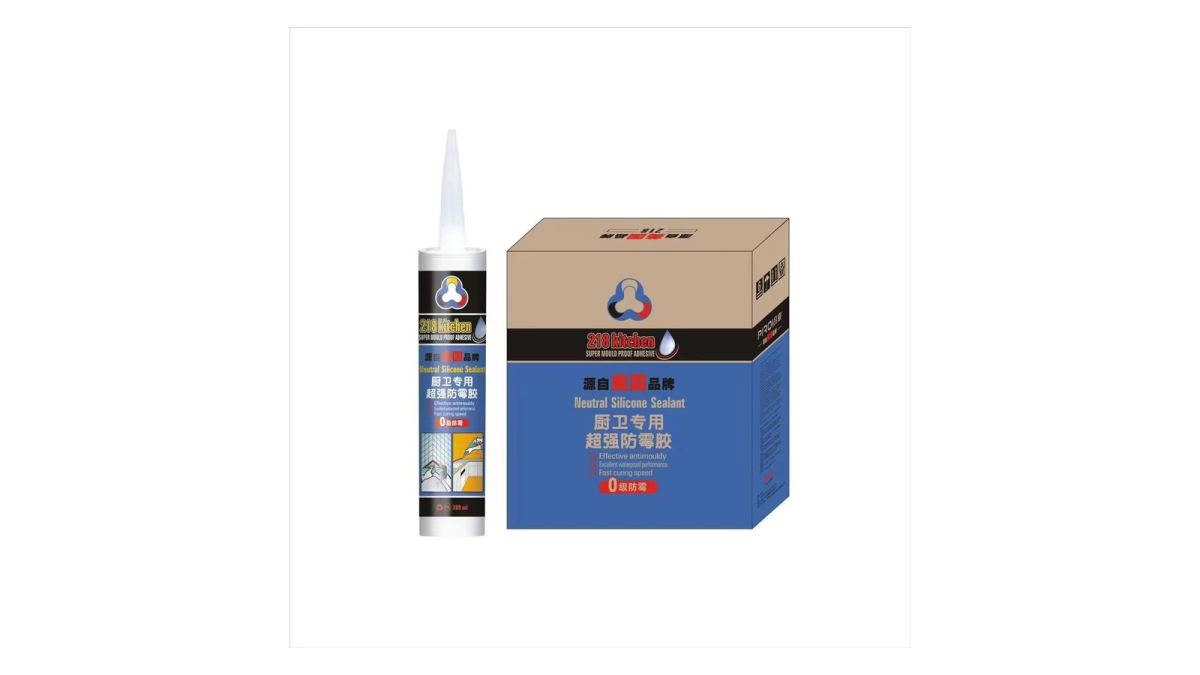
Anti-Mold
Sanitary Anti-Mold Silicone Sealant
Grade 0 mould resistance under JC/T 885-2016 — nine strains tested over 28 days at above 90% relative humidity by a CNAS/CMA accredited laboratory.
Numbers like these only mean something once you know what the joint has to resist. Our silicone sealant FAQ explains how tensile adhesion, cure time and service life translate into a specification.
The Substrates, Numbers and Commercial Terms Behind the Report
A test report only means something when it is read against the substrate and the joint it was produced for. This section ties the report back to the substrates the grade is cleared for, repeats the numbers you should be checking, and lists the commercial terms a supplier is normally asked for alongside the report.
Substrates and joints this applies to
| Substrate | Suitability | What to watch |
|---|---|---|
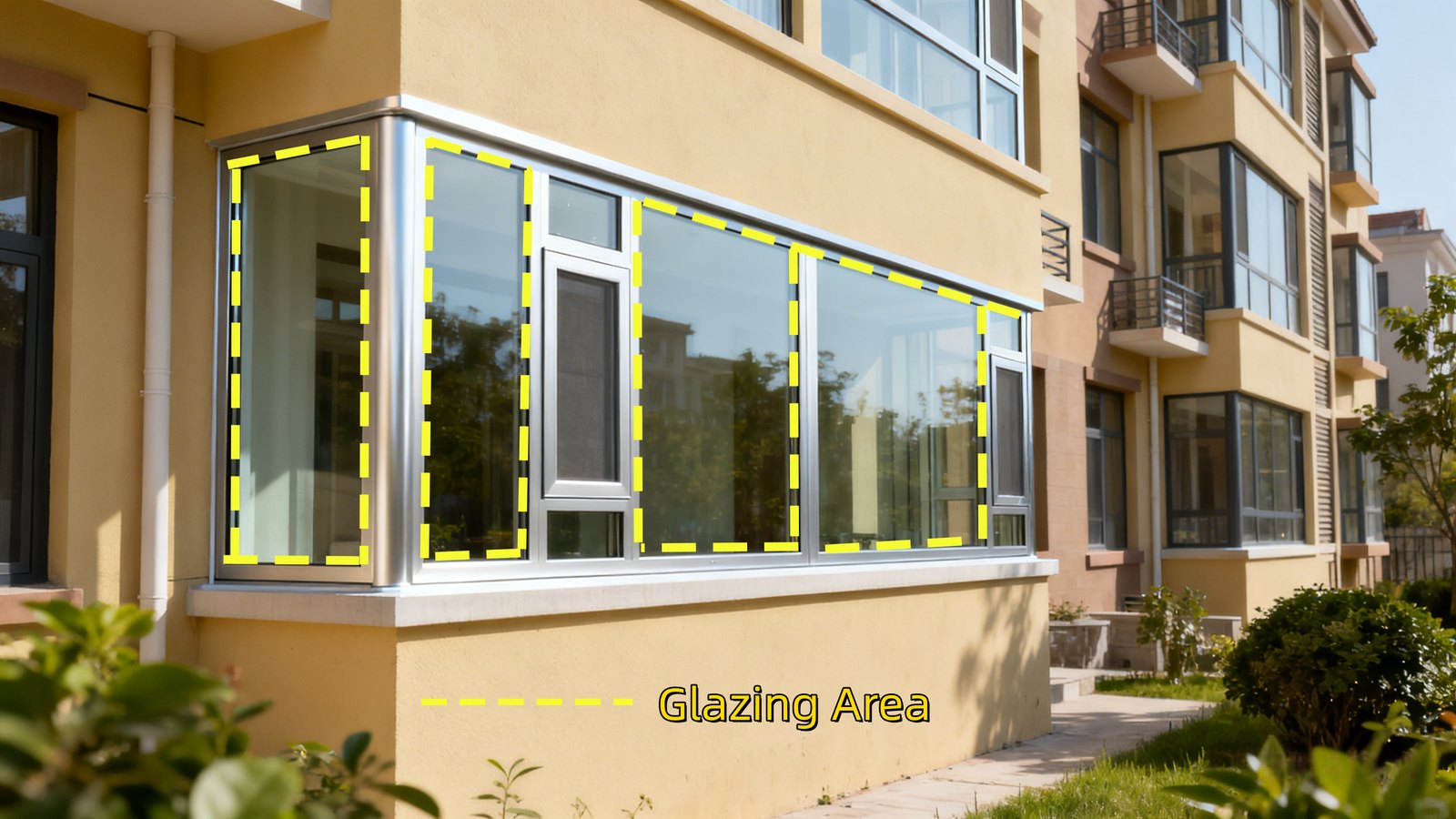
| Glass (structural joint) | Specified grade | The joint carries load; report must show GB 16776-2025 |
| Anodised aluminium mullions | Neutral cure only | Acid cure would etch the anodised layer |
| Concrete and precast panels | Neutral cure only | Alkaline substrate rejects acid cure |
| Natural stone and marble | Neutral cure only | Acid reacts with calcium carbonate and stains |
| UPVC and PVC profiles | Neutral cure only | Protects the metal reinforcement in the chamber |
| Stainless steel and coated metal | Neutral cure preferred | Adhesion must be proved on the actual finish |
| Ceramic and sanitary ware | Anti-mould sanitary grade | Report should show a Grade 0 mould result |
| Timber and engineered board | Neutral cure | Movement is large; check the elongation figure |
Performance data you can quote in a submittal
| Property | Tested value | Requirement |
|---|---|---|
| Tensile adhesion strength (23 °C) | 0.85 MPa | Minimum 0.60 MPa |
| Tensile adhesion strength (90 °C) | 0.71 MPa | Minimum 0.45 MPa |
| Tensile adhesion strength (−30 °C) | 1.44 MPa | Minimum 0.45 MPa |
| After water / UV exposure | 0.93 MPa | Minimum 0.45 MPa |
| Elongation at max. tensile strength | 205% | Minimum 100% |
| Heat ageing — mass loss | 4.3% | Maximum 6.0% |
| Alkane plasticizer | Not detected | Must not be detected |
What the cure chemistry does inside the joint
A neutral-cure silicone is a one-component RTV system: it crosslinks by reacting with atmospheric moisture, starting at the surface and working inward. The by-product is an alcohol or an oxime rather than acetic acid, which is why neutral grades can be used against concrete, mortar, natural stone, marble, anodised aluminium and the metal reinforcement inside a PVC profile without etching or staining the substrate. Cure depth is roughly 2–4 mm in the first 24 hours at 23 °C and 50% RH; a 6 mm joint therefore needs several days before it carries load, and a joint that is sealed and immediately loaded will fail at the interface rather than in the sealant.
Standards and documentation
The reports behind these numbers are issued by CNAS and CMA accredited laboratories, with CTC Suzhou for the structural grade and the Guangzhou Institute of Microbiology for the mould test. Each production batch ships with its own Certificate of Analysis, and the retained sample is archived for 18 months so a third-party laboratory can re-test it if a buyer wants independent verification.
Ordering reference
| Commercial term | What PIROI offers |
|---|---|
| MOQ | OEM & private label from 1,000 pcs per model |
| Trial order | Mixed-model trial orders from 3,000 pcs total; stock items from 500 pcs |
| Lead time | Typically 15–25 days after artwork and sample approval |
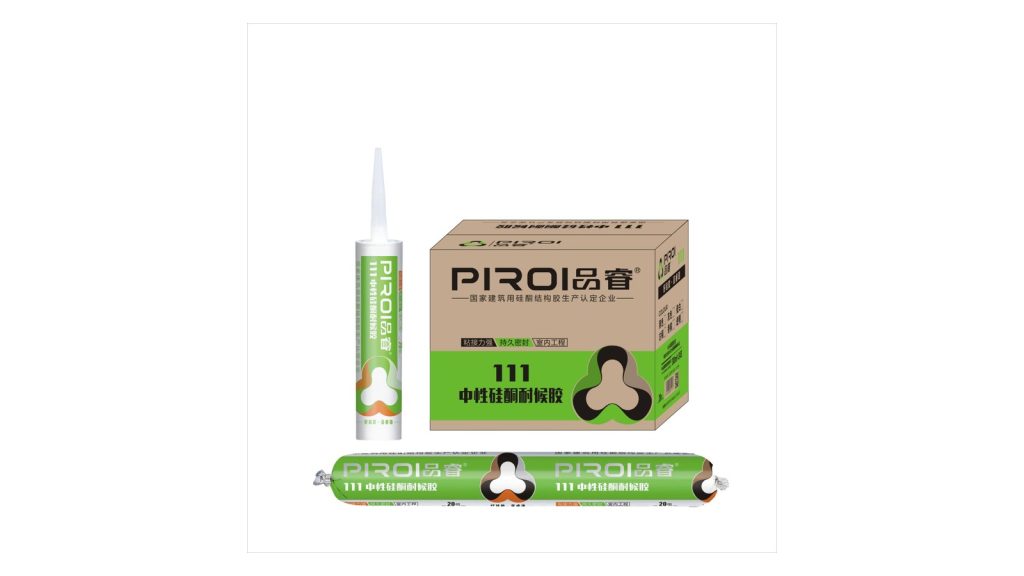
| Packaging | 300 mL cartridges and 590 mL foil sausage packs |
| Private label | Custom cartridge artwork and colour matching supported |
| Sample | Free substrate adhesion and staining test on your own sample |