Short Answers for Buyers and Specifiers
- Silicone is an excellent sealant and a limited adhesive. It is the right material for a moving joint; it is the wrong material for a structural load-bearing bond unless it is a structural-grade product tested to GB 16776.
- “Strong” has a number attached. On our own test reports, tensile bond strength ranges from 0.36 MPa on a fast-cure window sealant to 0.85 MPa at 23 °C on the structural grade — a 2.4× spread between two products both sold as “silicone sealant”.
- Acetoxy cures fastest and sticks to glass best, and must never touch mirror backing, bare metal or concrete. Neutral cure covers everything else.
- Silicone is not a paint surface. Nothing bonds reliably to cured silicone, including new silicone — which is why a failed joint has to be cut out, not topped up.
- Shelf life is 12 months (9 months for the acetoxy grade) from the production date printed on the cartridge, not from the day you receive it.
“Is silicone a good sealant?” is the first question almost every buyer asks, and it is usually two different questions wearing one coat: is silicone a good sealant, and is silicone a good adhesive. The answers are not the same, and confusing them is how projects end up with a joint that leaks or a bond that lets go.
This page answers the twelve questions that come up most often in the PIROI inbox from importers, window fabricators and specifiers. Every number quoted below is from our own GB/T 14683-2017 and GB 16776 test reports, not from a generic data sheet.
1. Is Silicone a Good Sealant?
Yes — for sealing, silicone is one of the best materials available, for four measurable reasons:
| Property | What silicone does | Why it matters on site |
|---|---|---|
| Elastic recovery | 92% on PR-333 and PR-888 | The joint returns to its original shape after movement instead of creeping open. |
| UV and weather resistance | No measurable degradation on outdoor exposure | It is the reason facade joints still work after 20 years. |
| Temperature range | Bond strength tested from −30 °C to 90 °C | Covers everything from a cold-store wall to a sun-loaded metal roof. |
| Movement capability | Class 25HM on PR-520 | The joint can move ±25% of its width without failing. |
Where silicone is not good is as a load-bearing adhesive, as a paintable surface, and on substrates that are contaminated with oil, dust or old sealant. Those three limits explain most sealant failures we are asked to diagnose.
2. What Is a Silicone Sealant?
A silicone sealant is a one-component, room-temperature-vulcanising (RTV) paste: a silicone polymer, a filler, and a curing agent that reacts with moisture in the air. It skins over at the surface, then cures inward at roughly 2–4 mm per 24 hours. There is no mixing, no pot life and no catalyst to measure — which is exactly why it dominates construction.
Our PR-618 acetoxy grade reaches a tack-free surface in 0.2 hours — the fastest in our range — while the neutral grades run from 0.8 to 1.2 hours.
The curing agent defines the family:
| Chemistry | By-product released | Where it belongs | Where it must not be used |
|---|---|---|---|
| Acetoxy (acidic) | Acetic acid | Glass, glazing, ceramic, fast assembly lines | Mirror backing, bare aluminium, concrete, marble, electronics |
| Neutral (oxime / alkoxy) | Alcohol or oxime — non-corrosive | Almost everything: metal, uPVC, stone, concrete, sanitary | Nothing in normal construction use |
| Structural neutral | Non-corrosive | Structural glazing, IGU secondary seal, curtain wall bonding | Never substitute a general weatherseal here |
3. Is Silicone a Good Adhesive?
It depends entirely on whether the load is carried by the bond or by a mechanical fixing.
- Sealing and bonding where a frame or gasket carries the load — silicone is excellent. It holds the joint closed, keeps water out and absorbs movement.
- Structural bonding where the sealant itself carries the load — only a structural-grade silicone tested to GB 16776 may be used. Everything else in the catalogue is a weatherseal.
This distinction matters commercially: a buyer who specifies a general-purpose sealant for a structural glazing joint has not bought a cheaper product, they have bought a non-compliant one. The structural route is PR-999, tested under GB 16776 with a report number on file.
4. How Strong Is Silicone Adhesive?
Strength is reported as tensile bond strength in MPa. Here is the real spread across our range:
| Product | Type | Tensile bond strength | Standard | Report |
|---|---|---|---|---|
| PR-999 | Structural neutral | 0.85 MPa at 23 °C · 0.71 MPa at 90 °C · 1.44 MPa at −30 °C · 0.93 MPa after water immersion + UV | GB 16776 | 2025ML009 |
| PR-111 | Neutral weatherproof | Type M 0.41 MPa · Type G 0.40 MPa | GB/T 14683-2017 | 2025ME159 |
| PR-8800 | Fast cure door & window | Type M 0.36 MPa · Type G 0.35 MPa | GB/T 14683-2017 | 2025MK115 |
| PR-666 | Neutral weatherproof | Adhesion at maintained extension: no failure | GB/T 14683-2017 | 2025ME156 |
For context, 0.85 MPa is roughly 8.7 kg of load per square centimetre of bond line. On a 12 mm × 12 mm structural bead that is more than a tonne of capacity per metre of joint — which is why structural glazing works at all.
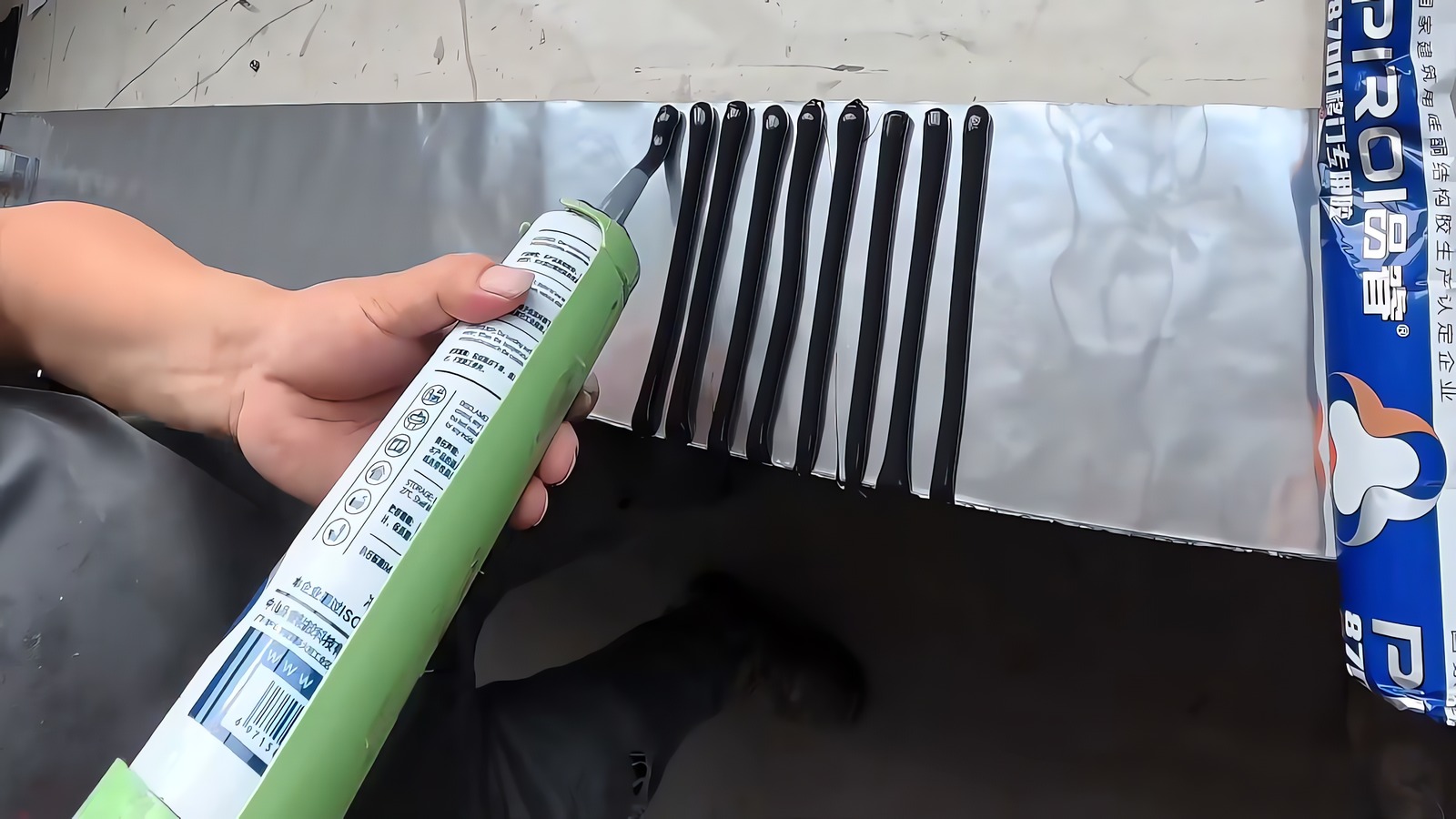
5. What Sticks to Silicone — and What Does Not
Adhesion is a substrate question, not a brand question. This is the practical map we give to fabricators:
| Substrate | Adhesion | Recommended grade |
|---|---|---|
| Glass (float, clear) | Excellent — both chemistries | PR-618 acetoxy or any neutral |
| Anodised / powder-coated aluminium | Excellent with neutral cure | PR-333, PR-8800 |
| Bare or mill-finish aluminium | Good, but acetoxy corrodes it | Neutral only |
| uPVC profile | Excellent, primerless | PR-333, PR-111 |
| Concrete and precast | Good, alkaline surface needs neutral cure | Neutral weatherproof |
| Natural stone and marble | Requires a non-staining grade | PR-602 |
| Stainless steel | Good, requires non-discolouring grade | PR-304 |
| Mirror backing / silvering | Acetoxy destroys it | PR-228 only |
| Cured silicone (re-sealing) | Nothing bonds to it | Cut out and replace |
| Polyethylene, polypropylene, PTFE | No adhesion | Mechanical fixing required |
The last two rows cause more callbacks than any product defect. If you are asked to “just run a bead over the old one”, the honest answer is that the joint has to be cut back to sound material first.
6. Is There a Sealant for Concrete?
Yes, but the concrete has to be treated as an alkaline, porous, dusty substrate rather than a smooth one. Three rules:
- Use neutral cure. Fresh concrete is alkaline, and an acid-curing sealant works against its own substrate.
- Prime or dust-bind where the surface is friable. Adhesion fails at the dust layer, not at the sealant.
- Choose a joint design that respects movement. Concrete panels move thermally and shrink for years.
Precast panel joints are a standard application for neutral weatherseal grades; see our precast concrete sealing page for the joint details used on panel facades.
7. What Is the Best Sealant for Solar Panels?
Solar mounting and framing has three requirements that rule out most general-purpose grades: continuous UV exposure, a temperature cycle from −20 °C to 80 °C on the module frame, and no corrosive by-product that could attack the junction box or frame coating.
That points to a UV-stable neutral grade formulated for outdoor PV framing. Our PR-338 is specified for exactly this duty, and the application is covered in more detail on the solar PV page.
8. Silicone Sealant Lifespan and Expiry Date
| Question | Answer |
|---|---|
| Unopened shelf life | 12 months from production date (9 months for acetoxy grades), stored dry and cool |
| Cured service life | 20+ years on a correctly designed exterior joint; the sealant is rarely the first thing to fail |
| How to read the date | Printed on the cartridge or the sausage film — it is a production date, not an expiry date |
| Signs of an expired cartridge | Skinning inside the nozzle, lumpy extrusion, or a tack-free time far outside the declared value |
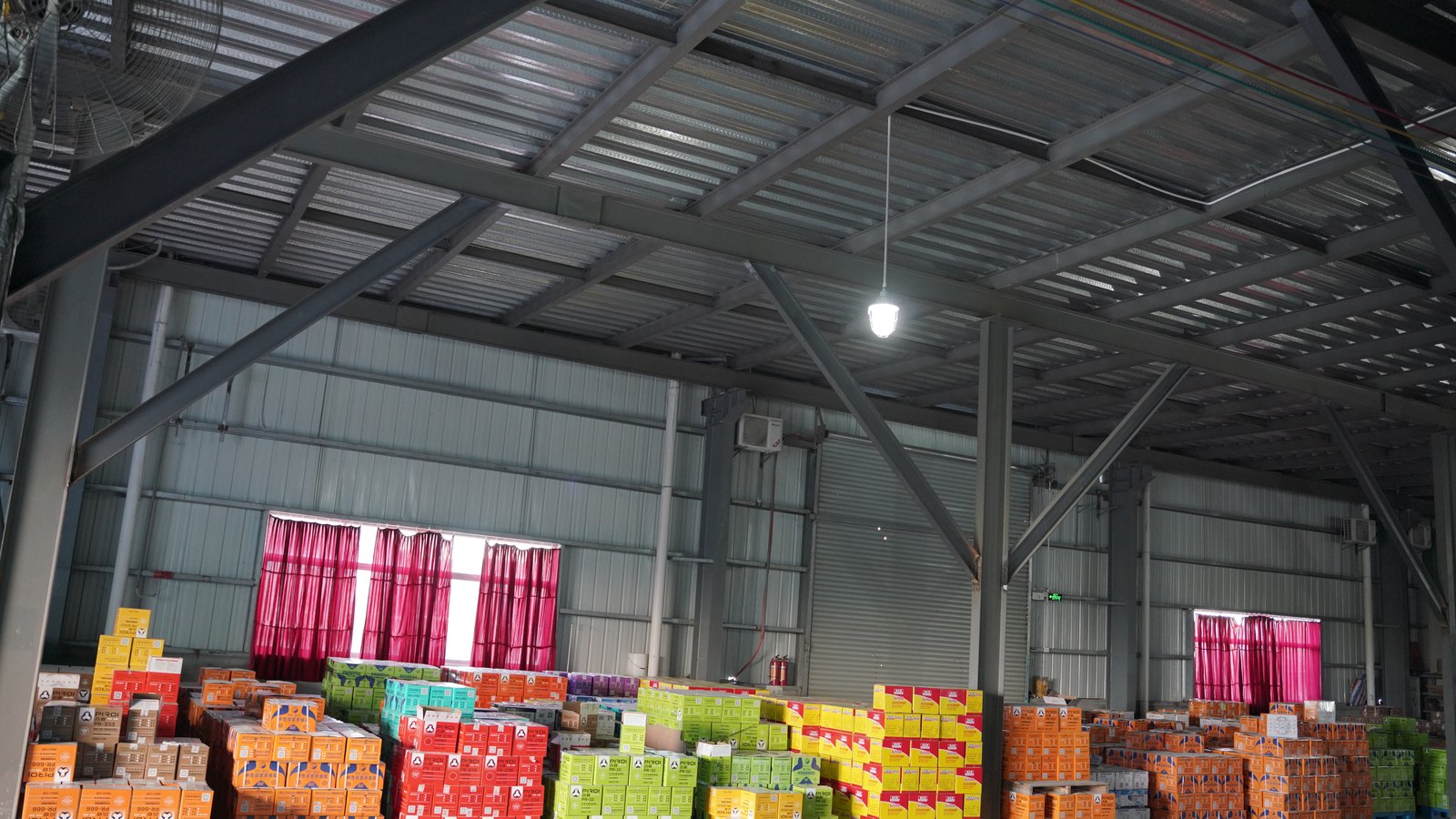
Buyers shortlisting a manufacturer should ask for the production date on the batch they will actually receive. A 12-month shelf life is comfortable, but only if the goods are not already six months old when they ship.
9. How Long Does Silicone Sealant Take to Dry?
Two different clocks are running, and they are often confused:
- Tack-free time — how long until the surface stops being sticky. Our range runs from 0.2 h (PR-618) and 0.8 h (PR-8800, PR-520) to 1.2 h (PR-333, PR-666, PR-888).
- Full cure — the joint reaching design strength, at roughly 2–4 mm per 24 hours from each exposed surface. A 10 mm bead is fully cured in about a week, not in an hour.
A faster tack-free time is not automatically better. On a factory line it lets you handle frames sooner; on site, a sealant that skins in twelve minutes can set before the applicator has finished tooling it.
10. What Is a Structural Sealant?
A structural sealant is one qualified to carry load, not merely to keep water out. In China that means GB 16776, which adds requirements a weatherseal is never tested against: tensile bond strength at 23 °C, 90 °C and −30 °C; strength after water immersion and UV; shear strength; elongation at maximum tensile strength; and a check that no alkane plasticizer is present.
Our structural grade returns 0.85 MPa at 23 °C, 205% elongation and a clean result on the plasticizer test. It is used for structural glazing and IGU secondary sealing, and it must not be substituted with a general weatherseal.
11. What Is a Construction Sealant?
“Construction sealant” is a market category, not a chemistry. It covers silicone, polyurethane, acrylic, polysulphide and hybrid products sold into building work. The word tells you the application, not what is in the tube.
Within silicone alone the construction market splits into weatherseals, structural grades, sanitary anti-mould grades, fire-rated grades and speciality products such as mirror and stainless steel grades. Our full specification table lists all 17 models with their standard, cure system, density, tack-free time, extrusion rate and report number on one page — useful when you are comparing a quotation line by line.
12. How Do I Buy Silicone Sealant in Bulk?
Four things decide whether a bulk order runs smoothly:
- Match the standard to the application. GB 16776 for structural, GB/T 14683-2017 for weatherseals, GB/T 24267 for fire-rated, JC/T 885 for sanitary.
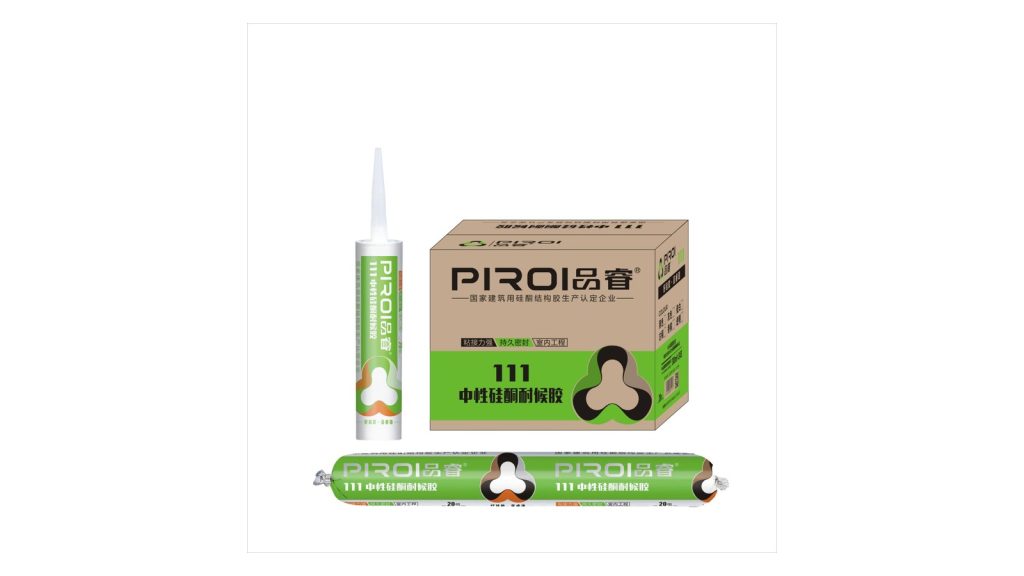
- Confirm the packaging format. Most of our range ships as 300 mL cartridges and 590 mL sausages; the choice affects your applicator setup.
- Ask for the report, not a promise. Every model above has a report number you can verify with the issuing laboratory.
- Test on your own substrate. We supply samples for adhesion and staining trials before a first order.

Quick Reference: Which Question Points to Which Grade
| If you are asking… | You need | Typical model |
|---|---|---|
| Is silicone good for a moving joint? | Neutral weatherseal, class 25HM | PR-520, PR-333 |
| Is silicone strong enough to carry load? | Structural grade, GB 16776 | PR-999 |
| Can I seal a mirror with it? | Neutral, non-corrosive to backing | PR-228 |
| Will it stain my stone? | Non-staining stone grade | PR-602 |
| Will it survive outdoors for years? | UV-stable weatherproof grade | PR-638, PR-666 |
| I need speed on a production line | Fast cure grade | PR-618, PR-8800, PR-8700 |
If your question is not on this page, it is probably on our FAQ page, and if it is about a specific project, send us the substrate, the joint dimensions and the standard you are working to. We will tell you which grade fits and which one to avoid.
Working with a Manufacturer: MOQ, Lead Time and Private Label
The last group of questions we are asked is commercial rather than technical, so here are the answers in one place:
| Question | Answer |
|---|---|
| What is the MOQ? | Depends on the model and the packaging format; cartridges carry a higher minimum than 590 mL sausages. Ask with your annual volume and we will quote the real figure. |
| What is the lead time? | Standard models ship from stock; custom colours and OEM printing add production time, confirmed on the order. |
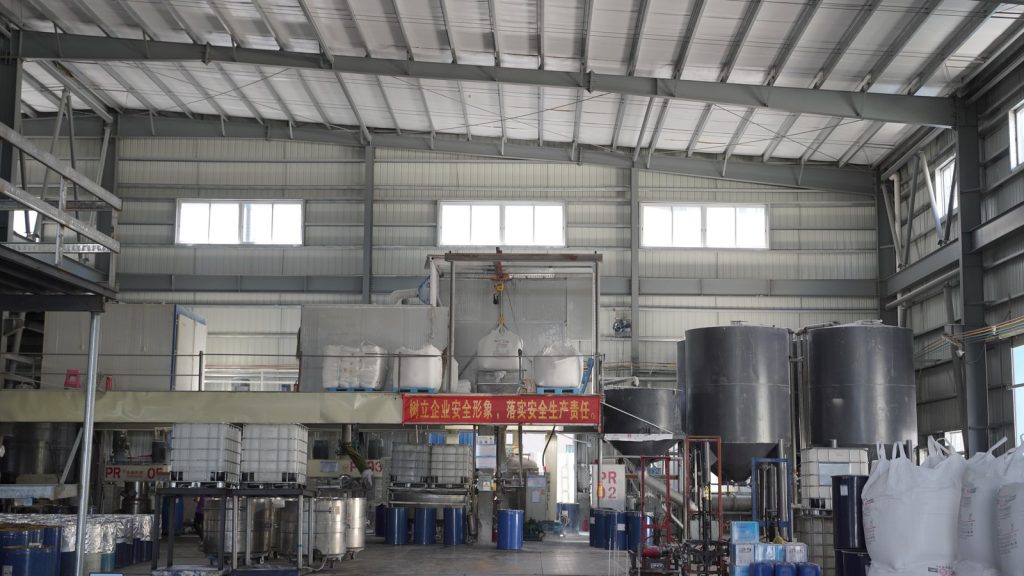
| Can you do OEM and private label? | Yes. OEM and private-label printing is a core part of our export business — our factory page covers the process. |
| Can I get a sample first? | Yes, including substrate samples for adhesion and staining trials before you commit to a first order. |
| Who manufactures the product? | PIROI, at our own plant — not a trading office reselling another factory’s output. |
For OEM terms, private-label printing and factory audit information, see the silicone sealant factory page.