Key Takeaways for Silicone Sealant Buyers
- In China, the word manufacturer (厂家) is used by three very different businesses: real factories, trading companies with a workshop photo, and factories that only sell domestically and cannot export. Knowing which one you are talking to changes everything about price and risk.
- A genuine factory claim can be verified in about twenty minutes without a visit — using the business licence, the customs registration record and a live video walkthrough.
- Eight capabilities separate an export-grade factory from one that merely has the equipment. Missing any two of them will show up as problems in your first container.
- Price differences between Chinese suppliers are usually explained by raw material grade (silicone polymer content, plasticizer type, filler loading), not by labour or margin. Ask for the density and the alkane plasticizer row before you negotiate.
“We are a manufacturer” is the first sentence in almost every quotation you will receive from China. It is also the sentence that is hardest to verify from eight thousand kilometres away, and the one that most directly determines whether your project succeeds.
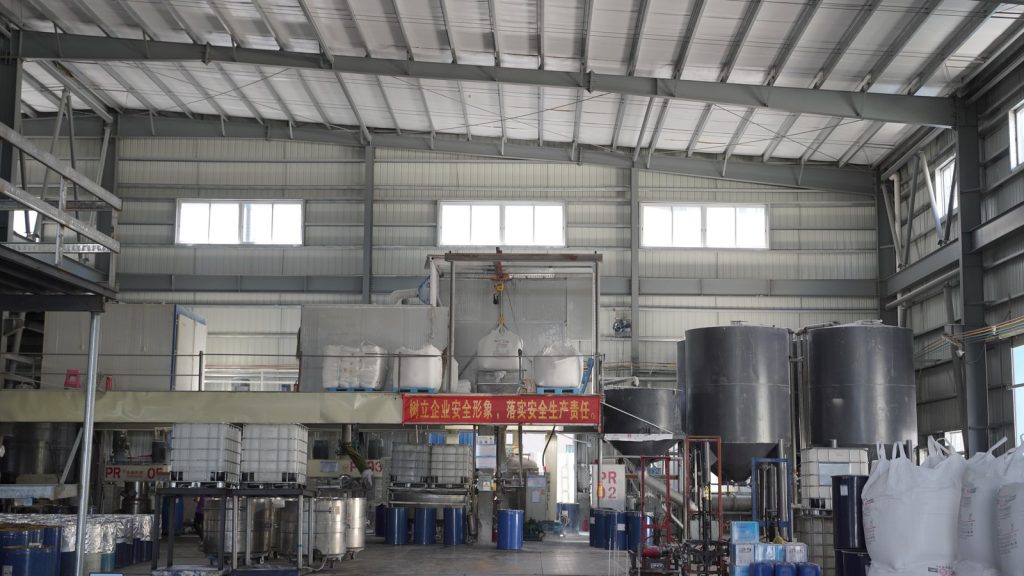
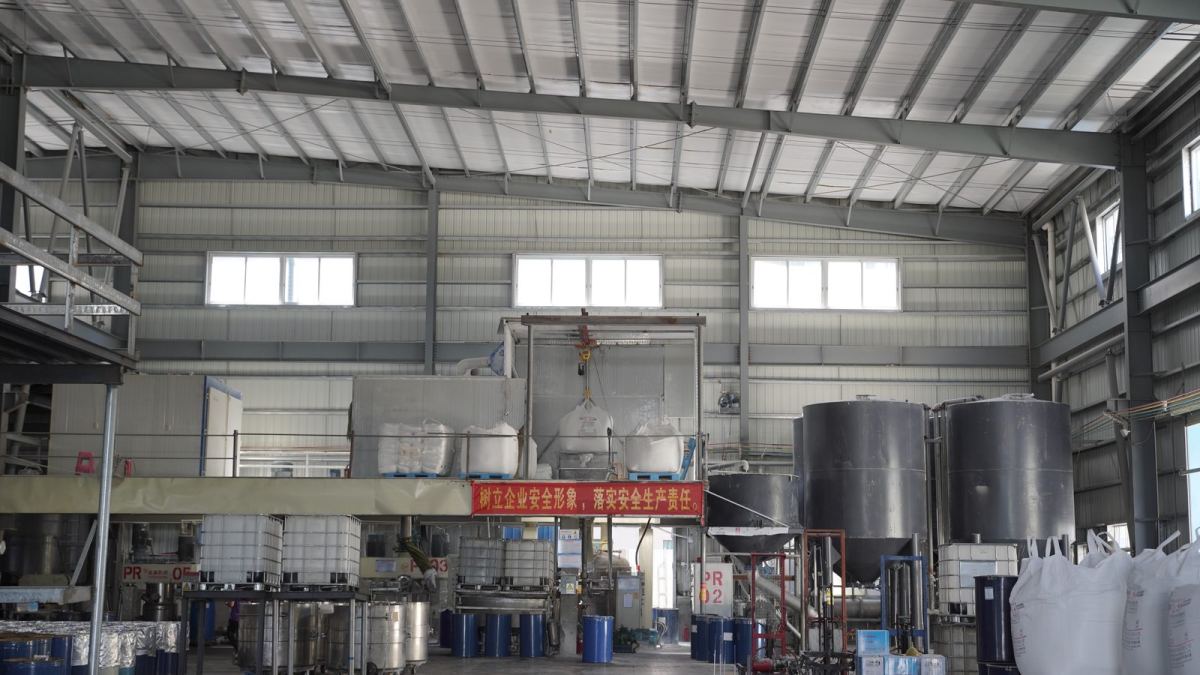
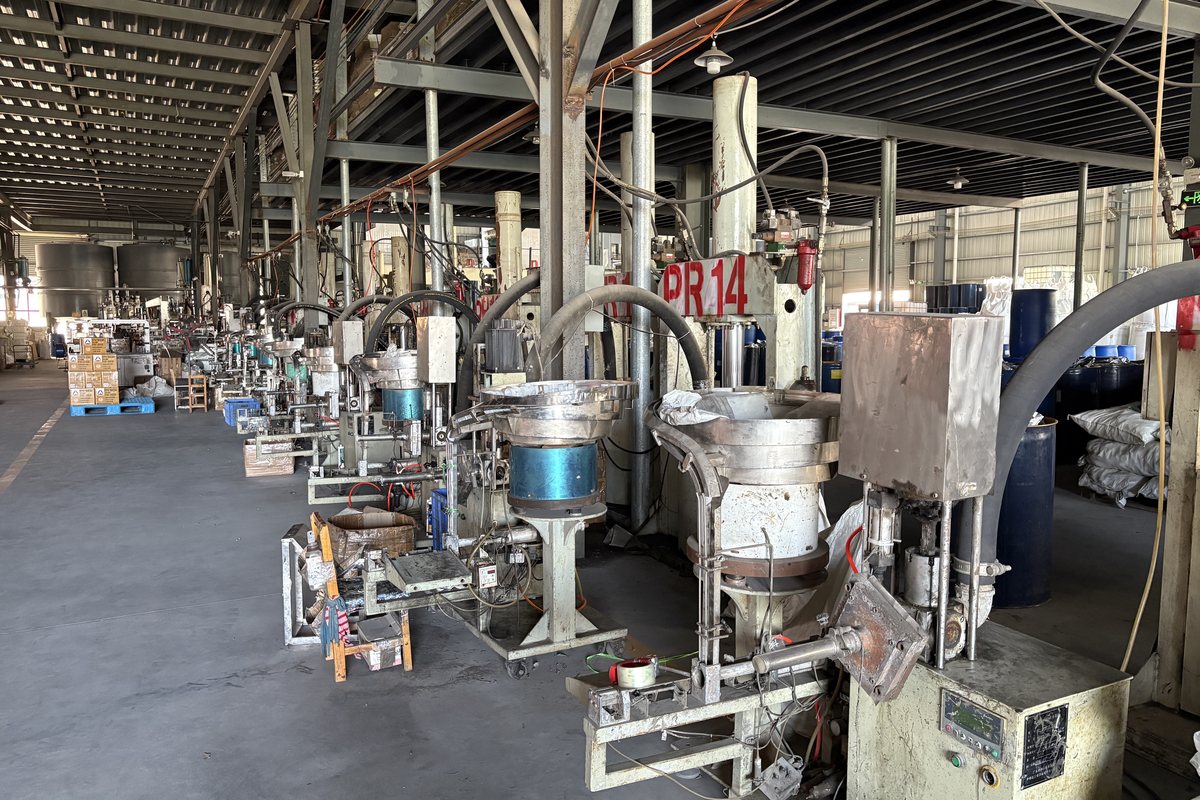
The reason is structural. China’s silicone sealant industry has several hundred producers, and they sit in very different places on the capability ladder. Some operate continuous production lines with in-house polymerisation and CNAS-accredited laboratories. Some mix and fill under contract for other brands. Some simply buy finished cartridges, print a label and ship. All three will tell you they are manufacturers, and all three will send you a photograph of a filling line.
This guide gives you a repeatable way to tell them apart, and the specific questions that separate a silicone sealant supplier you can scale with from one that will cost you a customer in eighteen months.
1. Why “Manufacturer” Means Three Different Things in China
Before you compare prices, work out which category you are dealing with. The three types look identical on a quotation and behave completely differently in production.
| Type | What they actually do | How they price | Risk to you |
|---|---|---|---|
| Integrated factory 一体化工厂 |
Owns the mixing and filling lines. May also produce or buy base silicone polymer. Controls formulation. | Quotes from raw material cost plus a fixed margin. Can adjust formulation on request. | Low. Can support OEM, private label and custom formulations. |
| Contract filler 代工厂 |
Owns filling equipment but buys base compound from a polymer supplier. Formulation options are limited to what the compound supplier offers. | Quotes on the compound price plus filling cost. Less room to move. | Medium. Fine for standard grades, weak on custom work. |
| Trading company 贸易公司 |
Owns no production. Sources from one or more factories, sometimes switching between them batch to batch. | Quotes whatever margin the market will bear. Can appear cheapest because they may quote a lower grade. | High. Batch consistency is the first thing to go, and technical questions come back unanswered. |
Trading companies are not automatically a bad choice — some are excellent at logistics and small-order flexibility. The problem is when a trading company is presented as a factory, because you then lose the ability to audit the thing you are actually buying.

2. How to Verify a Factory Claim in Twenty Minutes
You do not need to fly to China to check whether a supplier manufactures. Three documents and one video call are enough for a first-pass screen.
Step 1: The business licence (营业执照)
Ask for a scan. Every Chinese company has one, and it is public information. Look at three fields:
- Registered capital (注册资本) — a sealant factory with continuous lines typically carries registered capital in the millions of RMB. A trading company registered at RMB 100,000 with no production equipment is a warning sign.
- Business scope (经营范围) — it should explicitly include production/manufacturing (生产/制造) of adhesives or sealants, not only sales (销售) or wholesale (批发).
- Establishment date — a company incorporated eighteen months ago and claiming fifteen years of export experience is describing its sales staff, not its factory.
Step 2: Customs registration (海关备案)
A company that exports under its own name holds a customs registration and a 10-digit customs code (海关十位编码). Ask for it. If the supplier exports through a third-party trading company instead, ask who that company is and why — sometimes there is a legitimate reason, sometimes it means they cannot handle export documentation themselves.
Step 3: A live video walkthrough
This is the step most buyers skip, and it is the most informative. Ask for a scheduled video call — not a pre-recorded video — and request three specific views:
- The mixing or compounding area, with the equipment running and the batch record visible
- The filling line, showing the date coder or batch printer in operation
- The warehouse, showing finished goods and, ideally, the retained sample archive
A real factory can arrange this within a day. A trading company will usually offer a “factory video” instead, or reschedule twice.
3. The Eight Capabilities That Separate an Export-Grade Factory
Having equipment is not the same as being able to supply export markets reliably. These eight capabilities are what buyers should confirm before committing to a container programme.
| # | Capability | Why it matters | How to check |
|---|---|---|---|
| 1 | In-house testing 自有检测能力 |
Batch release depends on it. Without it, every batch is a guess until a third-party test comes back weeks later. | Ask which tests are run in-house and which are sent out. A factory doing extrusion rate, sag and tack-free time internally can hold a batch same-day. |
| 2 | Third-party accredited reports CMA / CNAS 报告 |
Required by most importers and by project specifiers. Proves the formulation, not just the sample. | Request the report with the CMA and CNAS marks and verify the report number with the issuing laboratory. |
| 3 | Batch traceability and retained samples 批次追溯与留样 |
If a batch performs badly, retained samples are the only way to establish what was actually shipped. | Ask how long samples are retained and whether a batch COA is issued with each shipment. |
| 4 | Private label capability 贴牌能力 |
Cartridge printing, box artwork, and in many markets a local-language label. Weak factories can only ship their own brand. | Ask for the minimum order quantity for private label versus their own brand, and request a sample of a private-label job they have run. |
| 5 | Export documentation 出口单证能力 |
FORM E, certificate of origin, MSDS, non-hazardous transport declaration. Missing paperwork stops containers at the port. | Ask which of these they issue themselves and which they outsource. |
| 6 | Formulation flexibility 配方调整能力 |
Different markets need different cure systems, colours and movement classes. A factory locked to one compound cannot adapt. | Ask what happens if your project needs a 25% movement class rather than 20%, or a specific colour batch. |
| 7 | Raw material control 原材料管控 |
This is the single biggest driver of price and performance. Alkane plasticizer (烷烃增塑剂) is the classic cost-cutting substitution. | Ask for the alkane plasticizer row on the test report — it should read “not detected” for architectural grades. |
| 8 | English-language technical support 英文技术支持 |
When a joint fails on site, you need a technical answer within hours, not a translated sales reply next week. | Ask a specific technical question during the quotation stage — for example, the recommended joint width for a 3 m aluminium mullion in a 45 °C temperature range — and see who answers it. |
4. What Actually Drives the Price
When two Chinese silicone sealant suppliers quote 30% apart for what looks like the same product, the gap is almost never margin. It is almost always the raw material specification. Four variables explain most of it:
| Variable | Effect on cost | Effect on performance |
|---|---|---|
| Silicone polymer content | The dominant cost item. Higher polymer content raises cost roughly in proportion. | Determines elasticity, movement capability and service life. Low polymer content means a sealant that hardens and cracks. |
| Plasticizer type | Alkane (paraffin-based) plasticizer is far cheaper than silicone or phthalate-free alternatives. | Alkane plasticizer migrates out over time, causing shrinkage, staining of porous substrates and loss of adhesion. It is also the item most commonly checked by specifiers. |
| Filler loading | Calcium carbonate is cheap; higher loading lowers cost. | Shows up as higher density and lower elongation. A sealant at 1.55 g/cm³ is a very different product from one at 1.33 g/cm³. |
| Packaging and cartridge quality | Thin-wall cartridges and low-grade foil save a few cents per unit. | Manifests as leaking cartridges, poor shelf life and complaints from your end users. |
This is why the practical negotiation lever is not the price itself but the specification. Ask for density, alkane plasticizer status, tensile adhesion strength and elongation on the report, and compare those numbers across quotations. Two quotes at the same price with different density values are not the same product.
5. Five Red Flags Worth Taking Seriously
Any one of these can be explained. Two or more together usually means the silicone sealant supplier is not the factory they describe.
- No business licence will be shared — or the scan arrives with the registered capital and business scope fields obscured.
- The test report names a different company than the one quoting you. This is common with trading companies and means the factory is one step removed.
- Technical questions come back as sales answers. Ask for the joint width calculation and see whether you receive a formula or a brochure.
- The same photographs appear on several suppliers’ websites. Reverse-image search the factory photo; stock or borrowed images are easy to spot.
- MOQ for private label is identical to MOQ for their own brand. A real factory has a setup cost for private label and will reflect it.
6. Frequently Asked Questions
Q: Should I always choose the biggest manufacturer?
No. Large Chinese producers often have high minimum order quantities, standardised formulations and little interest in custom packaging for a mid-sized importer. For orders in the one to twenty container range, a mid-sized export-focused factory frequently delivers better flexibility and faster technical response than a market leader. The right question is not “how big” but “how well does their capability match my programme”.
Q: How many suppliers should I qualify?
Two is the practical minimum for any recurring programme — one primary and one backup that has already passed sample approval. Qualifying a backup after your primary fails costs far more than qualifying it in advance, because by then you are shipping against a deadline. Three is reasonable if you are sourcing several different product lines.
Q: The price is much lower than everyone else. Is that automatically a bad sign?
Not automatically, but it requires an explanation. Ask directly which raw material differs from the higher quotes. A supplier who can tell you “we use a higher filler loading, so density is 1.55 instead of 1.33, and movement class is 20 instead of 25” is being straight with you. A supplier who says “we are just more efficient” is usually not. Low price with a clear specification is a legitimate business. Low price with no explanation is a substitution.
Q: Do I need a factory audit before placing an order?
For a first trial order, a video walkthrough plus document verification is normally enough. For a container programme or private label, a third-party audit (such as a social compliance or quality system audit) is worth the cost, particularly if your own customers require supply chain documentation. Many Chinese factories are already audited by larger buyers and can share an existing report.
Q: How do I compare two quotations that use different standards?
Ask both suppliers for a bridging test on the same standard. A factory that tests to GB 16776-2025 for the Chinese market and to ASTM C920 for export can usually produce both sets of numbers for the same product. If a supplier cannot map their product onto the standard your project specifies, that is itself the answer.
7. A Shortlisting Checklist You Can Use Today
Work through this before you send a sample request. It takes about twenty minutes per supplier and will save you a container.
| ✓ | Check |
|---|---|
| ☐ | Business licence obtained; business scope includes production/manufacturing |
| ☐ | Registered capital consistent with a real production operation |
| ☐ | Customs registration confirmed, or the export agent identified and explained |
| ☐ | Live video walkthrough completed — mixing area, filling line and warehouse |
| ☐ | CMA and CNAS test report obtained and report number verifiable |
| ☐ | Alkane plasticizer row present and reading “not detected” |
| ☐ | Density, tensile adhesion strength and elongation stated, and compared across quotations |
| ☐ | Private label MOQ quoted separately from own-brand MOQ |
| ☐ | Batch COA and retained-sample policy confirmed in writing |
| ☐ | A technical question answered with a calculation, not a brochure |
A silicone sealant supplier who passes eight or more of these ten is worth a sample order. A supplier who passes five is worth more questions. A supplier who passes three has told you what you needed to know, and you have not spent a container finding out.
Substrate Coverage, Performance Data and Ordering Terms to Verify
When you shortlist suppliers, three things separate a factory from a reseller: whether it can name the substrates each grade suits, whether it will put performance numbers in writing, and whether the commercial terms are specific. Below is what our answers look like, so you can compare them with the next supplier on your list.
Substrates and joints this applies to
| Substrate | Suitability | What to watch |
|---|---|---|
| Glass and glazing | All grades | Acetoxy or neutral depending on load-bearing duty |
| Anodised aluminium | Neutral cure only | Acid cure etches the anodised layer |
| silicone sealant for precast concrete | Neutral cure only | Alkaline substrate, acid cure unsuitable |
| Natural stone and marble | Neutral cure only | Acid reacts with calcium carbonate and stains |
| silicone sealant for UPVC profiles | Neutral cure only | Protects the steel reinforcement in the chamber |
| Stainless steel and coated metal | Neutral cure preferred | Adhesion proved on the actual coating |
| Ceramic and sanitary ware | Anti-mould sanitary grade | Grade 0 mould result for wet areas |
| Timber and engineered board | Neutral cure | Joint width recalculated from the board length |
Performance data you can quote in a submittal
| Property | Tested value | Requirement |
|---|---|---|
| Tensile adhesion strength (23 °C) | 0.85 MPa | Minimum 0.60 MPa |
| Elongation at max. tensile strength | 205% | Minimum 100% |
| Shear strength | 0.89 MPa | Minimum 0.60 MPa |
| Elastic recovery (weatherproof) | 92% | Keeps a moving joint closed |
| Extrusion rate (fast-cure) | 2,076 mL/min | Minimum 150 mL/min |
| Heat ageing — mass loss | 4.3% | Maximum 6.0% |
What the cure chemistry does inside the joint
A neutral-cure silicone is a one-component RTV system: it crosslinks by reacting with atmospheric moisture, starting at the surface and working inward. The by-product is an alcohol or an oxime rather than acetic acid, which is why neutral grades can be used against concrete, mortar, natural stone, marble, anodised aluminium and the metal reinforcement inside a PVC profile without etching or staining the substrate. Cure depth is roughly 2–4 mm in the first 24 hours at 23 °C and 50% RH; a 6 mm joint therefore needs several days before it carries load, and a joint that is sealed and immediately loaded will fail at the interface rather than in the sealant.
Standards and documentation
A factory should be able to name the standard each product is tested to without looking it up: GB 16776-2025 for the structural grade, GB/T 14683-2017 for weatherproof grades, JC/T 885-2016 for sanitary and mirror grades, GB/T 24267-2009 for fire-rated. Ask for the report number and the issuing laboratory, and check whether that laboratory is CNAS or CMA accredited. We hold ISO 9001:2015 valid to 2029-01-25 and archive retained samples for 18 months per batch.
Ordering reference
| Commercial term | What PIROI offers |
|---|---|
| MOQ | OEM & private label from 1,000 pcs per model |
| Trial order | Mixed-model trial orders from 3,000 pcs total; stock items from 500 pcs |
| Lead time | Typically 15–25 days after artwork and sample approval |
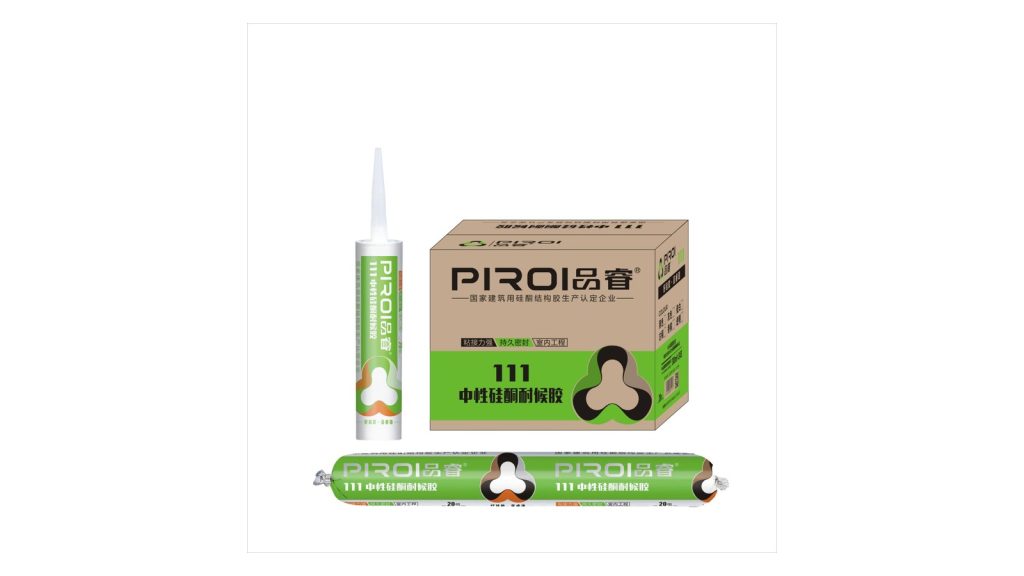
| Packaging | 300 mL cartridges and 590 mL foil sausage packs |
| Private label | Custom cartridge artwork and colour matching supported |
| Sample | Free substrate adhesion and staining test on your own sample |