
Sealant Joint Calculator — Width & Coverage
This free sealant calculator works out the minimum joint width your facade needs from the panel material, panel length and surface temperature range — then the coverage calculator shows how many metres one cartridge will cover. The joint calculator runs on the thermal movement formulas used in ASTM C1472 and ASTM C920 joint design.
Enter your project data
Your result
Rounded up to the next whole millimetre from the calculated minimum. This is the narrowest joint you should build — a wider joint always performs better.
Backer rod is sized about 25% larger than the joint width so it compresses into place. Select the nearest standard rod size from your supplier — standard ranges typically step in 2–5 mm increments, so do not round up more than one size or the rod will be over-compressed.
How this is calculated
ΔL = α × L × ΔT
W = ΔL ÷ (Class ÷ 100) × SF
α is the coefficient of thermal expansion, L the panel length or joint spacing, ΔT the surface temperature range, and SF the safety factor. This calculator uses the conservative interpretation: it compares the joint total movement directly against the sealant rated percentage of joint width. ASTM C920 rates movement capability as ±X%, which strictly speaking applies in each direction — some guides would therefore halve the required width. We do not, because an oversized joint never fails and an undersized one does. Confirm the final figure with your project engineer.
Coverage is a volume calculation and makes no allowance for waste, tooling loss or uneven joints. Add 5–10% for site wastage.
How to use this sealant calculator
Four inputs, one output. The joint calculator runs entirely in your browser — nothing is submitted, and you can change any field to compare options before you specify:
- Panel / substrate material — sets the coefficient of thermal expansion. Aluminium 23, stainless steel 17, glass 9, concrete 10, granite 8, marble 7, terracotta 6, brick 6 and PVC/uPVC 80, all × 10⁻⁶ per K. Replace the default with your supplier figure where you have one.
- Panel length or joint spacing — the distance between two movement joints, not the total facade length. This is the length that actually expands and contracts.
- Surface temperature range — the minimum and maximum surface temperature the panel will see. Use surface temperature, not air temperature; dark panels run 40–50 °C above ambient in direct sun.
- Movement class and safety factor — the ASTM C920 class of the silicone sealant you intend to buy (12.5, 25, 35 or 50), plus a safety factor that defaults to 1.25.
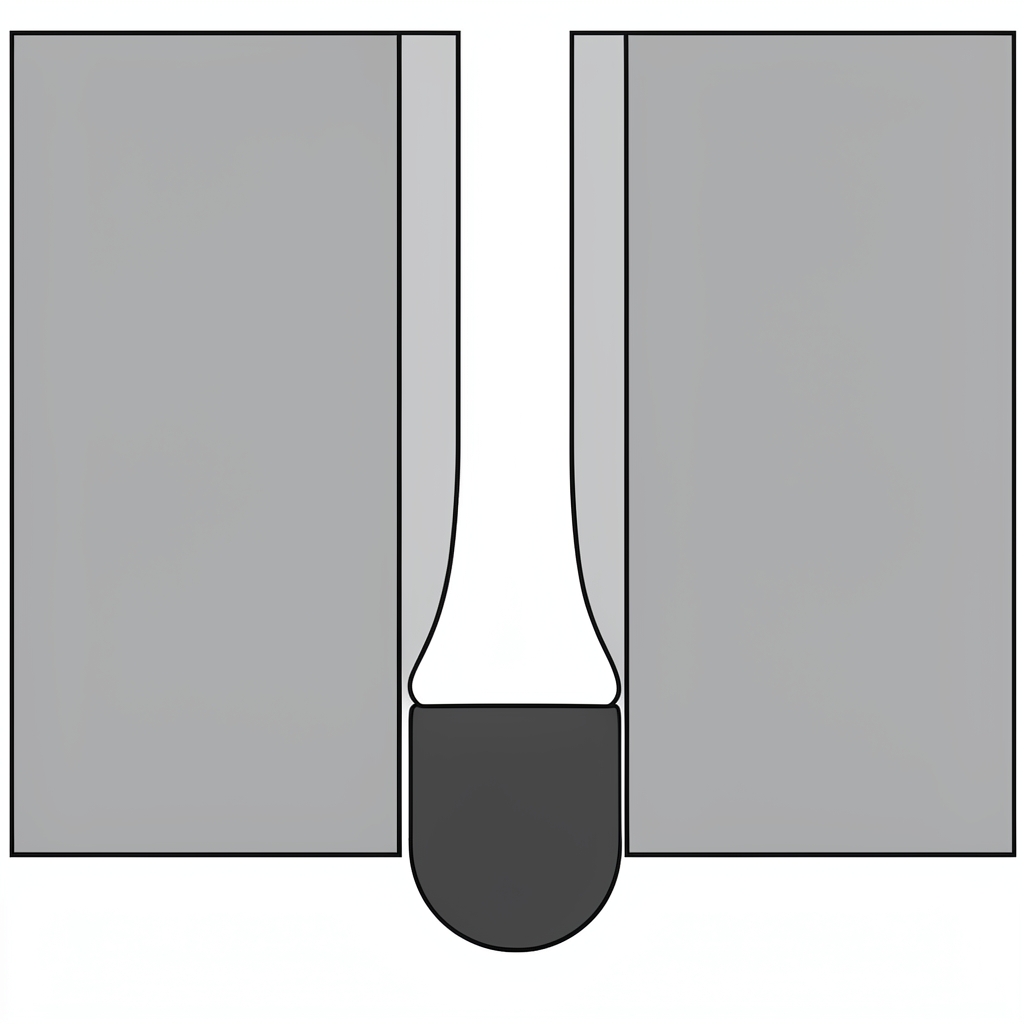
The sealant calculator then returns the minimum joint width in millimetres, the recommended bead depth, the resulting width-to-depth ratio and the matching backer rod diameter, together with a coverage table in metres per cartridge for both 300 mL cartridges and 590 mL foil sausages. Every figure updates as you type, so a joint schedule can be checked in a few minutes rather than a spreadsheet session.
How to size a sealant joint correctly
A sealant joint that fails within two years almost never fails because the sealant was defective. It fails because the joint was sized for the gap on site rather than for the movement the building will actually see. The calculation has three inputs and one output, and skipping it is the single most common design error behind premature facade failure.
Step 1 — Calculate the thermal movement
Every material changes dimension with temperature. The change is proportional to the coefficient of thermal expansion (α), the length of the element (L) and the temperature range it experiences (ΔT):
ΔL = α × L × ΔT
Aluminium moves at roughly 23 × 10⁻⁶ per K, glass at about 9, and concrete at about 10. That means a 3 m aluminium panel over a 70 K swing moves about 4.8 mm — roughly two and a half times as much as a glass panel of the same size. A joint between two different materials moves more than a joint between two identical panels, because each side moves at its own rate.
Step 2 — Convert movement into a required joint width
Sealants are classified by the movement they can accommodate, expressed as a percentage of the installed joint width. Dividing the calculated movement by the movement class gives the minimum joint width; multiplying by a safety factor covers construction tolerances, material variation and unexpected loads:
W = ΔL ÷ (Class ÷ 100) × SF
A Class 50 sealant needs roughly half the joint width of a Class 25 product for the same movement. That does not make Class 50 automatically better — it is formulated for different jobs, usually costs more, and often trades off some tear strength or paintability. Specify the class the calculation demands, not the highest number on the datasheet.
Step 3 — Use surface temperature, not air temperature
This is where most calculations go wrong. A dark panel in direct sunlight reaches 40–50 °C above ambient air temperature: a black aluminium panel in 35 °C air can hit 75–80 °C at the surface. Clear night skies allow radiative cooling below ambient. Using air temperature instead of surface temperature typically underestimates movement by a third or more, producing a joint that is too narrow from the day it is built.
Use historical local extremes rather than averages, and account for building orientation, reflective surroundings and urban heat island effects. West-facing elevations and horizontal joints age fastest because they see the most thermal cycling and hold water longest.
Step 4 — Get the joint geometry right
A correctly specified sealant still fails if the joint is shaped wrongly. Two rules matter:
- Width-to-depth ratio — roughly 2:1 for joints up to about 12 mm, moving toward 1:1 as the joint widens. Too deep concentrates strain at the bond line; too shallow leaves insufficient volume to absorb the movement.
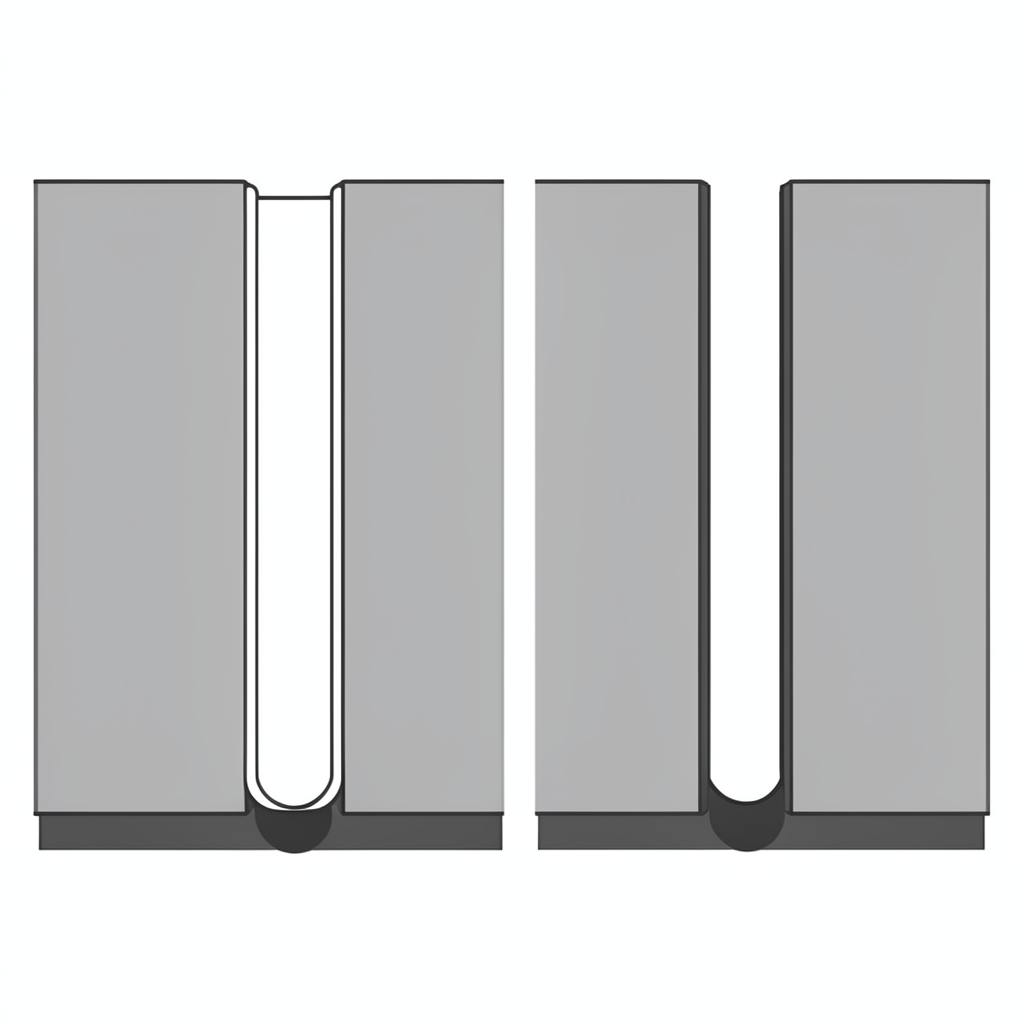
- Backer rod — sized about 25% larger than the joint width, it controls bead depth and prevents three-sided adhesion. A sealant bonded to the joint base as well as both faces cannot flex into the required hourglass shape and tears internally within one or two seasonal cycles.
Common mistakes this calculator helps you avoid
- Sizing the joint from the last project instead of the movement calculation.
- Using air temperature instead of surface temperature.
- Specifying a Class 25 sealant on a joint that demands Class 50 — it will fail regardless of installation quality.
- Skipping backer rod, which turns a correctly sized joint into a three-sided adhesion failure.
- Estimating cartridge quantities without allowing for waste — add 5–10% for site conditions.
What this joint calculator does not cover
The joint calculator sizes a joint for thermal movement only. Five things sit outside it, and each one needs a separate check before the silicone sealant joint schedule is signed off:
- Wind and structural load — a joint on a tall or exposed elevation also carries racking and deflection, which the thermal formula does not include.
- Structural glazing — load-bearing glass bonding is designed to GB 16776 or ASTM C1401 with its own stress and bite calculations, not to a movement class.
- Building movement and seismic joints — joints that cross a structural break are sized by the structural engineer for inter-storey drift and seismic displacement.
- Adhesion on the actual substrate — the calculation assumes the sealant bonds. Coated panels, damp concrete, some plastics and stone need an adhesion test or a primer.
- Chemical and fire exposure — pools, industrial plant and fire-rated compartment lines need a product qualified for that exposure, not just the right joint width.
Where any of those apply, send the panel build-up, the joint detail and the target market to our engineers at PIROI and we will confirm the movement class, the adhesion requirement and the documentation your project needs.
Joint Design FAQs
How do you calculate the minimum sealant joint width?
First calculate the thermal movement: ΔL = α × L × ΔT, where α is the coefficient of thermal expansion, L is the panel length or joint spacing, and ΔT is the surface temperature range. Then divide by the sealant movement class: W = ΔL ÷ (Class ÷ 100) × safety factor. This calculator uses a conservative interpretation — it compares the joint total movement directly against the sealant rated percentage of joint width. An oversized joint always outperforms a marginally sized one.
What is the difference between a Class 25 and a Class 50 sealant?
The ASTM C920 class is the movement capability expressed as a percentage of joint width. A Class 25 sealant is rated ±25% and a Class 50 sealant ±50%, so at the same joint width a Class 50 product accommodates twice the movement. Class 50 is not simply better — it is formulated for different jobs and usually costs more, so it should be specified only where the movement calculation actually demands it.
Why does surface temperature matter more than air temperature?
A dark panel in direct sunlight can reach 40 to 50°C above ambient air temperature. A black aluminium panel in 35°C air can reach 75 to 80°C surface temperature. Using air temperature instead of surface temperature underestimates the movement and produces an undersized joint — one of the most common design errors behind premature joint failure.
How many metres does one cartridge of silicone sealant cover?
Coverage is a simple volume calculation: consumption per metre equals joint width × joint depth in millimetres, which gives millilitres per metre. A 590 mL foil sausage therefore covers about 5.9 m of a 10 × 10 mm joint, and a 300 mL cartridge about 3 m. The calculator above shows coverage across common joint sizes and both packaging formats.
What width-to-depth ratio should a sealant joint have?
Most manufacturers specify a width-to-depth ratio of roughly 2:1 for joints up to about 12 mm wide, moving toward 1:1 as the joint gets wider. A bead that is too deep relative to its width concentrates strain at the bond line and risks adhesive failure; one that is too shallow does not have enough volume to absorb the calculated movement. Backer rod controls this ratio during installation and should be sized about 25% larger than the joint width.
Find the right product for your joint
Structural Glazing
Load-bearing glass bonding to GB 16776-2025 — tensile, shear and elongation data.
Aluminium Composite Panel (ACP)
Facade joints with high thermal movement, cut core edges and coated faces.
Window & Door Sealing
Frame-to-wall joints, mixed substrates and factory production lines.
All 17 Silicone Sealant Models
Movement classes, standards, packaging and technical data.
Need the right sealant for this joint?
Send us your panel material, joint width and target market. Our engineers will match the movement class, confirm adhesion on your substrate and quote accordingly.
- Free adhesion & staining test on your own substrate sample
- OEM & private label from 1,000 pcs
- Typical lead time 15–25 days