
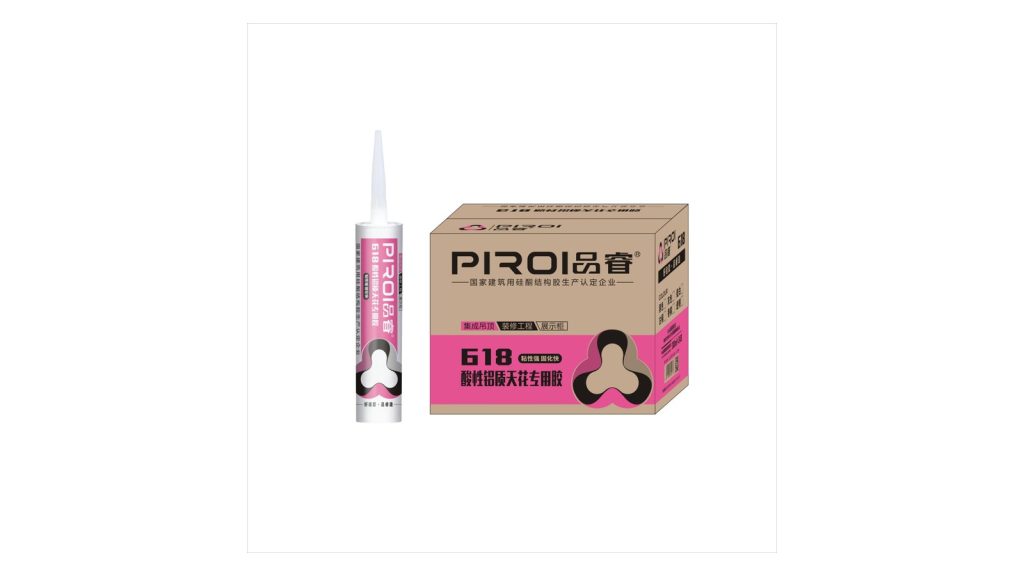
Fast Cure Acetoxy Silicone Sealant
Fast curing acetoxy sealant for glass and glazing. Excellent adhesion to glass and ceramics, cost-effective for indoor glass and aquarium work.
| Product Standard | GB/T 14683-2017 |
|---|---|
| Cure System | Acidic Cure |
| Packaging | 300mL cartridge |
| Shelf Life | 9 months from production date |
| Transport | Non-hazardous goods |
| Storage | Dry, ventilated, cool place |
Technical Data
| Sag resistance (vertical) | 0 mm (max. 3) |
|---|---|
| Tack-free time | 0.2 h (max. 3) |
| Extrusion rate | 2,076 mL/min (min. 150) |
| Tensile modulus (23°C) | 0.3 MPa (max. 0.4) |
|---|---|
| Tensile modulus (-20°C) | 0.4 MPa (max. 0.6) |
| Adhesion at maintained extension | No failure |
Typical values obtained under laboratory conditions (23°C / 50% RH) and not intended for specification purposes. Tested to GB/T 14683-2017 — Report No. 2022MC080. Download the full test report on request.
Product Characteristics
- Fast curing acetoxy cure system
- Excellent adhesion to glass and ceramics
- Semi-transparent, yellowing resistant
- Cost-effective for glass and glazing
- Good weather aging resistance
- Transport as non-hazardous goods
Applications
- Large panel glass joint bonding
- Glass showcase and display fabrication
- Aquarium and glass furniture assembly
- Indoor glass decoration
Limitations
- Not for hidden/semi-hidden frame curtain walls
- Not for metal or coated glass
- Not for unventilated areas
- Not for continuous immersion
- Apply at 4°C to 50°C
Where PR-618 Is Used

Marine & Boat Building
Marine-grade silicone sealant for boat and yacht construction — salt water, UV and constant flexure resistant.

Swimming Pool & Wet Areas
Chlorine-resistant silicone for pool tile joints, wet areas and spa surrounds — Grade-0 anti-mold, chemically stable.
Insulating Glass Unit (IGU)
Secondary seal silicone for insulating glass units — compatible with polysulfide and butyl primary seals, no fogging or chemical attack.
MOQ, Lead Time & Private Label — PR-618
FAQs — PR-618
What is PR-618 used for?
Large panel glass joint bonding, glass showcase and display fabrication, aquarium and glass furniture assembly, and indoor glass decoration. It bonds strongly to glass and ceramics.
Can PR-618 be used on metal or coated glass?
No. PR-618 is an acid cure (acetoxy) sealant and releases acetic acid while curing. It must not be used on metal, coated glass, mirror backing, concrete, marble or mortar — it will attack them. For those substrates use a neutral cure grade.
How fast does PR-618 cure?
Tack-free in about 0.2 hours (12 minutes), with an extrusion rate of 2,076 mL/min — the highest in our range. That makes it suitable for tank and showcase production where units are handled quickly.
Why is the shelf life only 9 months?
Acid cure sealants have a shorter shelf life than neutral cure grades. Store in a cool, dry place and use within 9 months of the production date for consistent cure performance.
What is the MOQ and lead time?
Standard OEM and private label MOQ is 1,000 pcs per model, with mixed-model trial orders from 3,000 pcs total and stock items from 500 pcs. Typical lead time is 15–25 days after artwork and sample approval.
Is acetoxy silicone sealant the same as acid cure silicone sealant?
Yes. Acetoxy and acid cure describe the same chemistry — the sealant releases acetic acid as it cures. Acetoxy silicone sealant cures quickly and bonds strongly to glass and ceramics, which is why it suits showcase, aquarium and glass furniture assembly. The trade-off is that the released acid can attack metal, coated glass, mirror backing, concrete and marble.
Acetoxy or neutral cure silicone sealant — which should I choose?
Choose acetoxy when the joint is glass to glass or glass to ceramic, the substrate is not acid sensitive, and fast cure matters — PR-618 is tack-free in about 12 minutes. Choose neutral cure when the joint touches metal, mirror backing, coated glass, natural stone, concrete or a hidden frame. Send us your substrate list and we will confirm the right grade.
Why does acetoxy silicone sealant smell of vinegar?
The smell is acetic acid released during cure. It is a normal part of the acetoxy cure mechanism, not a defect, and it disappears once the sealant has fully cured. Because acid is released into the joint, ventilate the work area and do not use acetoxy grades in enclosed or unventilated assemblies.
Is acetoxy silicone caulk the same as acetoxy silicone sealant?
Yes — same product, two trade words. Acetoxy silicone caulk is the applicator's term; acetoxy silicone sealant is what appears on the datasheet and test report. PR-618 is an acid-cure silicone sealant tested to GB/T 14683-2017, report 2022MC080, with a 0.2 hour tack-free time and 2,076 mL/min extrusion rate for fast production work.
Can acetoxy silicone adhesive be used on glass and ceramic?
An acetoxy silicone adhesive bonds well to glass and ceramic, which is why acid cure is the traditional choice for aquariums, mirrors without a backing coating, and indoor glass assembly. What it must never be used on is metal or coated glass — the acetic acid released during cure attacks anodised aluminium and mirror backing. PR-618 is specified for glass, ceramics and non-porous indoor substrates only.
What makes premium acetoxy silicone sealant different from a standard one?
A premium acetoxy silicone sealant is judged on the numbers that survive on site: extrusion rate, modulus stability across temperature, and adhesion at maintained extension. PR-618 extrudes at 2,076 mL/min, holds 0.3 MPa tensile modulus at 23 °C and 0.4 MPa at −20 °C, and shows no failure at adhesion at maintained extension. Those are the figures to compare when two "premium" grades are quoted.
Is there an acetoxy sanitary silicone sealant for wet rooms?
Yes, but the anti-mould property comes from a biocide package rather than from the acid-cure chemistry. An acetoxy sanitary silicone sealant is used on ceramic, tile and glass in bathrooms and kitchens where fast cure matters and there is no metal to corrode. Where metal fittings, stainless steel or coated profiles are present, use a neutral cure sanitary grade such as PR-218 instead — acetoxy must not be used on those substrates.
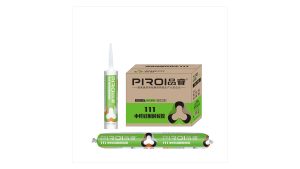
Need pricing or a sample of PR-618?
Tell us the order volume, target market and any labelling requirement. We will come back with pricing, samples and the technical data sheet.
- Free adhesion & staining test on your own substrate sample
- OEM & private label from 1,000 pcs
- Typical lead time 15–25 days