Key Takeaways for Contractors and Specifiers
- Mirror glass is a four-layer composite. The protective back paint is the weakest layer, and it is the one that fails first.
- Acetoxy (acid-cure) silicone releases acetic acid as it cures. Trapped against a mirror edge, that acid attacks the copper layer and produces the black edge staining that contractors are called back to fix.
- The failure is not visible for months — by the time the black edge appears, the mirror is already permanently damaged and must be replaced.
- Specifying a neutral-cure mirror sealant costs almost nothing extra. Replacing a failed mirror wall costs many times the original installation.
A bathroom mirror installed with standard construction silicone typically looks perfect for six to eighteen months. Then a dark line appears along one edge, usually the bottom or the side where moisture collects. It spreads inward over the following months, and eventually the silvering separates from the glass in visible patches.
The mirror is not faulty. The sealant is.
This article explains exactly what happens chemically, how to tell whether the sealant in your van is the wrong type, and what to specify instead. If you are installing mirrors or working with stainless steel, it is worth ten minutes.
1. What Is Actually Behind a Mirror
Architectural mirror glass is not simply glass with a reflective coating. It is a layered composite, and each layer has a different tolerance for chemicals:
| Layer | Thickness | Function | Vulnerability |
|---|---|---|---|
| Glass | 4 – 6 mm | Optical surface and structural substrate | Chemically resistant. Acetic acid will not damage it. |
| Silver | ~700 Å (0.07 µm) | Reflective layer | Thin. Tarnishes on contact with sulphur and moisture. |
| Copper | ~250 Å (0.025 µm) | Protects the silver from the back paint | Attacked directly by acetic acid. This is the layer that fails. |
| Back paint | 25 – 40 µm | Seals and protects the metal layers | Weakest layer. Acid-soluble, and easily breached at cut edges. |
Note the scale. The copper layer is roughly 250 ångström thick — about one ten-thousandth of the thickness of a sheet of paper. The back paint that protects it is a fraction of a millimetre thick, and it is designed to resist moisture, not acid.
When a mirror is cut to size, the edge is exposed. The back paint does not wrap around the cut face, so the copper layer is effectively unprotected at every cut edge. That is exactly where sealant is applied.
2. The Chemistry: Why Acetoxy Sealant Attacks the Mirror
All one-component silicone sealants cure by reacting with atmospheric moisture. The difference is what they release while doing so.
Acetoxy silicone uses acetoxysilane crosslinkers. During cure, each crosslinking reaction releases one molecule of acetic acid — the same acid in vinegar. This is why an acetoxy cartridge smells sharp and sour when you open it.
Acetic acid is a fast-leaving group, which is precisely why acetoxy formulations cure quickly and bond strongly to glass. Those are real advantages, and they are why acetoxy sealant remains the right choice for indoor glazing, showcase assembly and aquarium work.
But the acid has to go somewhere. In an open glazing joint, it evaporates. In a mirror installation, the joint is narrow, the mirror is flat against a wall or substrate, and ventilation is effectively zero. The acid stays where it is released — against the cut edge of the mirror, against the exposed copper layer.
What happens next
- The acetic acid diffuses into the exposed edge and through microscopic pores in the back paint.
- It reacts with the copper layer, forming copper acetate — a dark, greenish-black compound.
- The copper layer is consumed. With the copper gone, the silver layer has no protection.
- The silver tarnishes and begins to separate from the glass.
- Visually, this reads as a black or brown edge that spreads inward. In the final stage, the mirror develops blotches and loses reflectivity.
The process is accelerated by humidity and heat — which is why mirror failures are far more common in bathrooms, kitchens and tropical climates than in dry, temperate interiors.
3. The Four Failure Modes You Will Actually See
| What you see | What is happening | Time to appear | Recoverable? |
|---|---|---|---|
| Black edge | Copper layer converted to copper acetate by acetic acid | 3 – 18 months | No. The metal layer is consumed. |
| Silvering lift / delamination | Silver layer separating from glass as its protective copper is lost | 12 – 36 months | No. The mirror must be replaced. |
| Distortion / waviness | Sealant applied in a full bed cures under restraint and pulls the thin mirror out of plane | Immediate to 6 months | Sometimes — if the sealant is cut out early enough. |
| Yellowing or hazing | Plasticizer migration from a low-grade formulation, or mould growth in a trapped moisture pocket | 6 – 24 months | No for plasticizer migration. |
The economics are straightforward. A mirror sealant cartridge costs a few dollars. Replacing a failed mirror wall means removing fixtures, cutting out cured sealant, disposing of damaged glass, and re-installing — with the same labour cost again, and a client who now associates the failure with your work rather than the product.
4. How to Tell Whether Your Sealant Is Acetoxy
Before the next mirror job, check the cartridge in your hand. Three quick tests:
1. Smell it
Open the cartridge and smell. A sharp, vinegar-like odour means acetoxy — do not use it on mirrors, stainless steel or bare aluminium. A faint alcohol or neutral odour means neutral cure.
2. Read the label
Look for the words acetic, acetoxy, acid cure or acid-curing. Chinese labels use 酸性 (acidic). Neutral products are marked 中性 (neutral).
3. Check the substrate list
A product intended for mirrors will name mirrors, copper-backed glass or mirror backing explicitly. If the label lists only glass, tile and ceramics, assume it is not mirror-safe.
Watch for this trap
A product described as “silicone sealant for glass” is often acetoxy. Glass is acid-resistant, so the product works perfectly on glass — and destroys the mirror coating behind it. “For glass” does not mean “for mirrors”.
5. What to Specify Instead
Mirror installations need a sealant that cures without releasing acid, adheres to glass without a primer, and does not bleed oil into the assembly. That means a neutral-cure, mirror-grade formulation.
| Application | Specify | Avoid | Why |
|---|---|---|---|
| Bathroom & vanity mirrors | Neutral mirror sealant | Acetoxy / acid-cure silicone | Acid attacks the copper layer at the cut edge. Humidity accelerates it. |
| Stainless steel | Neutral stainless-steel grade | Acetoxy silicone | Acetic acid etches the surface and causes discoloration around the joint. |
| Bare or anodised aluminium | Neutral cure | Acetoxy silicone | Acid reacts with the metal and can prevent proper cure at the interface. |
| Concrete, mortar, stone | Neutral cure | Acetoxy silicone | Alkaline substrates interfere with acid-cure crosslinking. |
| Indoor glazing, showcases, aquariums | Acetoxy is fine | — | Glass only, well ventilated, fast cure is an advantage. This is where acetoxy belongs. |
One more property matters for mirrors specifically: the formulation should be tested for non-corrosiveness to the mirror backing coating. That is a different claim from “neutral cure” — a neutral sealant that has not been tested against mirror backing may still cause problems through plasticizer migration.
6. Installation Best Practices for Mirror Work
Choosing the right sealant is necessary but not sufficient. Three installation habits prevent most remaining failures.
Do not apply a full bed of sealant
The most common mirror installation error is spreading adhesive across the entire back of the mirror. This traps moisture behind the glass with nowhere to escape, and it restrains the mirror as the sealant cures — which is how thin mirrors end up visibly distorted.
Instead, apply sealant in vertical beads or discrete dabs around the perimeter and at a few points in the field, leaving gaps between them. The mirror is then held securely while air can still circulate behind it.
Leave the bottom edge open
Seal the top and sides if the design calls for it, but leave the bottom edge unsealed or fitted with a vented trim. Any moisture that does get behind the mirror can then drain or evaporate rather than pooling against the backing. This single detail prevents a large share of edge corrosion cases.
Use mechanical support, not adhesive alone
Mirror clips, J-trim or a cleat system should carry the weight. The sealant is there to seal and to stop rattling — not to be the primary structural fixing. Silicone is strong in tension but the mirror backing is not, and a heavy mirror hanging entirely on adhesive is a failure waiting for a warm day.
Match the sealant to the environment
In tropical climates, where bathroom humidity routinely sits above 85%, mould resistance matters as much as corrosion resistance. A mirror sealant used in a wet area should carry a documented mould-resistance result, not just a claim on the label.
7. Frequently Asked Questions
Q: The mirror already has a black edge. Can it be saved?
No. Once the copper layer has been converted to copper acetate, the reflective coating is permanently damaged — the metal is gone, not stained. Cutting out the old sealant will stop further spread but will not restore the affected area. In most cases the mirror needs replacing, and the sealant needs changing at the same time, or the new mirror will fail the same way.
Q: Is “neutral cure” the same as “mirror safe”?
Not automatically. Neutral cure means the sealant does not release acid, which removes the primary corrosion mechanism. But a neutral formulation can still cause problems if it contains plasticizer that migrates into the assembly, or if it has never been tested against mirror backing. Ask specifically whether the product has been tested for non-corrosiveness to mirror backing coating — that is the property that matters.
Q: Can I use construction silicone on a mirror if I only apply a thin bead at the very edge?
This is the most common “workaround” and it does not solve the problem. The cut edge of the mirror is exactly where the copper layer is unprotected, and a thin edge bead places the acid directly against it. The smaller volume of sealant means less acid is released, which slows the failure — it does not prevent it.
Q: What about “mirror adhesive” tapes and foam pads?
Double-sided mirror tapes are a valid alternative and avoid the chemistry problem entirely, provided the tape itself is specified as mirror-safe and the mirror is not so large that the tape cannot carry the load. Many installers use tape for fixing plus a neutral sealant for the perimeter seal — that combination is robust and is what we recommend for large vanity mirrors.
Q: Does the same problem affect stainless steel and aluminium?
Yes, in a milder form. Acetic acid etches the surface of stainless steel and bare aluminium, and the reaction can interfere with the sealant’s own cure at the interface. You will see discoloration or a weak bond developing around the joint rather than the dramatic black edge seen on mirrors — but the root cause is identical.
Q: How can I verify that a supplier’s mirror sealant really is non-corrosive?
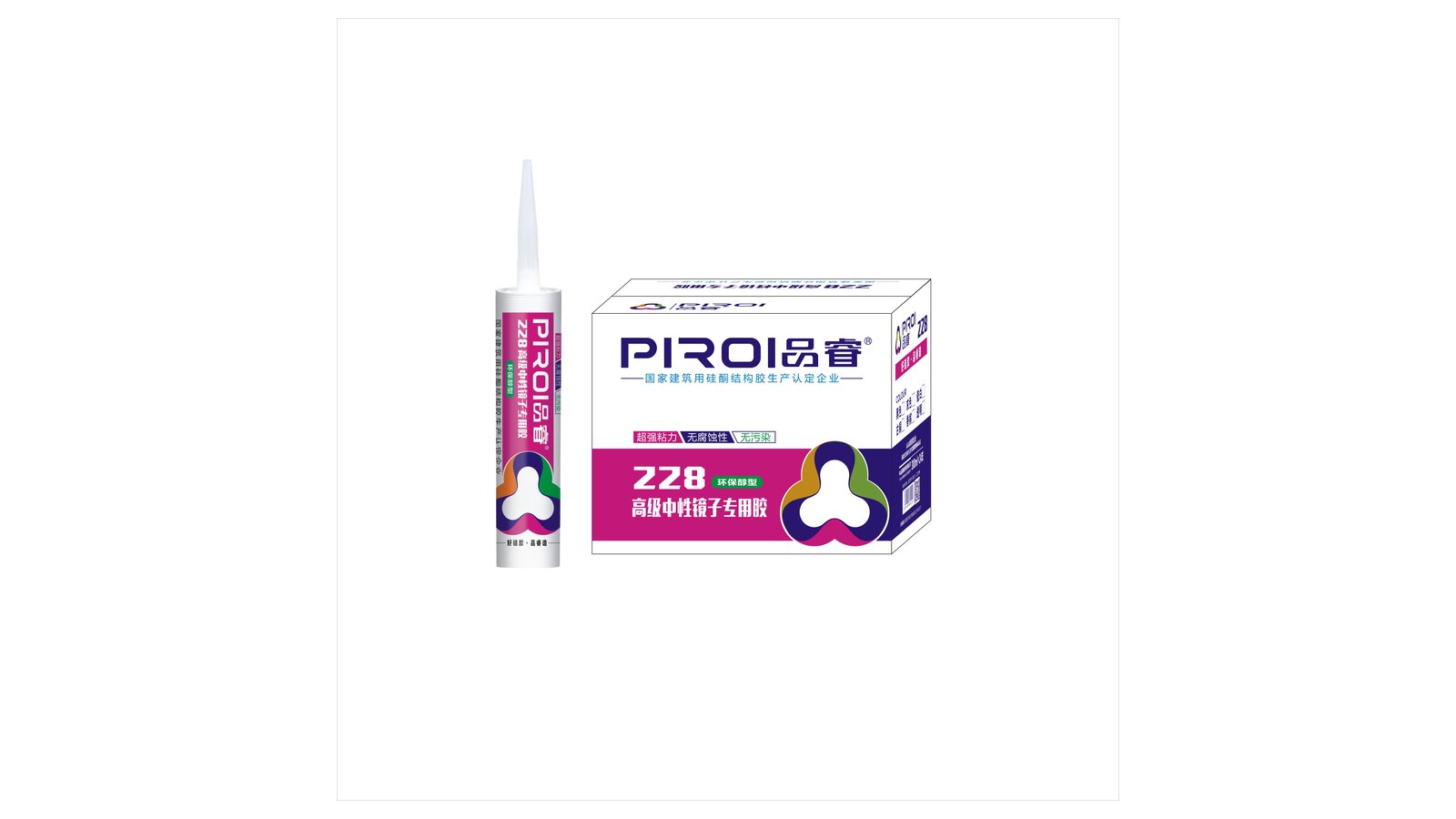
Ask for the test method and the result, not just the claim. A serious supplier will be able to tell you how the non-corrosiveness was assessed and will provide the underlying document. If the answer is a marketing statement with no test behind it, treat the claim as unverified. Our PR-228 is supplied with a documented non-corrosiveness specification, and we will send the technical documentation on request.
8. Specification Checklist
| ✓ | Check |
|---|---|
| ☐ | Sealant is neutral cure (no vinegar odour, label marked 中性 / neutral) |
| ☐ | Documented as non-corrosive to mirror backing coating — with a test, not just a claim |
| ☐ | Suitable for the substrate behind the mirror (tile, plasterboard, concrete, metal) |
| ☐ | Mould-resistant if the installation is in a wet area |
| ☐ | Applied as beads or dabs — never a full bed |
| ☐ | Bottom edge left open or vented for drainage |
| ☐ | Mechanical clips or trim carrying the weight |
| ☐ | Mirror tape used where the design allows it |
If you change one habit after reading this, change this one: before any mirror or stainless steel job, open the cartridge and smell it. A vinegar smell means put it back on the shelf and reach for a neutral-cure product instead.
Specified Silicone Sealants
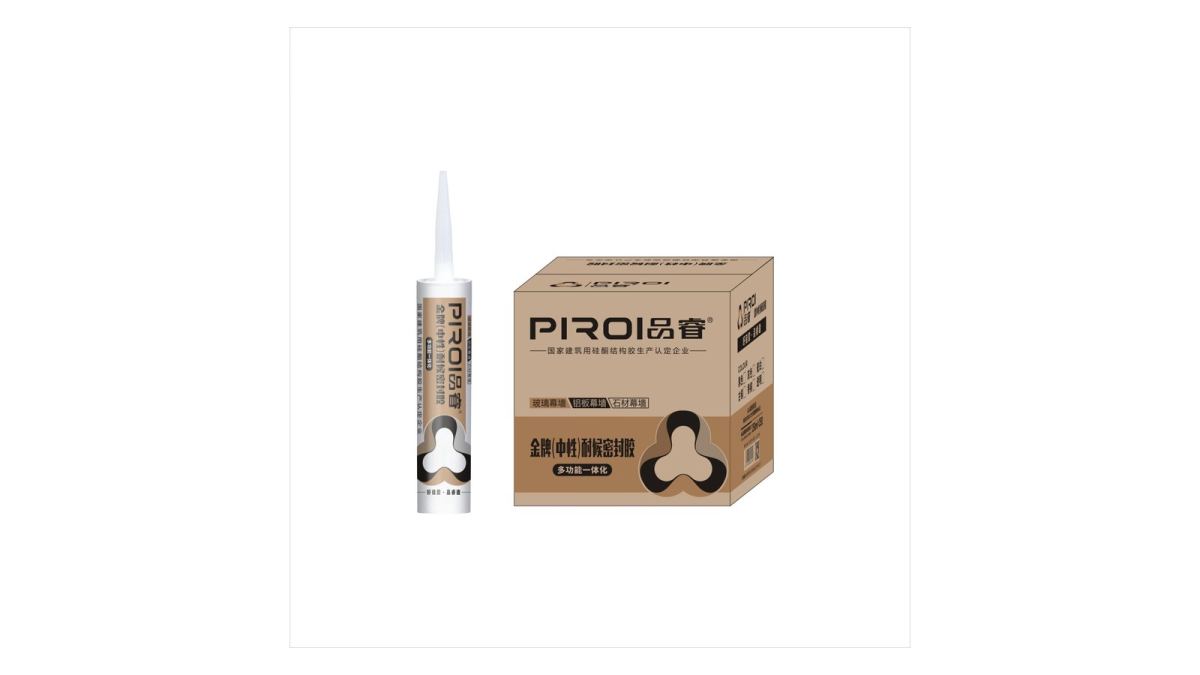
Specialty
Mirror Silicone Sealant
Neutral cure, formulated to be non-corrosive to mirror backing coating. Safe for bathroom mirrors, decorative glass and vanity installations.
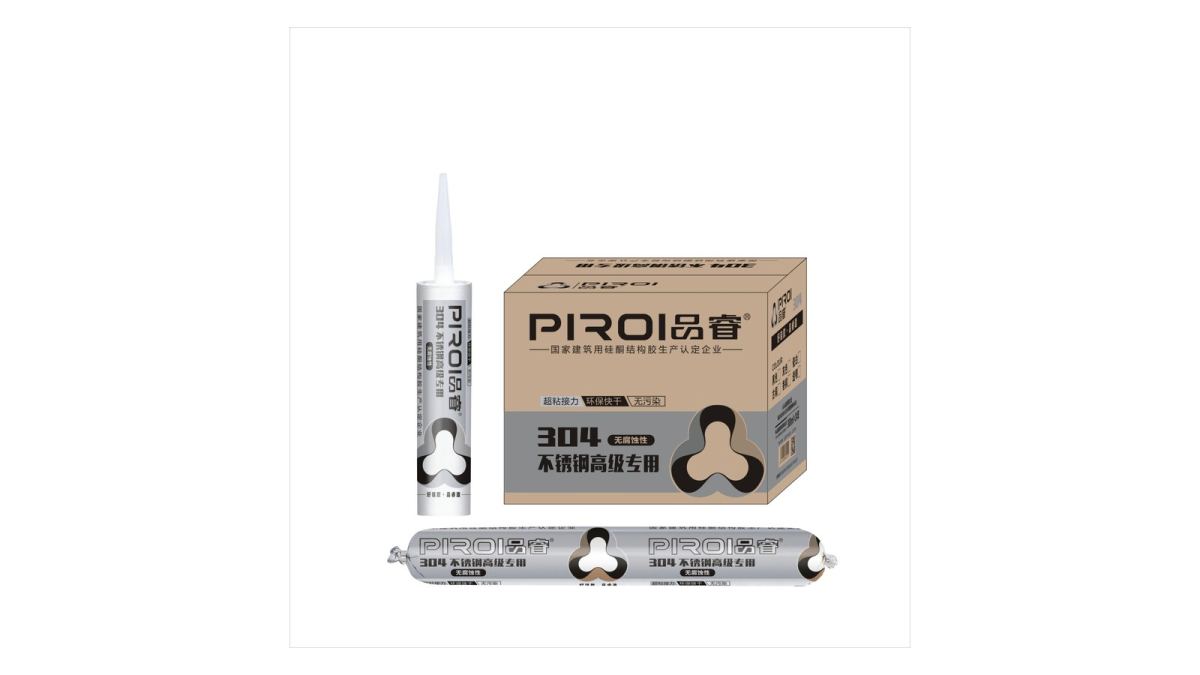
Specialty
Stainless Steel Silicone Sealant
Neutral cure formulation for stainless steel surfaces — non-corrosive, resistant to discoloration around the joint, for kitchen and sanitary applications.
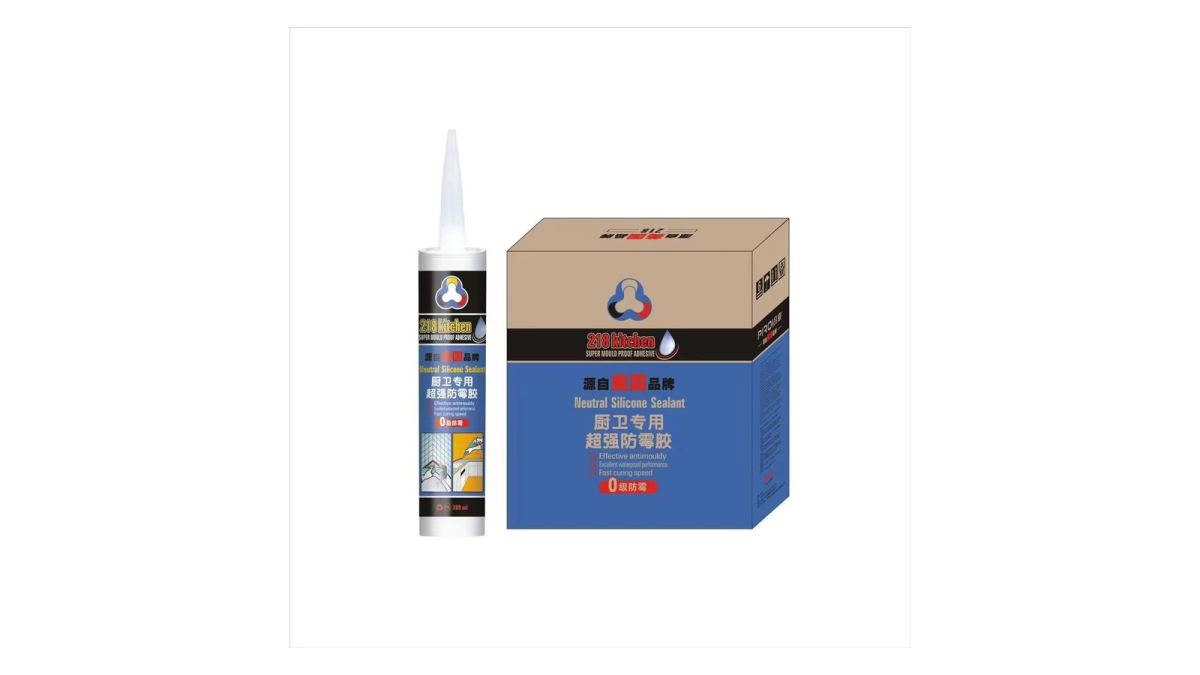
Anti-Mold
Sanitary Anti-Mold Silicone Sealant
Grade 0 mould resistance under JC/T 885-2016 — the right companion to PR-228 when sealing wet-area joints around a mirror installation.
Substrate-by-Substrate Guide, Test Data and Ordering Reference
The mirror failure described above is a substrate chemistry problem, so the fix is a substrate list. Below is where an acetoxy grade is acceptable and where it is not, followed by the performance data and the commercial terms for a mirror project.
Substrates and joints this applies to
| Substrate | Suitability | What to watch |
|---|---|---|
| Mirror backing (protective paint, copper, silver) | Neutral cure only | Acetic acid attacks the copper layer — this is the failure in the article |
| Glass (non-mirrored) | Acetoxy or neutral | Acetoxy is acceptable where the glass has no metallic backing |
| Anodised aluminium | Neutral cure only | Acid etches the anodised layer |
| Concrete, mortar and render | Neutral cure only | Acid attacks the alkaline substrate and leaves a chalky edge |
| Natural stone and marble | Neutral cure only | Acid reacts with calcium carbonate and stains the face |
| Ceramic and glazed tile | Neutral cure | Safer default in wet areas |
| UPVC and PVC profiles | Neutral cure only | Protects the steel reinforcement in the chamber |
| Stainless steel | Neutral cure preferred | Confirm adhesion on the actual surface finish |
Performance data you can quote in a submittal
| Property | Tested value | Requirement |
|---|---|---|
| Cure system (mirror grade) | Neutral cure | No acetic acid released |
| Product standard (mirror grade) | JC/T 885-2016 | Sanitary sealant standard |
| Tensile adhesion strength (23 °C) | 0.85 MPa | Minimum 0.60 MPa |
| Elongation at max. tensile strength | 205% | Minimum 100% |
| Elastic recovery rate | 88–92% | Keeps a moving joint closed |
| Movement capability | Class 25 and Class 50 available | Sized from the joint demand |
| Durability after water / UV exposure | 0.93 MPa | Minimum 0.45 MPa |
| Sag resistance (vertical) | 0 mm | Maximum 3 mm — overhead and vertical joints hold shape |
| Tack-free time (neutral) | 1.0–1.2 h | Maximum 3 h |
| Shelf life | 12 months from production date | 9 months for acetoxy grades |
| Alkane plasticizer | Not detected | Must not be detected |
What the cure chemistry does inside the joint
An acetoxy silicone cures by the same moisture-triggered RTV mechanism, but the by-product is acetic acid — the vinegar smell that makes acetoxy grades easy to identify on site. That acid is the reason acetoxy is fast (tack-free in 0.2 hours on PR-618 against 1.0–1.2 hours for our neutral grades) and also the reason it must not be used against concrete, marble, natural stone, mirror backing, or any bare or anodised metal. Where speed matters and the substrate is glass or a coated surface that tolerates acid, acetoxy is the right choice; anywhere else it is the wrong one.
Standards and documentation
Mirror work is specified to JC/T 885-2016 rather than to a structural standard, because the joint is not load-bearing — the failure mode is chemical attack on the mirror backing, not mechanical. The weatherproof grades carry GB/T 14683-2017 test reports and the factory holds ISO 9001:2015 valid to 2029-01-25. Each batch ships with its own Certificate of Analysis and the retained sample is archived for 18 months, so a third-party test report can be produced later if a client disputes a staining claim. We will also run a free adhesion and staining test on a sample of your own mirror before you order.
Ordering reference
| Commercial term | What PIROI offers |
|---|---|
| MOQ | OEM & private label from 1,000 pcs per model |
| Trial order | Mixed-model trial orders from 3,000 pcs total; stock items from 500 pcs |
| Lead time | Typically 15–25 days after artwork and sample approval |
| Packaging | 300 mL cartridges and 590 mL foil sausage packs |
| Private label | Custom cartridge artwork and colour matching supported |
| Sample | Free substrate adhesion and staining test on your own sample |