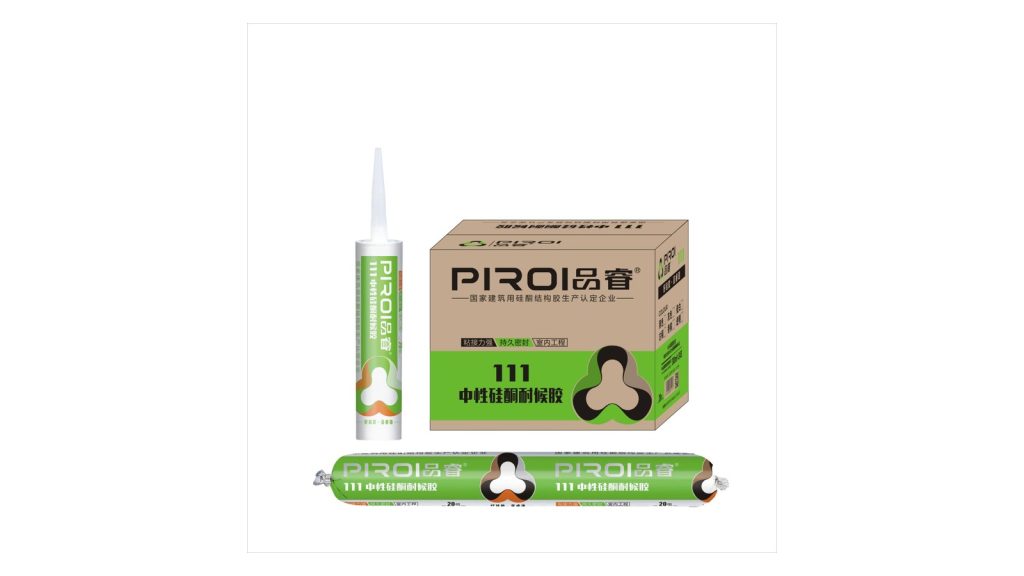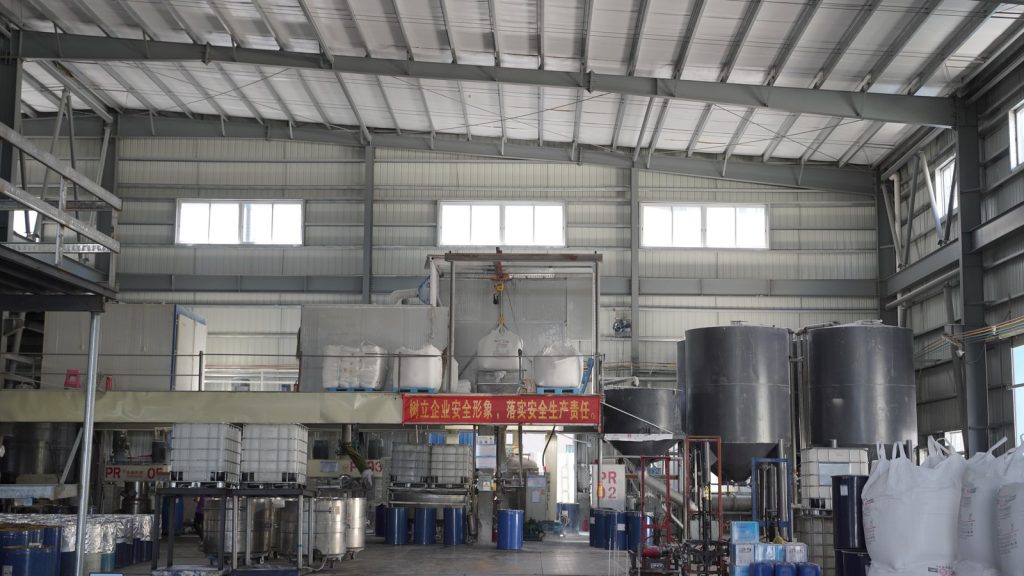
Most OEM enquiries for a neutral cure silicone sealant arrive as a price request: a cartridge size, a colour, a quantity, and a target cost. That brief is enough for a trading company to quote and not enough for a factory to guarantee anything, because the properties that decide whether the sealant survives on a facade, a window frame or an expansion joint are all missing from it.
This guide is the specification side of an OEM order: which properties have to be written down before a quote is meaningful, which documents make the order auditable, and where the commercial terms normally land.

Why “neutral cure” is not a specification on its own
Neutral cure describes the by-product chemistry, not the performance. Oxime and alkoxy systems are both neutral, both non-corrosive, and they behave differently in modulus, cure speed and adhesion build. Two suppliers can both quote “neutral cure” and deliver grades that are not interchangeable on the same joint.
| Cure system | By-product | Where it is the right choice |
|---|---|---|
| Acetoxy (acidic) | Acetic acid | General glazing on glass and ceramic only — attacks metals, stone and mirror backing |
| Oxime neutral | Oxime | General construction joints, fast adhesion build on aluminium and uPVC |
| Alkoxy neutral | Alcohol | Stone, concrete, sensitive metals, joints where a low-odour cure matters |
So the first line of an OEM silicone sealant spec should read “neutral cure, oxime or alkoxy” with the by-product named, not just the word “neutral”. The chemistry behind the three systems is set out in our cure chemistry guide.
The five properties to write into the OEM spec
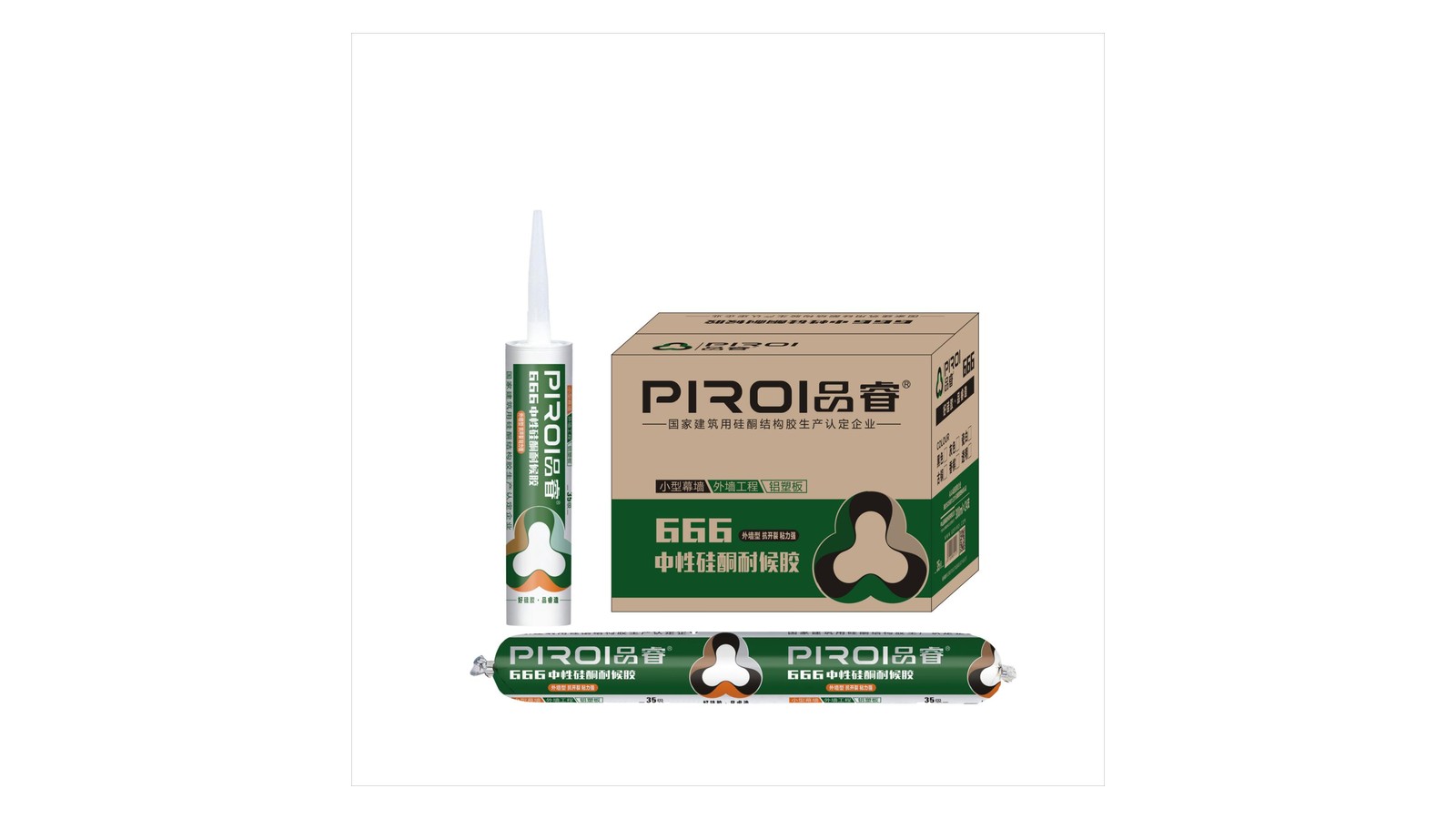
These are the values a factory can be held to, and the ones that actually predict field behaviour. Our neutral weatherproof grade, PR-666, is tested to GB/T 14683-2017; its report values are a useful reference for what a spec sheet should contain:
| Property | PR-666 report value | What it decides on site |
|---|---|---|
| Sag resistance (vertical) | 0 mm (limit 3) | Whether a vertical or overhead bead stays put before it skins |
| Tack-free time | 1.2 h (limit 3) | How long the joint must stay protected from rain and dust |
| Extrusion rate | 516 mL/min (min 150) | Gun time per cartridge — a low rate quietly doubles labour cost |
| Tensile modulus at 23°C | 0.6 MPa | Whether the bead accommodates movement or fights it |
| Adhesion at maintained elongation | No failure | Whether the bond survives a joint that stays stretched |
Note that these are not marketing figures — they come off a test report with a method attached. If a supplier quotes a modulus or a tack-free time without a report, the number is a claim rather than a specification. Our guide to reading a silicone sealant test report covers which fields must be present for the values to be traceable.
Packaging and the two formats that matter
An OEM silicone sealant order is as much a packaging decision as a chemistry decision, because the format fixes the filling line and therefore the MOQ:
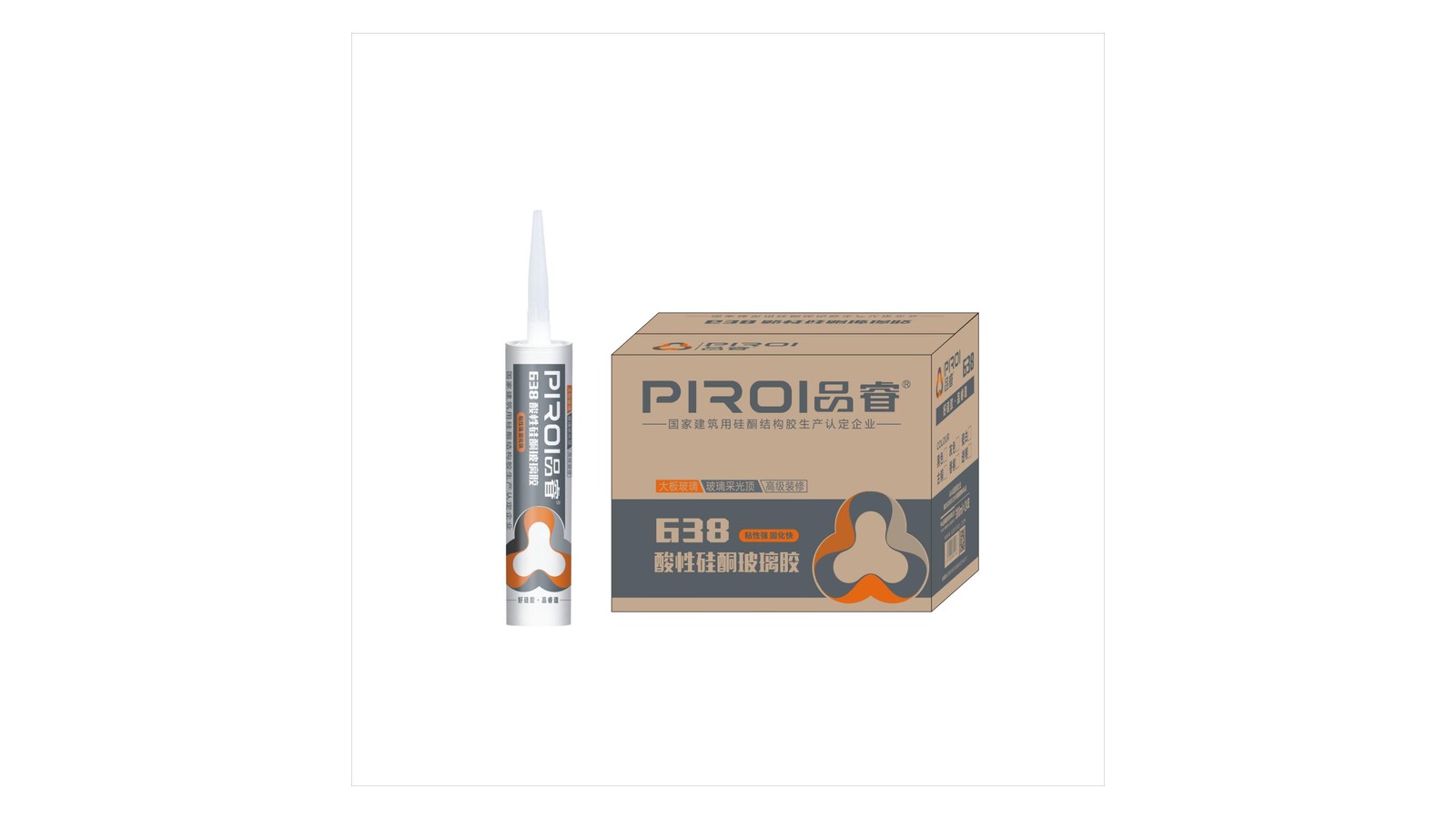
- 300mL cartridge — the standard rigid format for retail and trade packs, and the one most private-label ranges start from.
- 590mL sausage — the foil format for bulk applicators and curtain wall / facade crews, cheaper per litre and faster to gun.
- Shelf life — 12 months from production date on both formats, which sets how much stock a distributor can hold.
- Transport classification — non-hazardous goods, which keeps ocean freight and documentation simple.
Both formats are stocked across our neutral weatherproof range: see the PR-666 neutral weatherproof page and the PR-638 premium weatherproof page, with the full family under the weatherproof product series.
The three documents that make an OEM order auditable
- Certificate of Analysis per batch — not a sample-batch report. Every batch is coded, tested before release and archived for 18 months with its own CoA, so a cartridge can be traced back to its raw material lot.
- The test report behind the specification — method, laboratory, limits and measured values, so the spec can be re-checked on a later batch.
- Export documentation — commercial invoice, packing list and the certificate of origin your market requires, prepared against the label you registered.
Durability claims deserve a fourth check: accelerated weathering and adhesion-under-stress data. Our article on weatherproof durability tests explains what each test actually predicts.
Commercial terms for a private label run
- MOQ — 1,000 cartridges per model for private label, with mixed-model orders from 3,000 cartridges.
- Stock colours — available from 500 cartridges on standard shades, useful for a first market test.
- Lead time — typically 15 to 25 days after artwork approval.
- Samples — supplied before mass production, so the bead can be gunned on your own substrates and in your own climate first.
- OEM support — formula adjustment to your market’s standard, cartridge and label artwork, and the export paperwork handled in-house.
The full terms are in our guide to private label MOQ and lead time.
Factory questions worth asking before signing
The specification protects you on paper; the factory protects you in the second container. Our production base in Zhongshan, Guangdong runs 20,000 m² with 8 automated filling lines, an in-house R&D laboratory and 100% batch testing before release, under ISO 9001:2015 — a silicone sealant factory measured on the same batch records your CoA will come from. Certificates and scope are on the certifications page, production detail on the factory page, and the rest of the range on the full silicone sealant range.
Send the joint type, the substrates, the cartridge format and the market standard you need to meet, and our technical team will match the grade and confirm the specification before pricing — or start from the PIROI site for the full range.
Manufacturer or trader — how to tell before you order
A neutral cure silicone sealant manufacturer and a trader can quote the same grade at the same price, and the difference only surfaces later. Four checks settle it:
- Ask what can be adjusted. A manufacturer changes cure speed, clarity or modulus for your line; a trader forwards the request to someone else and returns with either “no” or a longer lead time.
- Ask for the raw material lot behind a finished batch. Our batch records trace a cartridge back to its silicone polymer lot. A trader cannot, because the batch was made before they bought it.
- Ask which standards the grade is actually tested to. PR-666 and PR-638 are tested to GB/T 14683-2017 with reported values for sag, tack-free time, extrusion rate, modulus and adhesion. A trader quotes the standard name without the values.
- Ask who signs the CoA. An in-house laboratory signs its own results, archived for 18 months per batch. A third-party signature you cannot trace is a warning sign.
None of this is about price. It is about who is accountable when a container arrives out of specification, and whether that company can adjust the next batch rather than simply replace it.
Ask the neutral cure silicone sealant manufacturer for the raw material lot behind a finished batch, not only the finished goods certificate.