Key Takeaways for Specifiers and Buyers
- “Weatherproof” is not a property — it is a combination of four resistances: UV, water, thermal cycling and movement. A product can be strong and still fail on any one of them.
- The decisive test is not tensile strength. It is adhesion while the joint is held stretched (maintained extension), and again after water immersion and after cold-draw / hot-compression cycling.
- Most general-purpose weatherseals pass one of those three durability tests. Our PR-888 passes all three with no failure — that is what separates a premium weatherproof sealant from an ordinary one.
- Extrusion rate is a cost line, not a datasheet detail. Across our own range it varies from 190 to 519 mL/min. On a large facade that difference is measured in labour hours.
- Ask for the mass loss and elastic recovery figures. They predict whether the sealant is still doing its job in year ten, not just on the day it was installed.
Every silicone sealant supplier claims their product is weatherproof. Very few can show what that claim is based on. This guide sets out what a weatherproof silicone sealant actually has to survive, which test results prove it, and how to read the numbers on a GB/T 14683-2017 report so you can compare products on evidence rather than adjectives.
1. What “Weatherproof” Has to Survive
A weatherseal on an exterior facade is exposed to four independent stresses. A product has to resist all four, and each one is tested separately.
| Stress | What it does to the sealant | How it is verified |
|---|---|---|
| UV radiation | Breaks polymer chains at the surface; causes chalking, hardening and cracking. | UV exposure followed by a repeat adhesion test. |
| Water | Migrates into the bond line, weakens adhesion, and can hydrolyse the interface. | Water immersion followed by a repeat adhesion test. |
| Thermal cycling | Repeated expansion and contraction fatigues the bond and the cured rubber. | Cold-draw / hot-compression cycling, then a repeat adhesion test. |
| Movement | The joint opens and closes; the sealant must stretch and recover without tearing or taking a permanent set. | Adhesion at maintained extension, plus elastic recovery rate. |
This is why a datasheet quoting only tensile strength tells you almost nothing about weatherproofing. Tensile strength is measured on a fresh specimen in a laboratory at 23 °C. The stresses above happen after installation, in the field, over years.

2. The Three Durability Tests That Decide It
GB/T 14683-2017 handles this by repeating the adhesion test under three different conditions. A product that passes one is not automatically a product that passes all three.
Test 1 — Adhesion at maintained extension
The specimen is stretched to a defined extension and held there while adhesion is assessed. This is much closer to real service than a simple pull test, because a joint sealant spends its life stretched, not at rest. A product can pass a tensile pull test and still fail here if the bond line releases under sustained strain.
Test 2 — Adhesion after water immersion
The cured specimen is immersed, then re-tested. Water is the most common cause of sealant bond failure in wet climates. A sealant that passes dry and fails wet will fail in the first monsoon season — and the failure will be at the bond line, not in the rubber, which is why it often goes unnoticed until water is already inside the building.
Test 3 — Adhesion after cold-draw / hot-compression cycling
The specimen is cycled between cold extension and hot compression, then re-tested. This simulates years of day–night and summer–winter thermal movement in a compressed timeframe. It is the test that catches formulations which are fine in a static joint but fatigue in a real one.
The commercial point: when you compare two weatherproof silicone sealants, ask which of these three tests each one has passed. The answer is often more revealing than any strength figure on the datasheet.
3. Real Test Data: Premium vs Standard Weatherseal
Both products below are neutral-cure weatherproof silicone sealants to GB/T 14683-2017. The difference is in how far the durability testing goes.
| Test item | PR-666 (standard) | PR-888 (premium) |
|---|---|---|
| Adhesion at maintained extension | No failure | No failure |
| Adhesion after water immersion | — | No failure |
| Adhesion after cold-draw / hot-compression | — | No failure |
| Mass loss rate | — | 4.2% (max. 8) |
| Elastic recovery rate | — | 92% (min. 80) |
| Tensile modulus at 23 °C | 0.6 MPa | 0.9 MPa |
| Density | — | 1.43 g/cm³ |
| Extrusion rate | 516 mL/min (min. 150) | 519 mL/min (min. 150) |
| Tack-free time | 1.2 h (max. 3) | 1.2 h (max. 3) |
| Sag resistance (vertical) | 0 mm (max. 3) | 0 mm (max. 3) |
The “—” entries are the point of this table. PR-666 is a capable general-purpose weatherseal with a high extrusion rate and a no-failure result at maintained extension. PR-888 is tested across the full durability set, and that is what justifies specifying it for exposed curtain wall and facade work where the joint cannot be re-sealed.
4. Reading Elastic Recovery and Mass Loss
Two figures appear on a full report that buyers routinely skip, and both predict long-term behaviour better than strength does.
Elastic recovery rate
The specimen is stretched and released, and the percentage of the original dimension it recovers is measured. 92% means the sealant returns to 92% of its original width. The remaining 8% is permanent set — the joint is slightly wider every cycle.
Permanent set accumulates. A sealant with a low recovery rate progressively loses contact with the joint faces, the seal thins, and eventually the joint opens. For a moving facade joint, elastic recovery is arguably the single most important number on the report. Our premium range holds 92% against a minimum of 80%.
Mass loss rate
Measured after heat ageing, this indicates how much volatile material leaves the cured rubber. A high mass loss means the sealant is shrinking in service — and a shrinking sealant pulls away from the bond line, which is how water gets in. PR-888 records 4.2% against a maximum of 8%.
5. Extrusion Rate Is a Cost Line
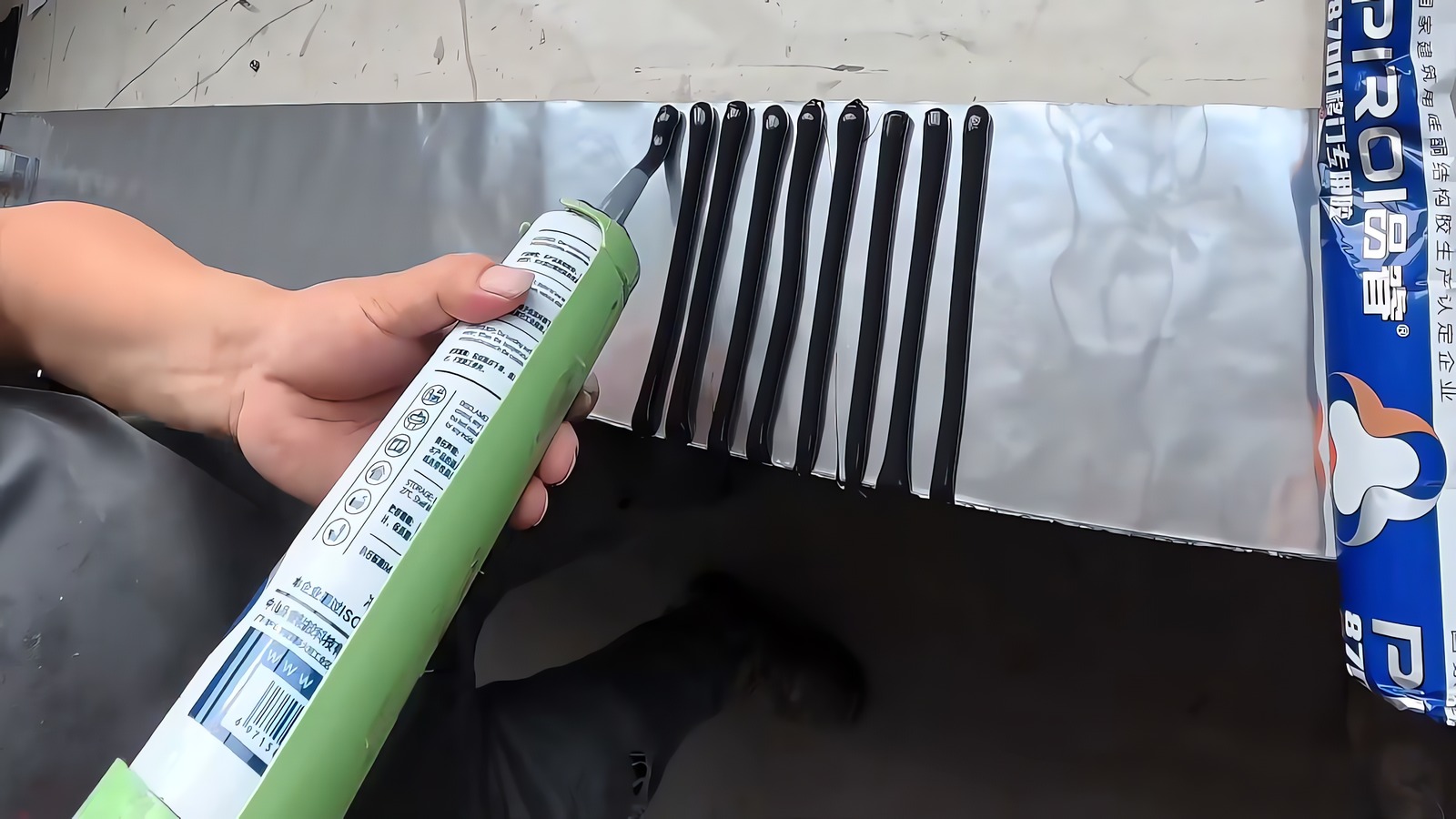
Extrusion rate is usually presented as a technical detail. It is actually a productivity figure, and on a large project it is the difference between finishing the facade and paying for another crew week.
| Product | Type | Extrusion rate | Relative application speed |
|---|---|---|---|
| PR-8800 | Fast-cure door & window | 190 mL/min (min. 50) | Baseline |
| PR-111 | General-purpose weatherseal | 212 mL/min (min. 50) | +12% |
| PR-333 | Window & door weatherproof | 210 mL/min (min. 50) | +11% |
| PR-666 | Neutral weatherproof | 516 mL/min (min. 150) | +172% |
| PR-888 | Premium curtain wall weatherproof | 519 mL/min (min. 150) | +173% |
| PR-520 | All-round curtain wall | 543 mL/min (min. 150) | +186% |
Extrusion rate is measured as the volume delivered per minute through a standard nozzle under standard pressure. A sealant at 519 mL/min delivers roughly 2.5 times the volume per minute of one at 212 mL/min. On a facade with tens of thousands of metres of joint, that is not a marginal difference — it directly reduces the number of gun-hours, and it also reduces the number of times a crew has to stop and change cartridges.
Two cautions. First, high extrusion rate must not come at the cost of sag resistance — a fast, runny sealant that slumps out of a vertical joint is worse than useless. Check that sag resistance is still 0 mm; all the products in the table above hold 0 mm. Second, for horizontal joints check horizontal sag separately, since vertical sag does not cover it.
6. How to Specify a Weatherproof Sealant
- Decide the exposure class first. An interior window joint and an exposed 40 m curtain wall facade are not the same requirement, and specifying the premium product for both wastes money while specifying the standard product for both risks failure.
- Require the three durability tests. Maintained extension, after water immersion, after cold-draw / hot-compression. Ask for the results by name.
- Check elastic recovery against the movement class. A joint designed for ±25% movement needs a sealant that recovers reliably, not one that takes a permanent set.
- Match extrusion rate to the project size. Small bespoke jobs do not need 500 mL/min. Large facades do.
- Confirm substrate compatibility. Adhesion depends on the specific aluminium finish, coating or substrate on the project. A pre-installation adhesion test on project samples is standard practice for exposed facades.
Frequently Asked Questions
What is the difference between “weatherproof” and “weather resistant”?
In practice, very little — both are marketing terms. What matters is the test evidence behind them: which durability tests were run, and whether the results were pass or no-failure. Ask for the report rather than the adjective.
Is a high-modulus sealant better for exterior joints?
Not automatically. Modulus describes stiffness. A higher modulus gives more strength but less movement capability, so it suits joints designed for limited movement. For wide, moving joints a lower-modulus sealant is usually the better choice. Match modulus to the joint design, not to a preference for “stronger”.
Why does my supplier’s weatherproof sealant only have one adhesion test?
Because the full durability set is more expensive to run. A single maintained-extension result is a legitimate test, but it does not demonstrate performance after water or thermal cycling. If the joint is exposed and difficult to re-seal, insist on all three.
How long does a weatherproof sealant last?
Service life depends on the joint design, the movement range, the climate and the substrate, so no responsible supplier quotes a single figure. The mass loss and elastic recovery results, plus the post-exposure adhesion tests, are the best available predictors.
Do you supply the test reports?
Yes. Specifiers and contractors can request the GB/T 14683-2017 reports for PR-666, PR-888, PR-520, PR-333, PR-111 and PR-8800, together with the TDS and safety documentation, through our contact page.
Weatherproofing is only one half of a window specification; the frame material decides which cure chemistry is even permissible. That side of the decision is covered in our window and door sealant selection guide.
Substrates, Durability Test Data and Ordering Reference
Durability results only transfer to a joint if the substrate and the joint geometry are the same. This section lists the substrates the weatherproof grades are used on, reproduces the ageing and exposure numbers, and sets out the commercial terms.
Substrates and joints this applies to
| Substrate | Suitability | What to watch |
|---|---|---|
| Glass and glazing | All weatherproof grades | Check whether the joint carries load |
| Anodised aluminium | Neutral cure only | Acid cure etches the anodised layer |
| Concrete, mortar and render | Neutral cure only | Alkaline substrate rejects acid cure |
| Natural stone and marble | Neutral cure only | Acid reacts with calcium carbonate and stains |
| UPVC and PVC window profiles | Neutral cure only | Protects the steel reinforcement in the chamber |
| Stainless steel and coated metal | Neutral cure preferred | Adhesion proved on the actual coating |
| Ceramic and glazed tile | Neutral cure | Safer default in wet areas |
| Timber and engineered board | Neutral cure | Joint width recalculated from the board length |
Performance data you can quote in a submittal
| Property | Tested value | Requirement |
|---|---|---|
| Tensile adhesion after water / UV exposure | 0.93 MPa | Minimum 0.45 MPa |
| Heat ageing — mass loss | 4.3% | Maximum 6.0% |
| Heat ageing — cracking / chalking | None | No cracking or chalking |
| Elongation at max. tensile strength | 205% | Minimum 100% |
| Elastic recovery rate | 88–92% | Keeps a moving joint closed over repeated cycles |
| Sag resistance (vertical) | 0 mm | Maximum 3 mm |
| Alkane plasticizer | Not detected | Must not be detected |
What the cure chemistry does inside the joint
A neutral-cure silicone is a one-component RTV system: it crosslinks by reacting with atmospheric moisture, starting at the surface and working inward. The by-product is an alcohol or an oxime rather than acetic acid, which is why neutral grades can be used against concrete, mortar, natural stone, marble, anodised aluminium and the metal reinforcement inside a PVC profile without etching or staining the substrate. Cure depth is roughly 2–4 mm in the first 24 hours at 23 °C and 50% RH; a 6 mm joint therefore needs several days before it carries load, and a joint that is sealed and immediately loaded will fail at the interface rather than in the sealant.
Standards and documentation
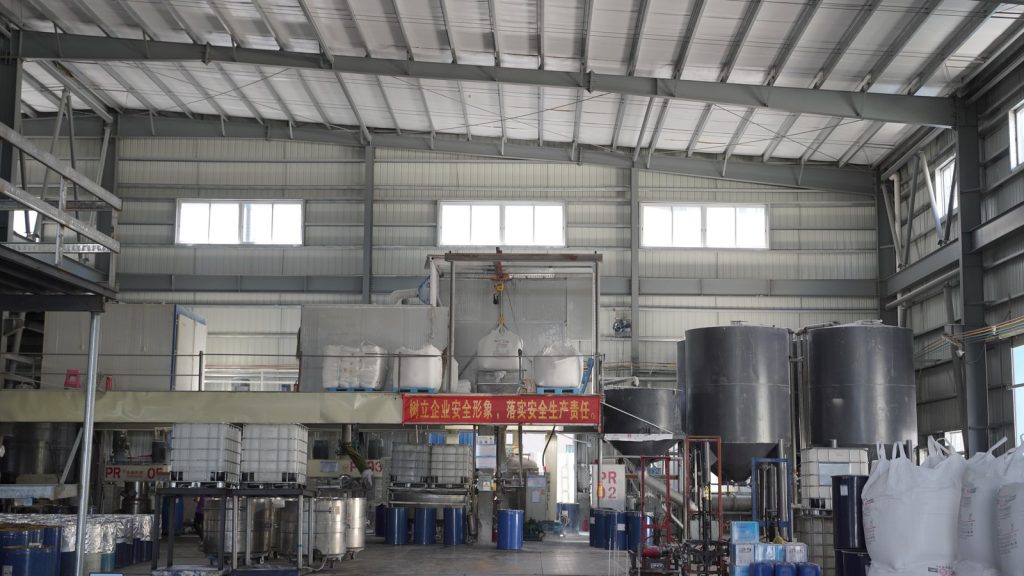
Durability testing for the weatherproof range is carried out to GB/T 14683-2017, with the structural grade tested to GB 16776-2025 by CTC Suzhou. The factory holds ISO 9001:2015 valid to 2029-01-25. We do not publish a service-life figure in years — service life depends on joint design, movement and bond-face preparation, so the joint design is what determines it, not the sealant alone.
Ordering reference
| Commercial term | What PIROI offers |
|---|---|
| MOQ | OEM & private label from 1,000 pcs per model |
| Trial order | Mixed-model trial orders from 3,000 pcs total; stock items from 500 pcs |
| Lead time | Typically 15–25 days after artwork and sample approval |
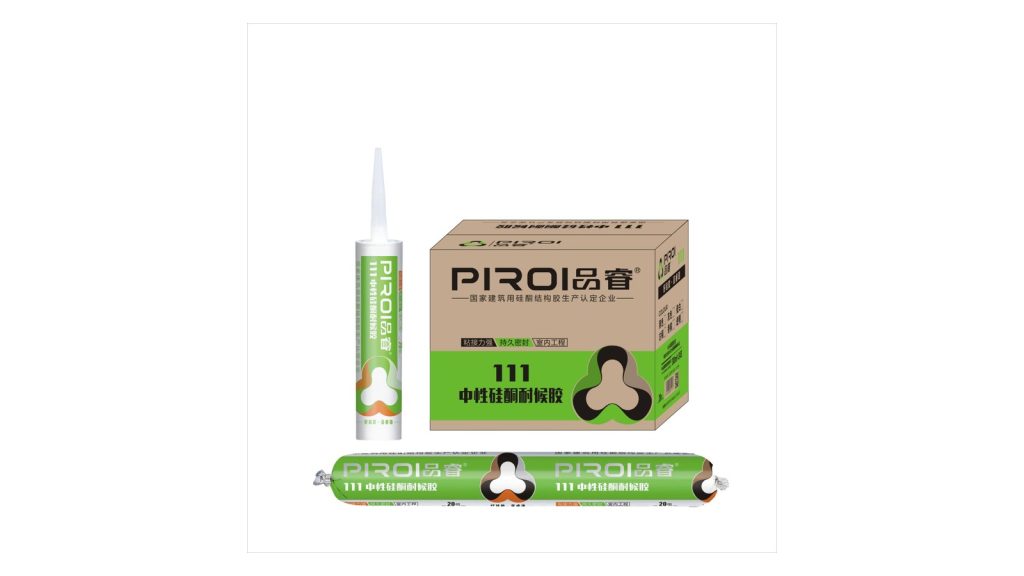
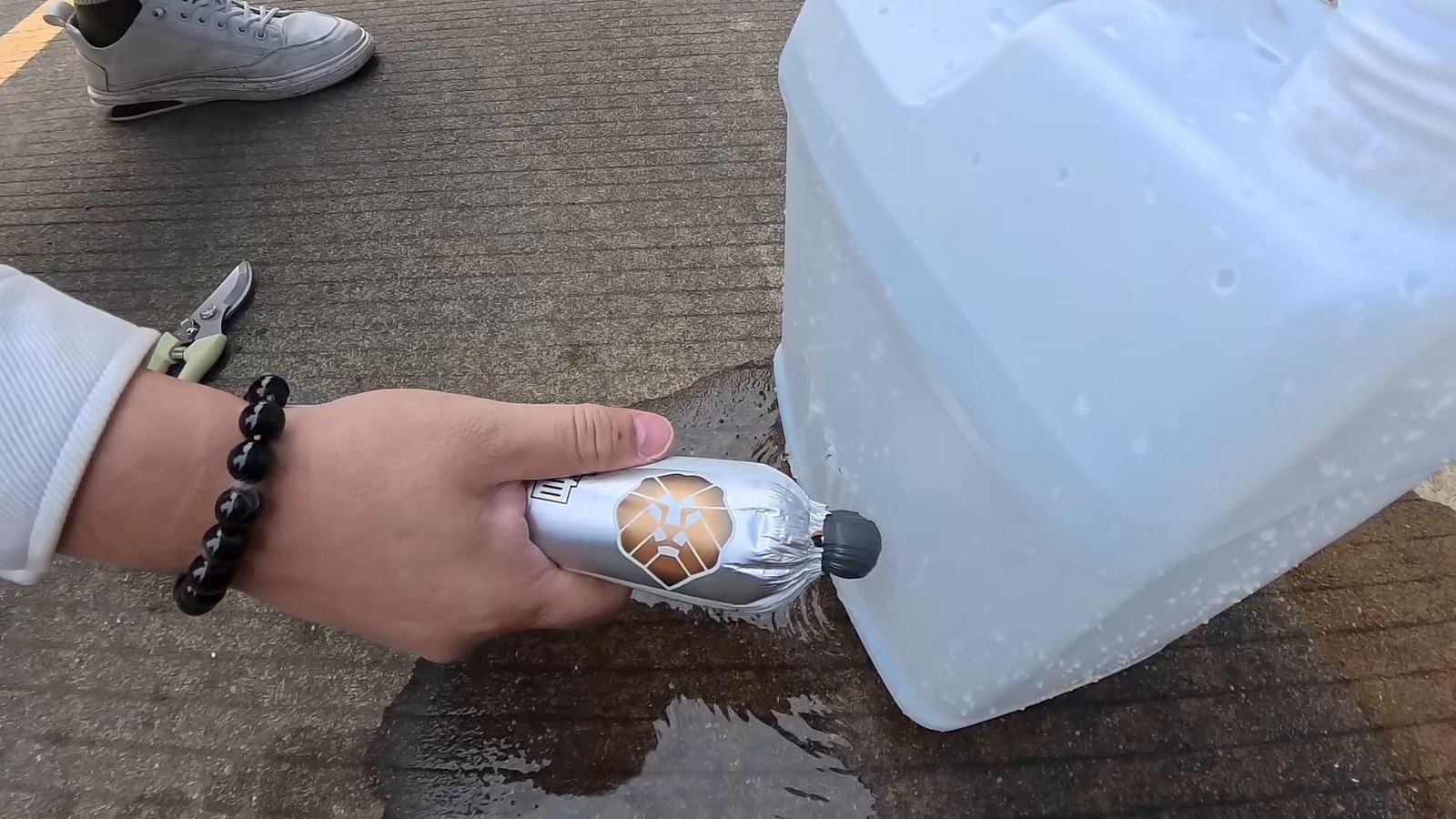
| Packaging | 300 mL cartridges and 590 mL foil sausage packs |
| Private label | Custom cartridge artwork and colour matching supported |
| Sample | Free substrate adhesion and staining test on your own sample |