What to Buy for uPVC, Aluminium, Timber and RV Frames
- The frame material decides the sealant, not the brand. The same window can need a neutral cure on aluminium, a primerless grade on uPVC and a non-staining grade on timber.
- Acetoxy sealants are the classic mistake on window frames. The acetic acid they release corrodes bare aluminium and can attack powder coating edges and concrete reveals. On frames, neutral cure is the default answer.
- “Best” is a number, not an adjective. Compare movement class, tensile adhesion and tack-free time against your production method — our window range spans 0.36 to 0.41 MPa tensile adhesion and 0.8 to 1.2 h tack-free.
- Interior joints and exterior joints are different jobs. Interior perimeter sealing is about air and draught; exterior perimeter sealing is about water, UV and thermal cycling.
- On a factory line, cure speed is a cost line. A fast-cure grade reaching 51% cure in 24 hours lets frames be handled and packed sooner than a standard grade at 21%.
Ask ten suppliers for the “best silicone sealant for windows and doors” and you will get ten answers, because the question is missing the only variable that matters: what the frame is made of. A sealant that performs flawlessly on a uPVC casement can corrode a mill-finish aluminium frame, stain an oak reveal, or fail on a powder-coated mullion if the coating is not prepared.
This guide works through window and door sealing frame by frame, using the test data from our own GB/T 14683-2017 reports, and shows how to write the requirement into a purchase order so that what arrives is what you specified.
1. The Frame Material Decides the Sealant
Window frames present five different bonding surfaces and three different chemical risks. This table is the fastest way to narrow the choice:
| Frame material | Main risk | Cure system | Recommended grade |
|---|---|---|---|
| uPVC / PVC-U profile | Plasticiser migration from the profile can soften a sealant; over-painting traps moisture | Neutral, primerless | PR-333, PR-111 |
| Aluminium (anodised or powder-coated) | Acetoxy releases acetic acid and corrodes bare aluminium; some coatings need a primer | Neutral only | PR-333, PR-8800 |
| Timber / wood-composite | Staining of absorbent grain; movement of the timber itself | Neutral, non-staining | PR-666 |
| Steel and galvanised sub-frames | Corrosion at cut edges; compatibility with the coating | Neutral | PR-111 |
| Glass-to-frame joints | None for the glass; the frame is the limiting surface | Acetoxy or neutral | PR-618, PR-333 |
If you only remember one line from this page: on window frames, use neutral cure. The two situations where acetoxy is still the better answer are all-glass assemblies and high-speed lines where the 0.2 h tack-free time of a fast-cure acetoxy grade is worth more than the corrosion risk it avoids by not being there.
2. What “Best” Should Mean in Your Specification
Buyers often specify “best quality silicone sealant” and then compare only price. Four measurable properties decide whether a window sealant performs:
| Property | Why it decides the outcome | Typical value, our range |
|---|---|---|
| Movement capability | Window joints move with thermal cycling and wind load; a low-movement sealant tears | Class 25HM (PR-520); 92% elastic recovery (PR-333, PR-888) |
| Tensile adhesion | Resistance to being pulled off the frame or the reveal | Type M 0.36–0.41 MPa |
| Tack-free time | Determines handling and packing time on a production line | 0.8 h (PR-8800) to 1.2 h (PR-333) |
| Extrusion rate | Determines how many frames one cartridge finishes | 190 mL/min (PR-8800) to 516 mL/min (PR-666) |
Extrusion rate is the most under-specified number in the industry. A 516 mL/min grade empties a 300 mL cartridge in about 35 seconds of trigger time; a 190 mL/min grade takes nearly twice as long. Over a shift, that difference is labour.
3. uPVC Windows: Primerless and Plasticiser-Safe
uPVC is the most forgiving frame material and the most common one in export markets, but it has one specific hazard: plasticisers migrating out of the profile can interfere with adhesion and can also cause some silicone sealant formulations to soften or discolour.
- Specify a neutral-cure grade that bonds without a primer. Our PR-333 (density 1.56 g/cm³, tack-free 1.2 h, extrusion 210 mL/min, tensile modulus 0.7 MPa, elastic recovery 92%) is the workhorse for window and door perimeters.
- Clean the profile, do not sand it. uPVC is bonded by chemical adhesion to a clean surface; abrading the profile can expose more plasticiser.
- Do not paint over the joint immediately. Solvent in fresh paint can disturb a sealant that has not yet fully cured.
For white uPVC the colour question also comes up: a neutral-cure sealant can be supplied clear or colour-matched, and the “what colour is neutral” confusion is only about the packaging label, not the cured bead. Full frame-material guidance is on the window and door sealing application page.
4. Aluminium Frames: Where Acetoxy Does Damage
Aluminium is where the wrong chemistry leaves visible, permanent evidence. An acetoxy sealant releases acetic acid as it cures; on bare, mill-finish or cut-edge aluminium that acid attacks the metal, producing white corrosion product and, over time, a loosened bond line.
Practical rules for aluminium windows and doors:
- Neutral cure, always — including on anodised profiles and on the cut ends of thermally broken frames where bare metal is exposed.
- Check the coating. Powder-coated and PVDF-coated profiles are a different bonding surface from bare aluminium; adhesion should be confirmed on the actual finish before a large order.
- Allow for differential movement. Aluminium expands more than uPVC over the same temperature change, so joint width and movement class matter more, not less.

5. Timber and Composite Frames: The Staining Question
Timber adds two variables that metal and plastic do not have: an absorbent surface that shows every stain, and a material that keeps moving with humidity long after installation.
- Staining is a formulation issue. A standard weatherseal can leave an oil halo in porous timber and stone; a non-staining grade is formulated to avoid it. The same chemistry is used for natural stone, where staining is even more visible — see our stone and marble sealing notes.
- Movement is larger. Timber swells and shrinks across the grain, so the joint has to be designed for wider movement than a uPVC joint of the same size.
- Finish first, then seal. Sealant applied before the final coating can wick finish into the joint line and look dirty within a season.
PR-666 (neutral weatherproof, tack-free 1.2 h, extrusion 516 mL/min, report 2025ME156) is the grade we recommend for timber and composite perimeters, and for RV and caravan windows where the same staining and movement concerns apply in a much harsher vibration environment.
6. Interior and Exterior Joints Are Different Jobs
| Joint | What it must stop | What to specify |
|---|---|---|
| Interior perimeter (frame to plaster reveal) | Draughts, dust, air leakage; appearance | Neutral, paintable-compatible, low odour |
| Exterior perimeter (frame to masonry or cladding) | Driving rain, UV, thermal cycling, movement | Neutral weatherproof with UV stability — PR-638, PR-666 |
| Glass to frame (glazing bead) | Water and air at the glazing line | Acetoxy or neutral depending on frame material |
| Sliding door track and end dams | Standing water, abrasion from the leaf | Fast-cure neutral with high recovery — PR-8700 |
The exterior joint is where most failures happen, and almost always for the same reason: the joint was designed as a gap to be filled rather than as a moving joint with a width-to-depth ratio. That design rule is covered in detail in our article on window and door joint design and depth ratio, and it matters more than the product choice in most failures we are asked to diagnose.
7. Fast Cure on the Production Line
For fabricators, cure speed is a throughput decision. Two of our window grades are built for it:
| Model | Tack-free | Extrusion rate | Adhesion | Where it pays |
|---|---|---|---|---|
| PR-8800 Fast Cure Door & Window | 0.8 h | 190 mL/min | Type M 0.36 MPa / Type G 0.35 MPa | Lines that handle and pack frames the same shift |
| PR-8700 Fast Cure for Sliding Doors | 1.2 h | 459 mL/min | Type-grade neutral | Sliding door assembly; 51% cure degree at 24 h against 21% for a regular silicone |
The 51% versus 21% comparison is the number to quote internally when justifying a fast-cure grade: it is not a marketing claim but a measured cure degree at 24 hours, and it is what allows a frame to be moved, stacked or shipped without the bead being disturbed. Sliding door specifics are on the sliding doors page, and the product itself is PR-8700.
8. How to Seal Windows and Doors: Five Steps That Decide the Result
- Confirm the joint width and depth. Measure the actual gap after the frame is fixed, not from the drawing.
- Prepare both surfaces. Dry, dust-free, oil-free. On coated aluminium, confirm adhesion on a test piece of the same finish.
- Back the joint where required. A joint that is too deep for its width will not move as designed.
- Tool the bead. Tooling forces the sealant against both substrates and removes trapped air. Do it within the tack-free window — 0.8 h on a fast-cure grade is not much time.
- Do not disturb the joint. Full cure is 2–4 mm per 24 hours from each exposed surface, not a matter of minutes.

9. Five Mistakes That Cause Window Sealant Callbacks
- Acetoxy on aluminium. The single most common and most visible error.
- Sealing over old sealant. Nothing bonds to cured silicone, including new silicone. The old bead has to be cut out.
- Wrong joint proportions. A deep, narrow joint tears; a shallow, wide joint sags.
- Applying to a damp or dusty surface. Adhesion fails at the interface, and the failure appears months later.
- Buying on price without the report. Two silicone sealant cartridges that look identical can be 0.36 MPa and 0.85 MPa products with different standards behind them.
10. Ordering Window and Door Sealant in Bulk
When you place an enquiry for window and door silicone sealant, send these five items and the quotation will be usable the first time:
- Frame material and finish (uPVC, anodised aluminium, powder-coated, timber, steel)
- Joint type (perimeter, glazing bead, sliding track) and approximate joint dimensions
- Standard required (GB/T 14683-2017 is the usual basis for weatherseals)
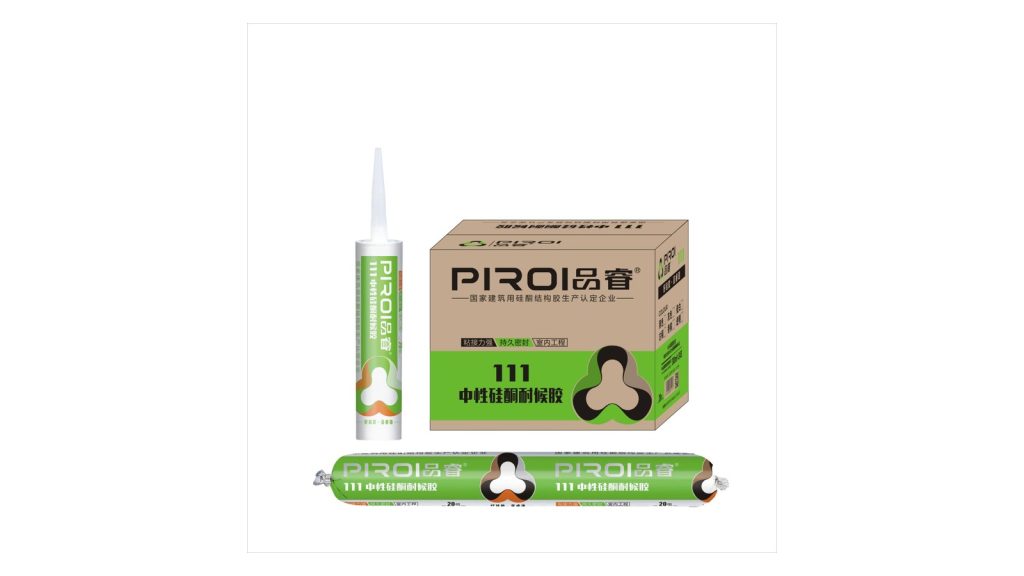
- Packaging format (300 mL cartridge or 590 mL sausage) and annual volume
- Whether OEM or private-label printing is required
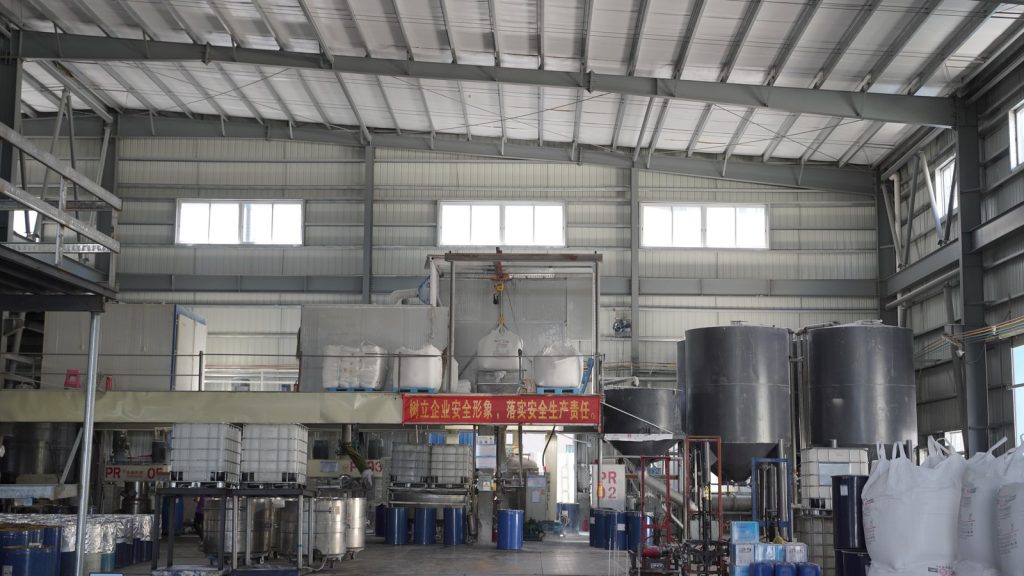
Every model on this page carries a report number that can be verified with the issuing laboratory, and we supply samples for adhesion and staining trials before a first order. The complete range, with density, tack-free time, extrusion rate and modulus for all 17 models, is listed in one table on our specifications page; for OEM and private-label terms, see the factory page.