Every bathroom sealant on the market says “anti-mould”. Almost none of them can tell you what that claim is measured against, who measured it, or how long the sample was held at high humidity before the result was read. That gap is where a sanitary joint fails two winters after installation, and it is the first thing a buyer should close when qualifying a sanitary silicone sealant supplier.
This guide sets out what the mould claim actually consists of, what a test report has to show for the claim to mean anything, and the commercial terms that decide whether the grade is worth stocking.

What “anti-mould” is measured against
A mould resistance claim is only meaningful with four pieces of information attached to it: the standard it was tested to, the grade awarded, the organisms used, and the exposure conditions. Remove any one of them and the claim becomes marketing copy.
Our sanitary grade, PR-218, is tested to JC/T 885-2016, the Chinese standard for anti-mould sealants, and returns Grade 0 — no growth at 50x magnification. The test itself is not a quick swab: nine strains are inoculated, including Aspergillus niger, Penicillium citrinum and Trichoderma viride, and the samples are held for 28 days at more than 90% relative humidity and 28°C before the result is read.
| What to ask for | Why it decides the claim | PR-218 result |
|---|---|---|
| Standard and grade | Without a grade, “anti-mould” has no scale | JC/T 885-2016, Grade 0 |
| Test organisms | Household mould is a mixed population, not one species | 9 strains incl. A. niger, P. citrinum, T. viride |
| Exposure conditions | Short, dry tests pass almost anything | 28 days, >90% RH, 28°C |
| Testing laboratory | An in-house pass is not evidence | Guangzhou Institute of Microbiology, CNAS / CMA accredited |
If a supplier cannot produce the report behind the grade, treat the claim as unverified. Our guide on how to read a silicone sealant test report walks through what each field on a CNAS/CMA report should contain.
Why a wet room forces a neutral cure
Sanitary joints sit against ceramic, glazed porcelain, acrylic trays, anodised aluminium and, increasingly, engineered stone. Acid-cure silicone releases acetic acid while it is still wet, and that by-product is aggressive against metals and against the resins in composite surfaces. A sanitary grade is therefore a neutral-cure position by default — oxime or alkoxy, not acetoxy.
The chemistry behind that choice, and how each cure system behaves in heat and humidity, is covered in our cure chemistry guide and in the tropical-climate comparison on neutral versus acetoxy selection.
What the grade has to do beyond killing mould
A sanitary joint has two jobs at once, and the mould package cannot be allowed to compromise the second one. The bead has to stay elastic through daily thermal cycling from hot shower water to cold tile, and it has to keep adhesion to the tray, the tile edge and the frame without shrinking away from the fillet.
- Elastic recovery — movement between a tray and a tiled wall is small but constant; a stiff bead cracks at the fillet.
- Adhesion on wet substrates — tiles and trays are rarely bone dry on site; the grade has to tolerate it.
- Non-corrosive cure — protects taps, frames, trims and stone surfaces around the joint.
- Colour stability — a white bead that yellows reads as a failed joint even when the seal is intact.
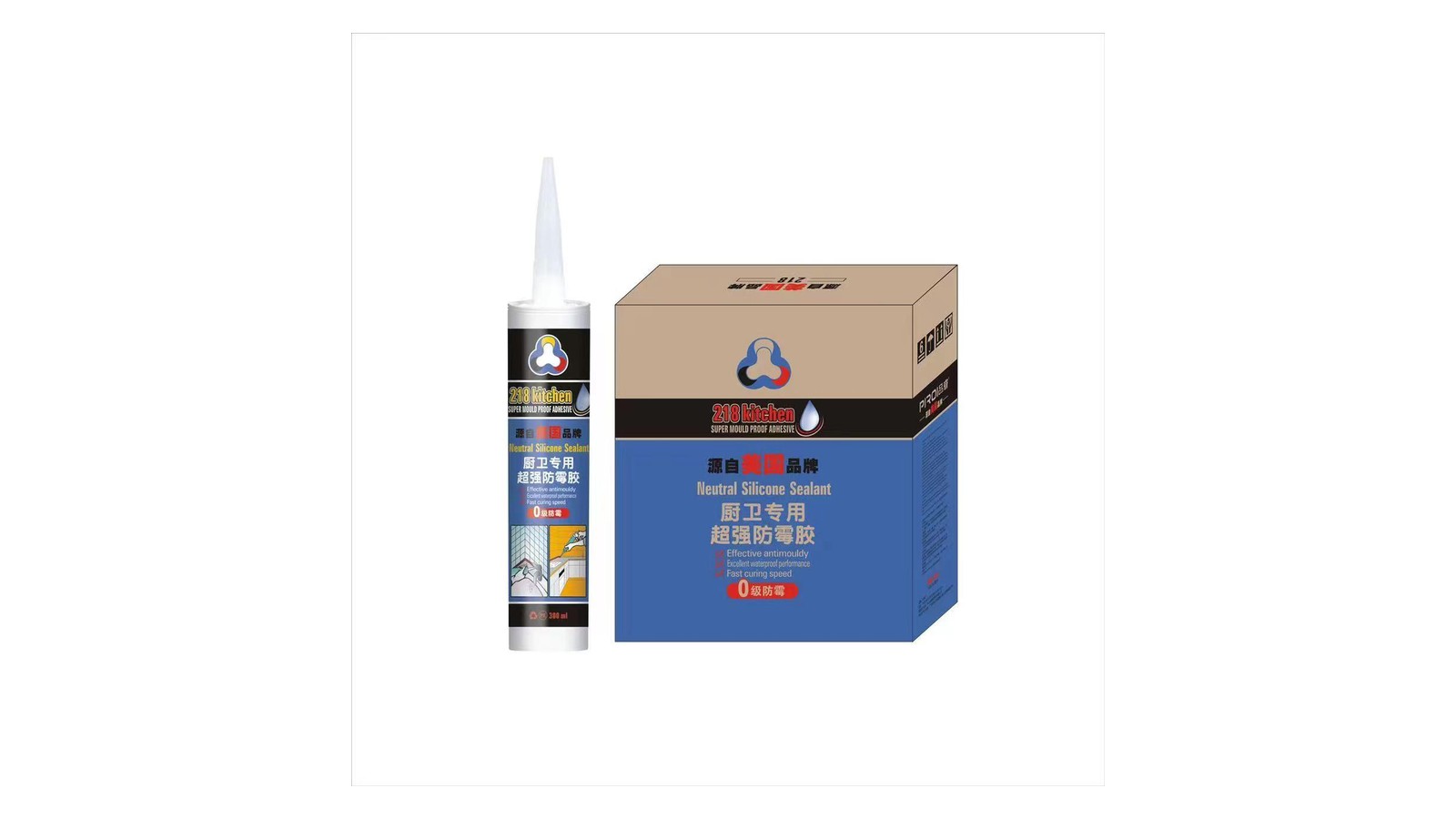
PR-218 is a 300mL cartridge grade with a 12-month shelf life from production date and non-hazardous transport classification. Full specifications sit on the PR-218 sanitary silicone sealant page, and the wider sanitary range is grouped under the sanitary product series and the sanitary sealant for bathroom and kitchen.
Qualifying a sanitary silicone sealant supplier
- Ask for the mould test report, not the label — grade, strains, duration and the laboratory name must all be visible.
- Confirm the cure system in writing — oxime or alkoxy, and confirm the by-product.
- Check who manufactures — a trading company cannot adjust a formula when your market’s humidity demands it.
- Ask for a batch CoA from a shipment already delivered, not a sample batch prepared for the enquiry.
- Bond a test joint in the actual substrate combination and leave it in a wet room; mould failure and adhesion failure both show within weeks.
OEM, private label and the commercial terms
Sanitary grades are usually bought as a private-label line rather than as a catalogue item, so the terms matter as much as the chemistry:
- MOQ — 1,000 cartridges per model for private label, with mixed-model orders from 3,000 cartridges.
- Stock colours — available from 500 cartridges where the shade is a standard one.
- Lead time — typically 15 to 25 days after artwork approval.
- Samples — supplied before mass production so the mould grade and the colour can be checked on your own substrates.
- OEM support — formula adjustment, cartridge and label artwork, and export documentation handled in-house.
The full terms are set out in our guide to private label MOQ and lead time.
Factory verification before the first order
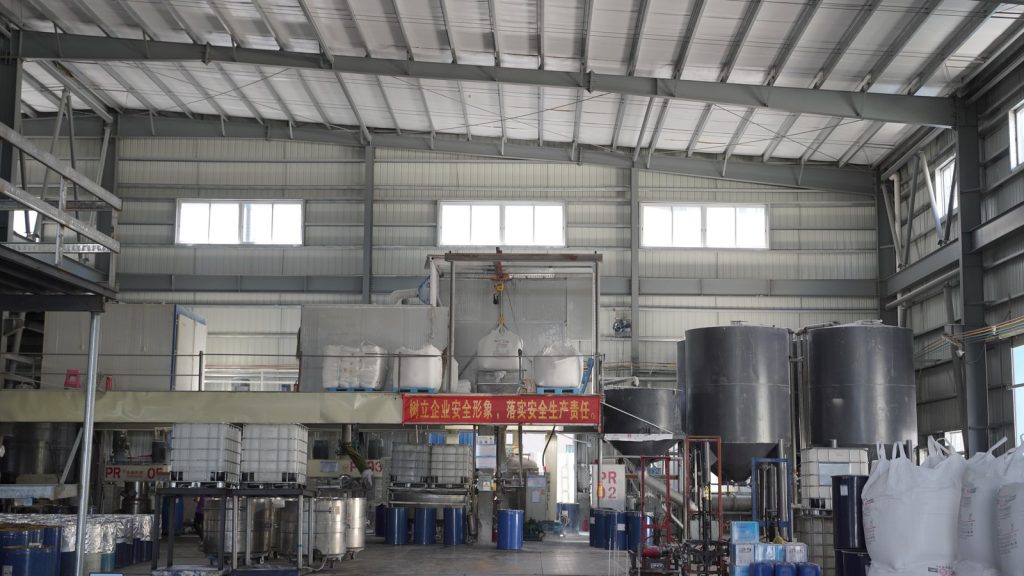
The mould claim is a laboratory result, but the consistency of that result is a factory question. Our production base in Zhongshan, Guangdong covers 20,000 m² with 8 automated filling lines, an in-house R&D laboratory and full batch traceability: every batch is coded, tested before release and archived for 18 months with its own Certificate of Analysis, so a cartridge can be traced back to its raw material lot.
The plant operates under ISO 9001:2015; the certificates and the scope of registration are listed on our certifications page, and the production detail is on the factory page. The wider range of grades sits on the full silicone sealant range.
Send the substrate combination, the cartridge size and the colour you need, and our technical team will confirm whether the sanitary grade fits the joint before an order is placed — or start from the PIROI site for the rest of the range.