Key Takeaways for Southeast Asian Contractors
- Neutral silicone sealant releases non-corrosive alcohol/oxime byproducts, making it essential for aluminum frames, alkaline substrates (concrete), and laminated glass.
- Acetoxy silicone sealant releases acetic acid during curing, curing faster on non-porous glass and glazing applications, but will aggressively corrode metals and mirror coatings.
- In tropical regions (Vietnam, Thailand, Malaysia, Indonesia) where humidity exceeds 85%, neutral cure formulations engineered with fungicide prevent premature bond hydrolysis and mold growth.
- Architectural structural curtain walls require neutral structural silicone sealant conforming strictly to
GB 16776andASTM C920 Type S.
Selecting the proper chemical curing system for architectural silicone sealants is often the deciding factor between a building facade that lasts twenty years and one that fails during its first monsoon season. In Southeast Asian climates, characterized by year-round ambient temperatures of 32°C–38°C, sustained relative humidity above 80%, and intense UV exposure, standard sealant selection guidelines developed for European or North American conditions cannot be applied without adjustment.
1. The Fundamental Chemistry: Curing Mechanism & Byproducts
All room-temperature vulcanizing (RTV) silicone sealants cure by reacting with ambient atmospheric moisture. However, the chemical group attached to the polymer backbone determines the volatile byproducts released during the crosslinking reaction:
Neutral Cure Silicone Sealant (Alkoxy or Oxime)
Neutral cure formulations react with atmospheric moisture to release neutral compounds, typically methanol or methyl ethyl ketoxime (MEKO). Because these byproducts are chemically benign and non-acidic, neutral sealants provide universal adhesion without attacking reactive building materials.
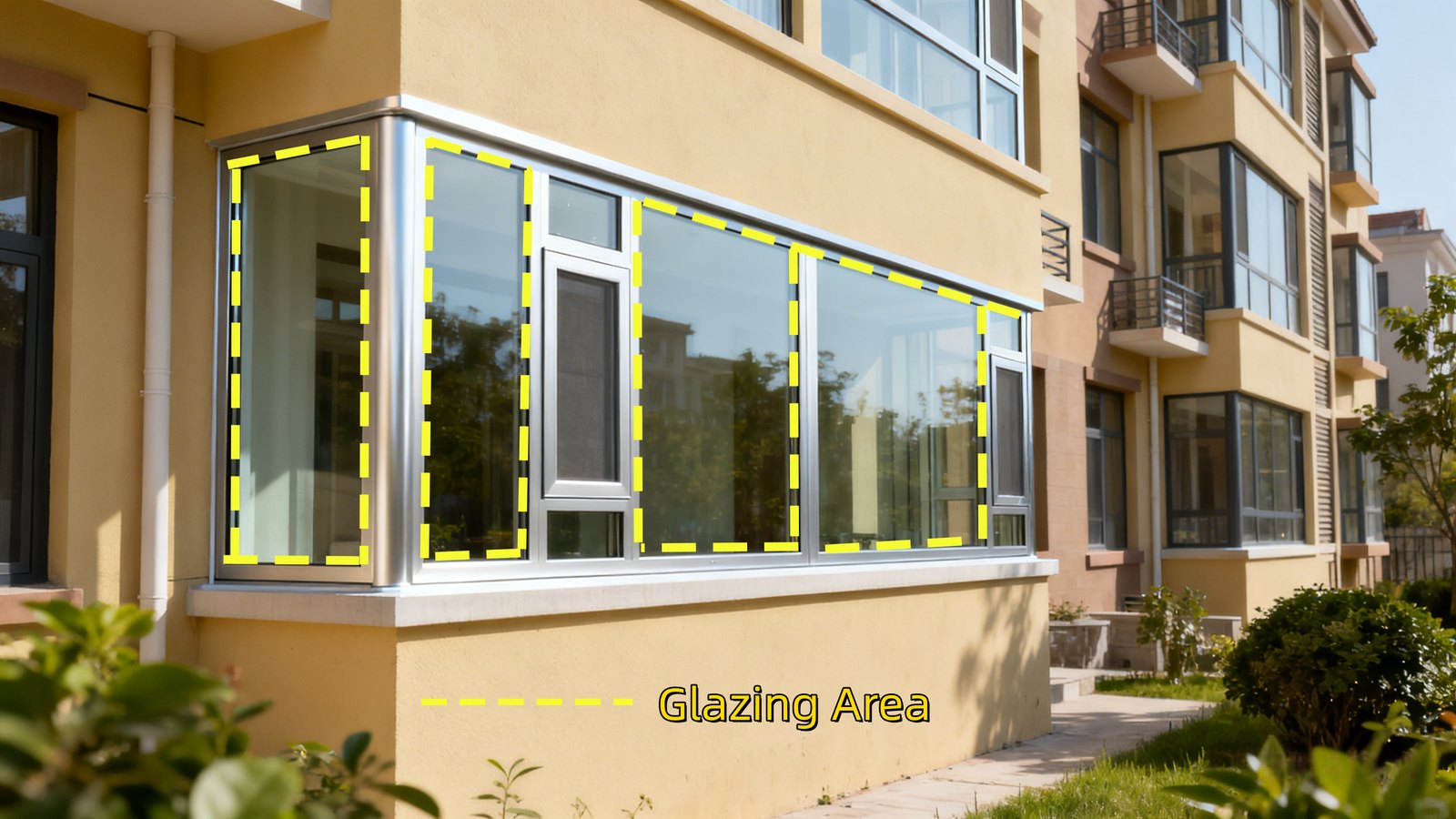
They are the industry standard for curtain wall & facade structural glazing, aluminum window and door perimeter sealing, and expansion joints in silicone sealant for precast concrete panels.
Acetoxy Silicone Sealant (Acid Cure)
Acetoxy sealants contain acetoxysilane crosslinkers that release acetic acid (giving off a pungent vinegar-like odor) as they vulcanize. Acetic acid is a fast-leaving group, which confers rapid skin formation and high tensile strength to the cured elastomeric matrix.
However, the release of active acid creates severe technical limitations: it oxidizes raw metals (copper, brass, zinc, galvanized steel), etches cementitious mortar, and degrades PVB interlayers in laminated architectural glass.
“Under 85% relative humidity, acetoxy sealant cures up to 40% faster on glass surfaces. However, applying acetoxy sealant to bare aluminum frames or structural curtain wall brackets guarantees adhesion failure within 12 to 18 months due to interfacial acid etching.”
2. Engineering Comparison: Neutral vs Acetoxy Formulations
The table below summarizes the critical physical, chemical, and operational differences between neutral and acetoxy silicone sealants under tropical conditions:
| Performance Factor | Neutral Silicone Sealant | Acetoxy Silicone Sealant |
|---|---|---|
| Curing Byproduct | Alcohol / Oxime (Non-corrosive, mild odor) | Acetic Acid (Vinegar odor, corrosive) |
| Substrate Compatibility | Glass, aluminum, concrete, stone, stainless steel, PVCu | Glass, ceramics, non-oily timber, select plastics only |
| Corrosion Risk | Zero risk on anodized or powder-coated metals | Severe risk on bare aluminum, steel, brass & silver |
| Skin-Over Time (25°C, 50% RH) | 15 – 25 minutes | 5 – 12 minutes (Rapid skinning) |
| Tropical Adhesion Retention | High (Hydrolysis-resistant polymer backbone) | Moderate (Degrades quickly on alkaline contact) |
| Standard Movement Capability | ±25% to ±50% (Class 25 / Class 50) | ±12.5% to ±20% |
| Primary Application Standard | GB 16776 / ASTM C920 Class 25/50 |
GB/T 14683 / ASTM C920 Class 12.5 |
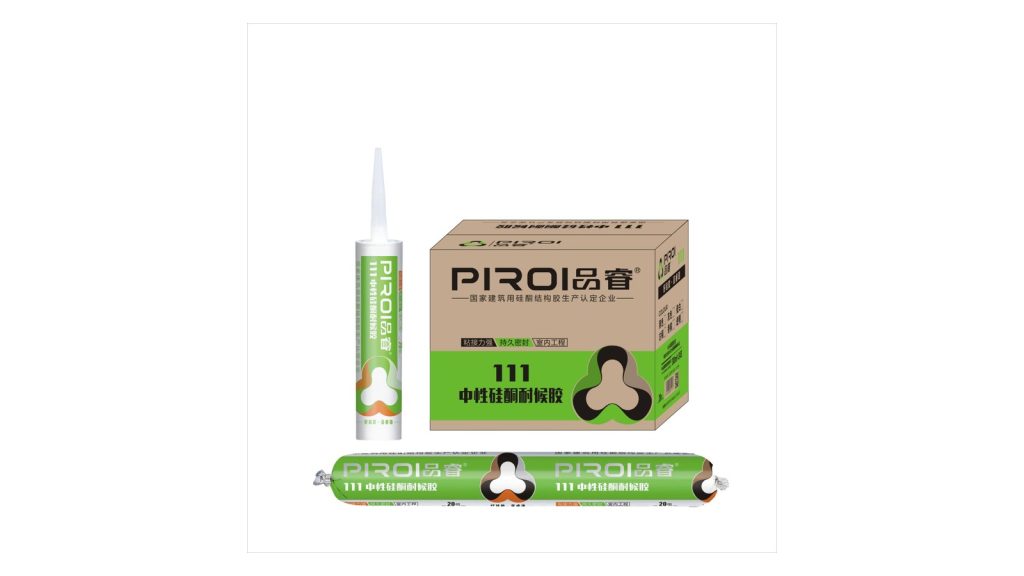
| Typical Product Code | PIROI PR-999 / PR-333 | PIROI PR-618 |
3. Substrate Compatibility Guide for Southeast Asia
Before issuing site specifications, engineering teams must evaluate substrate reactivity. Misapplying an acid-cure product to sensitive architectural components is a primary driver of project claims:
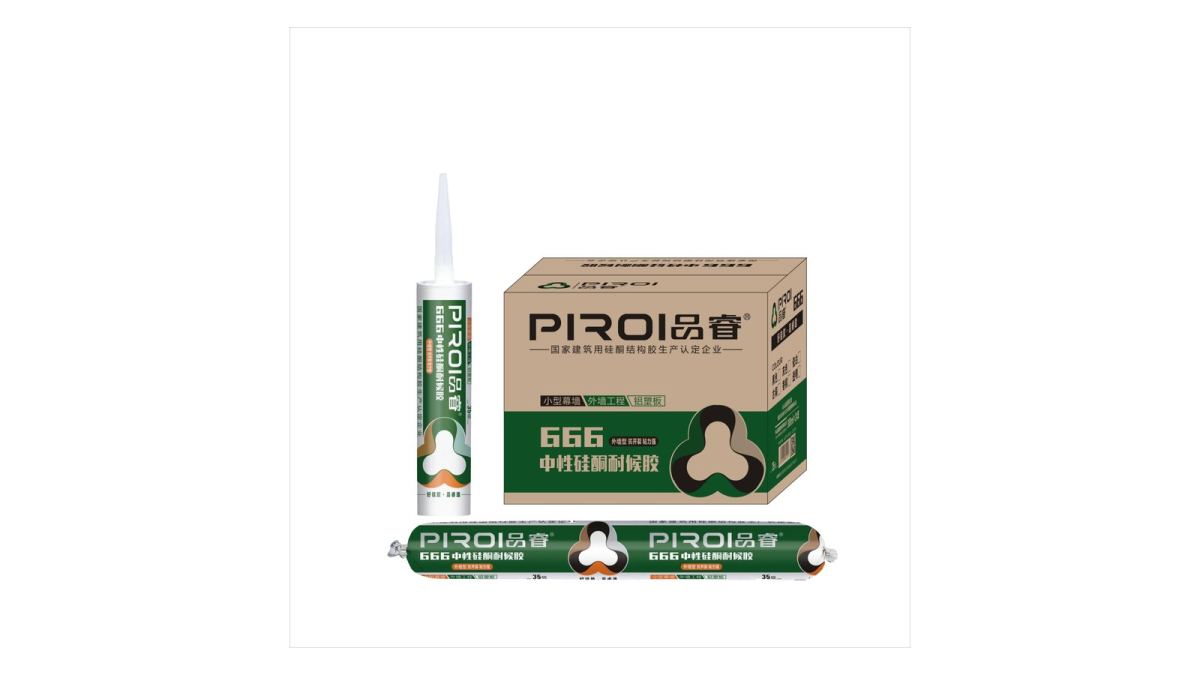
- Structural Glazing & Curtain Walls: Must always specify Neutral Structural Silicone Sealant (such as
PR-999). Never use acetoxy sealants for structural load-bearing joints. - Anodized & Powder-Coated Aluminum: Neutral cure is strictly mandated. Acetic acid reacts with microporous aluminum oxides, causing joint peeling under monsoon rain.
- Bathroom Mirrors & Stainless Steel: Acetoxy products eat through reflective silver backing coatings within weeks. Specify neutral sanitary formulations with Grade-0 mildew resistance.
- Interior Glass Showcase & Aquarium Fabrication: Acetoxy sealant (such as
PR-618) is superior and cost-effective due to its fast cure speed and glass bond strength.
4. Best Practice Joint Preparation: 4-Step Site Installation
Even the highest-grade neutral sealant will fail if joint design or surface cleanliness is compromised. Contractors should strictly enforce the following sequence:
Two-Cloth Solvent Cleaning Technique
Wipe the bonding substrate with a clean, lint-free cotton cloth saturated with solvent (IPA or MEK). Immediately follow with a second dry, clean cloth before the solvent evaporates. Never pour solvent directly onto joints.
Backing Rod Insertion & Joint Dimensioning
Install a closed-cell polyethylene (PE) foam backing rod. Maintain an engineering joint aspect ratio of 2:1 width-to-depth (minimum joint depth 6mm, maximum 12mm) to permit unrestrained thermal expansion movement.
Continuous Push-Bead Application
Cut the cartridge nozzle at a 45° angle matched to joint width. Push the sealant cartridge forward at an even rate—never drag the nozzle—ensuring the cavity is filled with zero air pocket entrainment.
Tooling Within Working Time & Masking Removal
Tool the joint with a rounded concave spatula within 10 minutes of extrusion to wet out the joint flanks. Strip protective masking tape immediately after tooling before initial skin formation.
5. Common Mistakes and How to Avoid Them
Through field audits of architectural joint failures across Vietnam and Malaysia, our technical service engineers have identified three recurring errors:
- Applying Sealant Over Wet Substrates: Tropical morning condensation traps moisture within concrete and aluminum cavities. Sealing damp joints creates steam bubbling when afternoon sun raises surface temperatures above 50°C.
- Using Three-Sided Adhesion: Failing to install a bond-breaker tape or backing rod causes the sealant to adhere to the joint bottom. When the building joint moves, the sealant tears down the center due to tri-axial stress.
- Substituting Acetoxy Sealant for Fire-Rated Partitions: Acetoxy formulations do not carry intumescent or smoke-blocking polymers. Always specify certified
Fire-Rated silicone sealant(such asPR-238) for code-compliant penetration barriers.
6. Frequently Asked Questions (Technical FAQs)
Q: Can neutral silicone sealant cure properly during Southeast Asia’s rainy monsoon season?
Yes. In fact, neutral RTV silicone sealants cure slightly faster at 80%+ RH because moisture drives the crosslinking mechanism. However, application must occur when the substrate surface is completely dry and rain is not forecast for at least 4 hours.
Q: Is a primer required when bonding PIROI neutral sealants to aluminum frames?
For standard architectural powder-coated and anodized aluminum, PIROI PR-999 and PR-333 achieve primerless adhesion once cleaned with solvent. For specialized fluorocarbon (PVDF) finishes, field peel testing is recommended to confirm primer requirements.
Q: How does FORM E certificate assist ASEAN importers purchasing PIROI sealants?
Under the China-ASEAN Free Trade Agreement (ACFTA), PIROI supplies original FORM E certificates of origin with every container shipment. This permits customs clearance at 0% preferential import tariff in Vietnam, Thailand, Malaysia, and Indonesia instead of standard MFN duties (typically 5%–10%).
7. Conclusion & Engineering Recommendations
For large-scale exterior construction, structural glazing, window and door fabrication, and coastal high-humidity projects, neutral silicone sealant is the mandatory choice to prevent corrosion, ensure substrate compatibility, and guarantee long-term movement absorption.
If you are still deciding whether silicone is the right material for the joint at all, see our guide to what silicone sealant can and cannot do, which covers adhesive strength, substrate compatibility and service life.