
Before a container of silicone sealant leaves the factory, the document most buyers ask for after the test report is the SDS — sometimes still called MSDS. The two names refer to the same document type, and treating it as a formality is one of the most common mistakes importers make. A generic or outdated SDS tells you nothing about the specific goods in your order, and it can fail customs or port checks in destination markets.
This guide explains what a silicone sealant SDS contains, which sections a B2B buyer should actually read, and what a supplier’s SDS reveals about how they run quality control.
SDS and MSDS: the same document under two names
MSDS (Material Safety Data Sheet) is the older term. SDS (Safety Data Sheet) is the standardized format defined by the Globally Harmonized System of Classification and Labelling of Chemicals (GHS), which most exporting countries have adopted. When a supplier sends you an “MSDS” today, it should follow the 16-section GHS structure — if it does not, the document is either very old or was never professionally prepared.
For buyers, the practical difference is nil: both terms describe the safety and handling document for the product. What matters is whether the document is current, product-specific, and complete.
The 16 sections of a GHS-format SDS
A compliant SDS follows the GHS 16-section structure:
| Section | Content | Buyer relevance |
|---|---|---|
| 1. Identification | Product name, manufacturer, emergency contact | Must name the actual producer |
| 2. Hazard identification | GHS classification, label elements | Customs and port handling |
| 3. Composition | Chemical identity, concentrations | Confirms what you are buying |
| 4. First aid | Measures by exposure route | Worksite handling |
| 5. Fire-fighting | Extinguishing media, hazards | Warehouse compliance |
| 6. Accidental release | Spill response | Worksite handling |
| 7. Handling and storage | Storage temperature, incompatibilities | Directly affects shelf life |
| 8. Exposure controls | PPE, ventilation, exposure limits | Worksite safety |
| 9. Physical and chemical properties | Appearance, density, cure chemistry | Cross-check against tech data |
| 10. Stability and reactivity | Stability, incompatible materials | Storage planning |
| 11. Toxicology | Health effects data | Regulatory review |
| 12. Ecology | Environmental fate | Some markets require it |
| 13. Disposal | Waste treatment | Importer obligations |
| 14. Transport | UN number, packing group | Freight booking and customs |
| 15. Regulatory | Applicable laws per market | Import compliance |
| 16. Other | Revision date, issuer | How current is the document |
Any silicone sealant SDS missing sections, renumbering them, or replacing them with marketing text is not GHS-compliant.
The sections a buyer should actually read
All 16 sections exist for a reason, but three of them carry direct commercial weight for an importer:
- Section 3 (Composition): confirms the cure chemistry and base polymer. For silicone sealant this is where you verify you are getting a neutral-cure or acetoxy product as ordered, not a substitute.
- Section 7 and 10 (Handling, storage, stability): these set the storage conditions that determine whether the product arrives usable. They should match what the supplier tells you about shelf life and storage and rotation planning.
- Section 14 (Transport): the UN classification determines how your forwarder books the shipment and what paperwork customs expects. If a sealant SDS claims “not regulated” for sea freight, that should match the actual formulation — this is a common copy-paste error in low-quality documents.
What your supplier must provide, and when
For an exporting manufacturer, the SDS is not an optional courtesy. A working B2B process looks like this:
- The SDS is available on request before you place a trial order — no waiting, no “we will send it with the shipment.”
- The document names the manufacturing entity, with an address and contact channel, not a trading-company shell.
- The version is current: Section 16 carries a revision date, and the product name matches the quotation exactly, including model number.
- Each model in your order has its own SDS. A 17-model catalogue needs 17 documents, not one generic sheet with a product list attached.
If a supplier hesitates on any of these points before payment, the hesitation will not improve after payment.
Red flags in a supplier’s SDS
Buyers reviewing an SDS for the first time should check for these warning signs:
- No revision date in Section 16, or a date several years old.
- Generic hazard text that could describe any chemical product — real SDS documents are specific to the formulation.
- Manufacturer name mismatch: the SDS names a company other than the one on the quotation, invoice, or export documents.
- Missing transport section or a transport classification that contradicts the freight forwarder’s requirements.
- Translation artifacts: inconsistent product names between the English document and the packing labels, usually a sign the document was machine-translated and never reviewed.
None of these are paperwork trivialities. They are usually the first visible symptom of a supplier whose document control — and by extension, batch quality control — is weak.
SDS, COA and test report: which document proves what
Importers often receive these three documents bundled and assume they overlap. They do not:
| Document | Proves | Covers |
|---|---|---|
| SDS / MSDS | Safe handling, transport classification, composition | Every batch, model-level |
| COA (Certificate of Analysis) | The specific batch meets spec | The batch you receive |
| Test report | Performance against a standard (GB, ASTM) | The model, at test date |
A complete buyer’s file for a silicone sealant order has all three: the test report before qualification, the SDS for transport and compliance, and the COA with each shipment. Reading a test report properly is its own skill — we cover it separately in our guide to reading a silicone sealant test report.
How we issue SDS documents
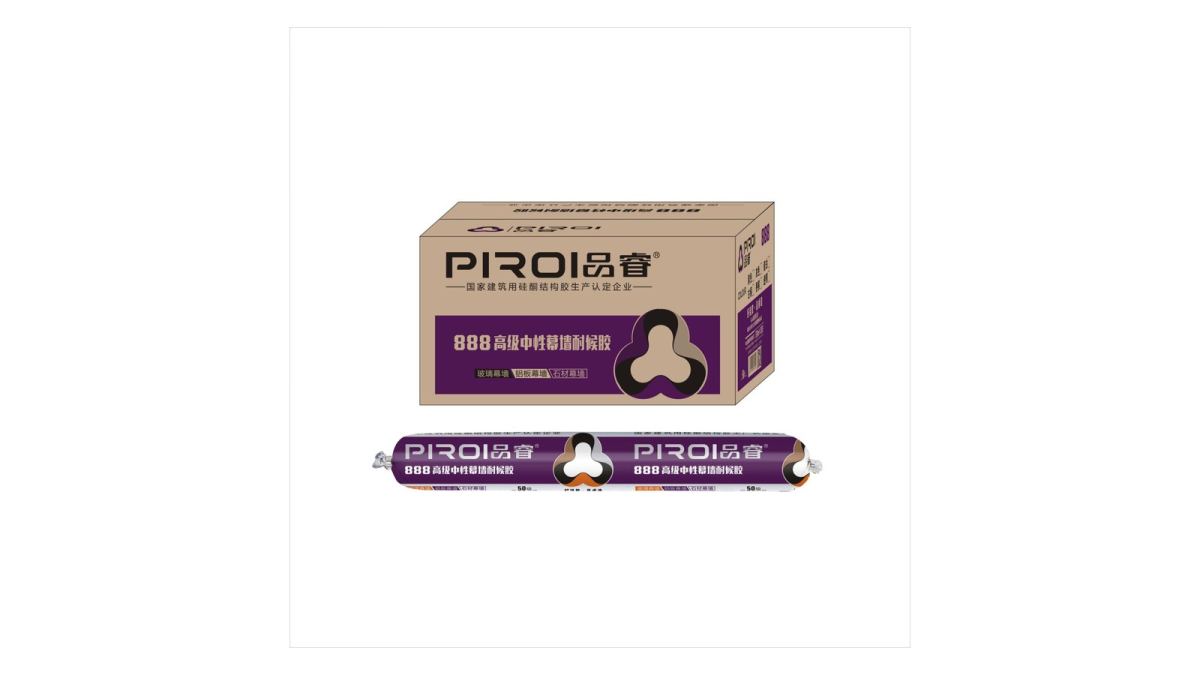
At PIROI (Zhongshan Pinrui Adhesive Technology), every model in the catalogue has its own GHS-format SDS issued in English, naming the manufacturing entity and carrying a revision date in Section 16. The SDS for your specific model is sent together with the quotation when you submit an inquiry through our contact page, and a matching COA accompanies each batch at shipment.
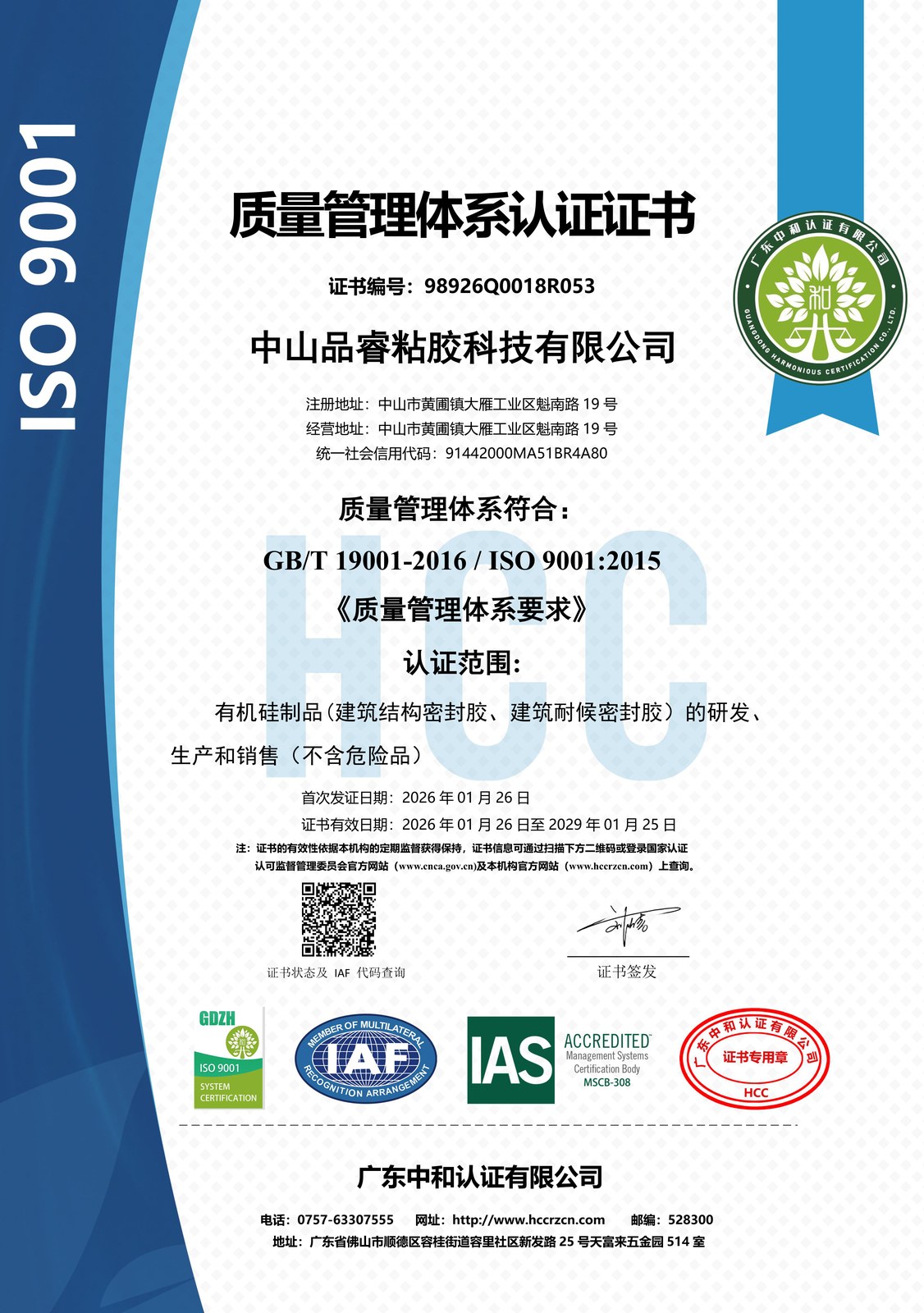
Our quality system runs under ISO 9001:2015 (certificate No. 98926Q0018R053), and product test reports against GB/T 14683 and related standards are available on the certifications page with report numbers you can verify with the issuing laboratory.
Checklist before you place a bulk order
Before confirming any silicone sealant order — ideally after sample testing — your document set should include:
- Model-specific SDS with a current revision date and the correct manufacturing entity
- Test report for the applicable standard, with a report number
- Agreed shelf life and production date window, matched to your stock rotation plan
- COA template showing which parameters are tested per batch
- Transport classification consistent with your forwarder’s booking requirements
Documents cost nothing to ask for before the order and are expensive to chase after the goods land. The suppliers who answer quickly and completely at this stage are the ones whose goods pass inspection on arrival.