Key Takeaways for Tropical Projects
- Mold on a silicone joint is almost always a surface phenomenon — the fungus feeds on dust, soap residue and organic matter on the bead, not on the silicone itself.
- Fungicidal silicone sealant is tested to
JC/T 885-2016. Grade 0 indicates the highest level of mildew resistance in that standard. - Mildew-resistant grades belong in interior wet areas — bathrooms, kitchens, sanitary ware, laundry areas. Exterior weather sealants do not normally need them.
- Never use acetoxy sealant on mirror backing or metal. The acetic acid released during cure attacks mirror coatings and corrodes metal — a separate failure mode from mold, and one that cannot be reversed.
- Cleaning the substrate properly before application does more to prevent mold than any additive, because it removes the food source.
- Where mold keeps returning, the cause is usually standing water or a joint that was never designed to drain — not the sealant grade.

1. What Is Actually Growing on the Joint
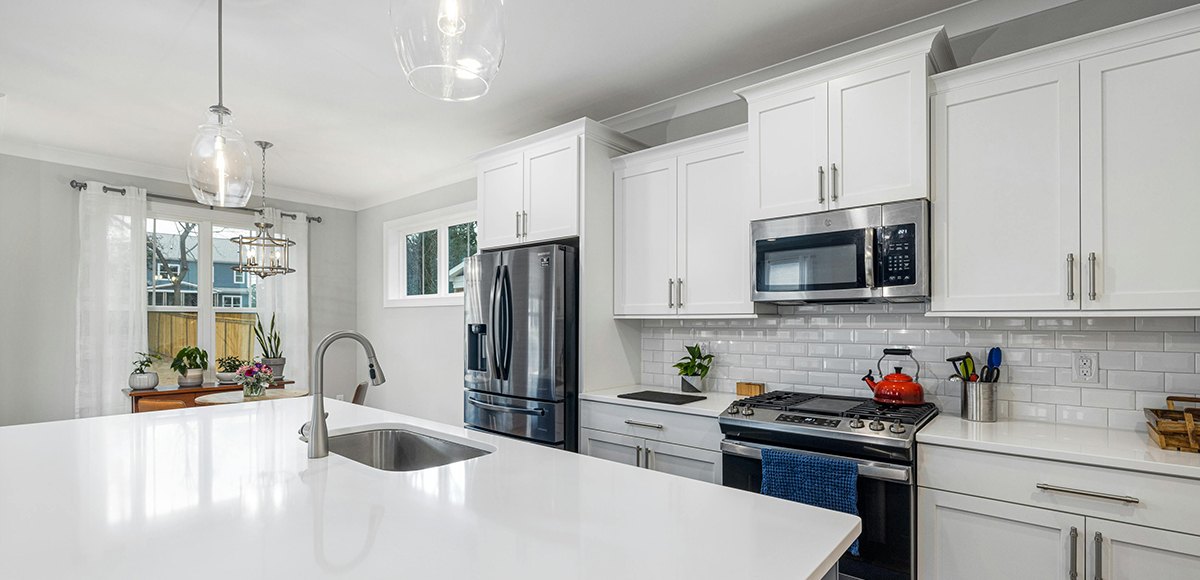
The first thing to establish when a client complains about black staining on a silicone joint is what the organism is feeding on. Silicone polymer itself is not a nutrient. Mold appearing on a joint is growing on one of three things:
- Surface contamination — dust, cooking grease, soap scum, body oils, or residue from cleaning products. This is the most common cause in bathrooms and kitchens.
- Exuded organic material — some sealant formulations contain plasticizers or extenders that can migrate to the surface over time. A high-quality silicone with a low plasticizer content does not do this; a cheap formulation may.
- Moisture trapped behind the bead — where a joint is permanently wet, or where a backing rod has absorbed water, biological growth establishes behind the sealant and reappears regardless of how often the surface is cleaned.
This distinction matters because it determines the remedy. A fungicidal sealant addresses the first two cases. It does nothing for the third, which is a drainage or detailing problem.
2. The Fungicidal Standard: JC/T 885-2016
In China, mildew-resistant sealant is tested to JC/T 885-2016 (Building sealants — Determination of mildew resistance). The standard grades a sealant by its resistance to fungal growth under controlled conditions, with Grade 0 representing the highest resistance level.
A fungicidal sealant works by incorporating an anti-microbial additive into the formulation. The additive migrates slowly to the surface of the cured bead and inhibits fungal growth there. It is not a permanent property — the additive depletes over time, which is one reason a joint in a permanently wet environment will eventually show growth even with a Grade 0 product.
| Location | Fungicidal additive needed? | Typical grade | Reasoning |
|---|---|---|---|
| Bathroom and shower perimeter | Yes | Grade 0 to JC/T 885-2016 | Constant humidity, soap residue, low airflow |
| Kitchen worktop and sink | Yes | Grade 0 to JC/T 885-2016 | Food residue, grease, regular wetting |
| Sanitary ware and sanitary fittings | Yes | Grade 0 to JC/T 885-2016 | Enclosed humid spaces |
| Laundry and utility areas | Recommended | Grade 0 | Intermittent high humidity |
| Exterior window and door perimeter | Normally no | Standard weatherproof grade | UV exposure and airflow inhibit growth |
| Curtain wall weatherseal | No | Standard weatherproof or structural grade | Not a fungal environment |
| Continuously immersed joints | Not applicable | — | Silicone sealant is not intended for continuous immersion |
3. Mirror Mounting: A Failure Mode That Is Not About Mold
Bathroom mirror installation is where two distinct problems get confused. A mirror mounted with the wrong sealant can fail in two ways:
- Mold at the mirror edge — the fungicidal case, addressed with a Grade 0 sanitary sealant.
- Mirror backing corrosion — the backing paint on the rear of a mirror is attacked by acetic acid released during the cure of an acetoxy sealant. The result is black spotting and edge degradation of the silvering, which is irreversible and can only be fixed by replacing the mirror.
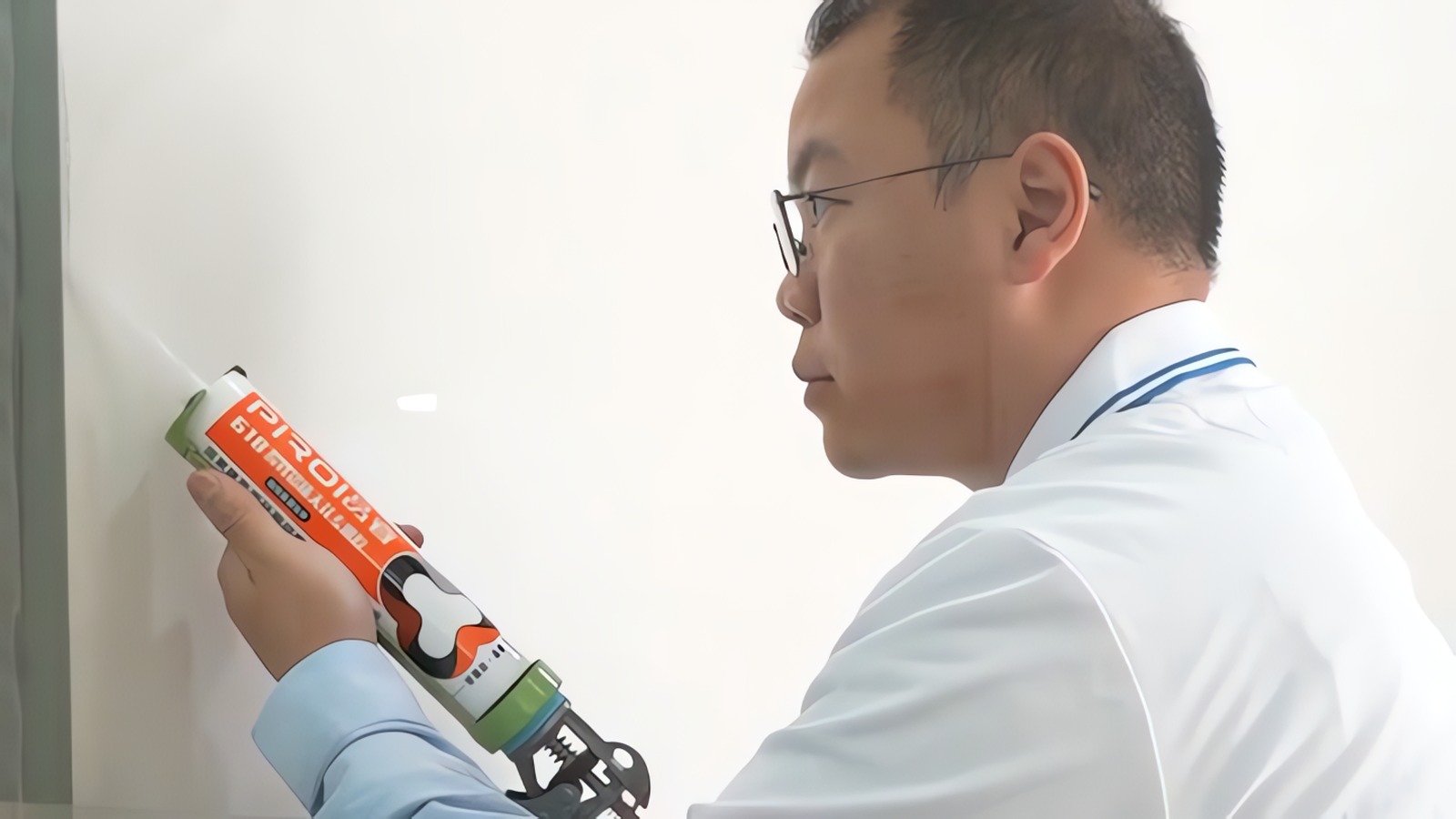
The second failure is more expensive and entirely avoidable. Mirror mounting requires a neutral cure sealant formulated for the application — commonly referred to as mirror adhesive or mirror sealant. It must not be an acetoxy (acid cure) product, and it should not be a general-purpose neutral sealant selected without checking compatibility with the specific mirror backing in use.
Because many bathroom mirror joints are also in a humid environment, the correct specification is often a neutral cure sealant that additionally carries Grade 0 mildew resistance. Confirm both properties against the product data sheet rather than assuming that a “bathroom sealant” covers both.
4. Prevention: Cleaning Matters More Than Chemistry
Fungicidal additives slow the growth of mold. Substrate preparation removes the food source. In practice, preparation contributes more to the outcome than the additive does, and it is the step most often skipped.
-
01
Remove all existing sealant and residue
Applying new sealant over an old bead traps contamination and moisture. Strip the old material completely, then clean the exposed joint faces. A silicone remover or mechanical removal is required — a new silicone will not bond to a cured silicone, even if the surface looks clean.
-
02
Degrease, then remove the solvent film
Use the two-cloth technique: wipe with a clean lint-free cloth saturated with an approved solvent (isopropyl alcohol is typical for sanitary work), then wipe immediately with a second dry cloth. The second wipe removes the solvent film along with the contamination it has lifted. On porous substrates such as tile grout or stone, solvent cleaning is not effective — clean mechanically instead.
-
03
Let the joint dry completely
Moisture is the single largest cause of adhesion failure in tropical bathrooms. Do not apply sealant onto a damp substrate. Where the joint is deep or the substrate is absorbent, allow additional drying time.
-
04
Use a backing rod where the joint is deep
A closed-cell polyethylene backing rod sets the sealant depth to the correct profile and prevents three-sided adhesion. It also prevents water from pooling in a deep open joint behind the bead. Do not use open-cell foam, which absorbs and retains water.
-
05
Tool with a dry spatula, never soapy water
Soapy water leaves a film on the bead surface and along the joint edges. That film is itself an organic nutrient, and it undermines adhesion at the very edge where failure begins. Use a dry tooling spatula or an approved silicone tooling agent.
-
06
Keep the area ventilated until fully cured
Humidity is needed for a neutral cure sealant to cure, but a closed bathroom with standing water on the surfaces will slow curing and leave the joint vulnerable. Ventilate the space and keep surfaces dry until the bead has fully cured through its depth.
5. When Mold Keeps Coming Back
If a joint has been re-sealed with a Grade 0 product and mold returns within a few months, the sealant is not the problem. Look for one of these:
| Recurring symptom | Likely root cause | What to fix |
|---|---|---|
| Mold returns along the same line every time | Water is entering behind the joint and cannot drain | Correct the detailing or drainage; sealing alone will not solve it |
| Mold concentrated at the bottom of a vertical joint | Standing water at a low point | Provide drainage or reshape the joint so water cannot pool |
| Mold across the whole bead surface, not just the edges | Surface contamination — grease, soap scum or cleaning product residue | Review the cleaning regime; aggressive cleaners can themselves leave residue |
| Black staining that does not clean off at all | Growth has penetrated into the bead, or the bead is a low-quality formulation with migrating plasticizer | Strip and replace with a quality Grade 0 sanitary sealant |
| Mirror edge blackening rather than joint mold | Acetoxy sealant used on mirror backing — a different failure entirely | Replace the mirror and re-mount with a neutral cure mirror sealant |
6. Frequently Asked Questions
7. Conclusion
Mold on a silicone joint is a hygiene and detailing problem before it is a product problem. Specify a Grade 0 fungicidal neutral cure sealant for interior wet areas. Clean the substrate properly with the two-cloth technique. Never tool with soapy water. Keep acetoxy sealant away from mirror backing and metal. And where mold keeps returning despite all of that, look at the drainage — because that is where the real cause usually is.
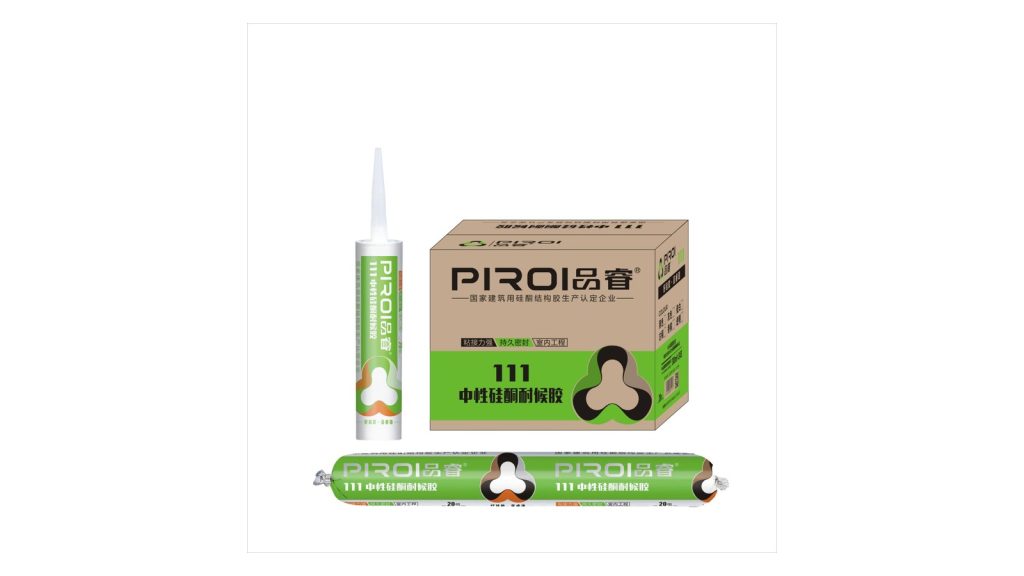
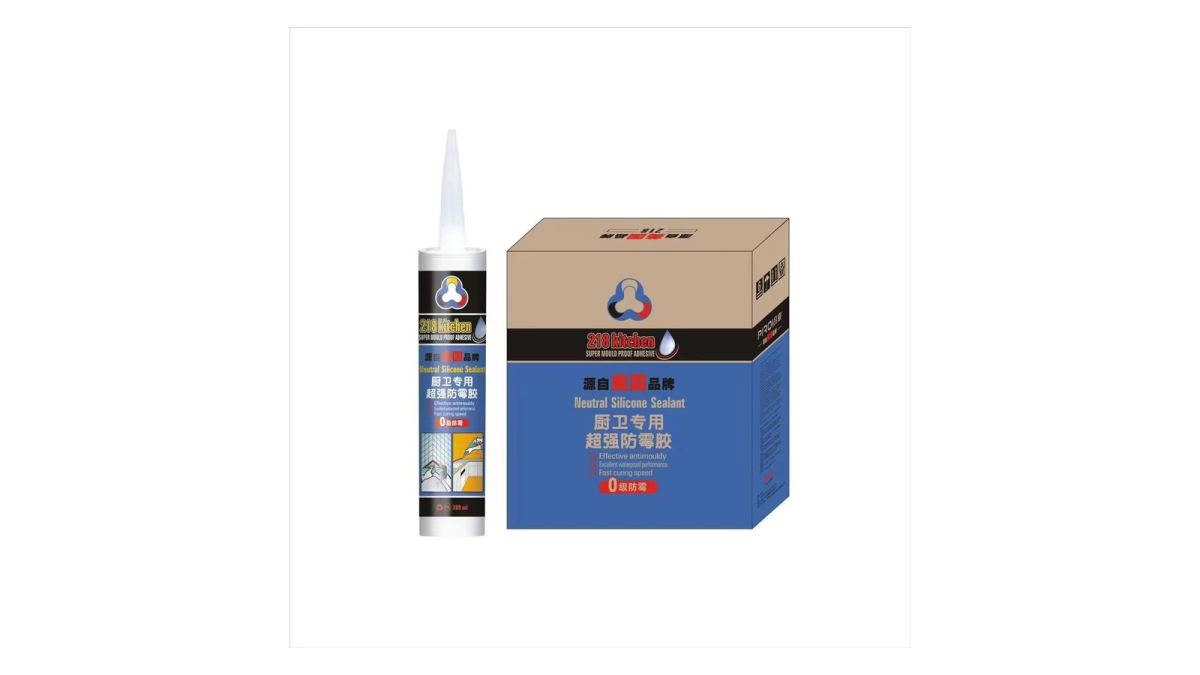
PIROI manufactures sanitary and anti-mold silicone sealant tested to JC/T 885-2016 at Grade 0, alongside neutral cure mirror sealant formulated for mirror backing compatibility. Contact our engineering team with your application details — substrate, environment and joint geometry — and we will recommend the correct grade and provide samples for trial application.
Substrates, Mould Test Data and Ordering Reference
Mould resistance is not a property of the sealant alone — it depends on the joint staying dry and on the substrate not feeding the growth. This section lists where the anti-mould grade is appropriate, the laboratory result behind it, and the commercial terms.
Substrates and joints this applies to
| Substrate | Suitability | What to watch |
|---|---|---|
| Ceramic tile and grout lines | Primary use | The joint, not the tile, is where mould establishes |
| Sanitary ware and acrylic | Suitable — neutral cure | Acid cure would attack the enamel and the acrylic |
| Glass shower screens | Suitable | Keep the joint dry between uses where possible |
| Anodised aluminium frames | Neutral cure only | Acetic acid etches the anodised layer |
| Natural stone and marble | Neutral cure only | Acid reacts with the stone and stains it |
| Stainless steel | Suitable — confirm finish | Adhesion test on the actual surface finish |
| Concrete and render | Neutral cure only | Alkaline substrate, acid cure is unsuitable |
| UPVC profiles | Neutral cure only | Protects the metal reinforcement in the chamber |
Performance data you can quote in a submittal
| Property | Tested value | Requirement |
|---|---|---|
| Mould growth grade | Grade 0 | No growth at 50× magnification |
| Test organisms | 9 strains | Incl. Aspergillus niger, Penicillium citrinum |
| Test duration | 28 days at >90% RH, 28 °C | Sustained tropical wet conditions |
| Test laboratory | Guangzhou Institute of Microbiology | CNAS / CMA accredited |
| Product standard | JC/T 885-2016 | Sanitary sealant standard |
| Shelf life | 12 months from production date | Printed on every carton |
What the cure chemistry does inside the joint
A neutral-cure silicone is a one-component RTV system: it crosslinks by reacting with atmospheric moisture, starting at the surface and working inward. The by-product is an alcohol or an oxime rather than acetic acid, which is why neutral grades can be used against concrete, mortar, natural stone, marble, anodised aluminium and the metal reinforcement inside a PVC profile without etching or staining the substrate. Cure depth is roughly 2–4 mm in the first 24 hours at 23 °C and 50% RH; a 6 mm joint therefore needs several days before it carries load, and a joint that is sealed and immediately loaded will fail at the interface rather than in the sealant.
Standards and documentation
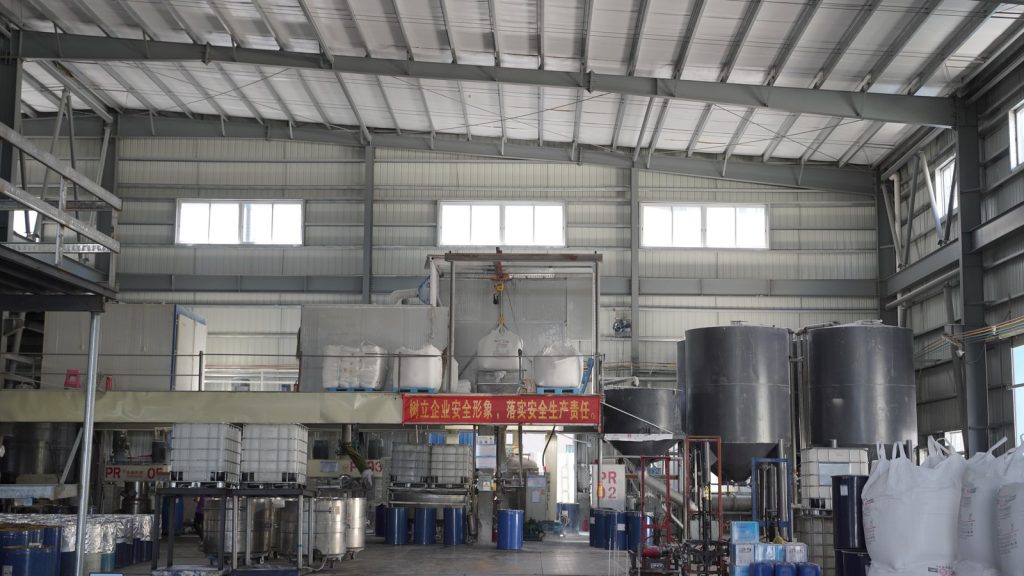
PR-218 is tested to JC/T 885-2016 by the Guangzhou Institute of Microbiology, a CNAS and CMA accredited laboratory. The mould test runs 28 days at above 90% relative humidity and 28 °C against nine organisms including Aspergillus niger and Penicillium citrinum. The factory holds ISO 9001:2015 valid to 2029-01-25, and each batch ships with its own Certificate of Analysis.
Ordering reference
| Commercial term | What PIROI offers |
|---|---|
| MOQ | OEM & private label from 1,000 pcs per model |
| Trial order | Mixed-model trial orders from 3,000 pcs total; stock items from 500 pcs |
| Lead time | Typically 15–25 days after artwork and sample approval |
| Packaging | 300 mL cartridges and 590 mL foil sausage packs |
| Private label | Custom cartridge artwork and colour matching supported |
| Sample | Free substrate adhesion and staining test on your own sample |