Most sealant failures that reach a claim are traceable to a specification that named a product but not a requirement. The clause said “silicone sealant”, the contractor bought on price, and the joint was wrong in a way nobody could have caught from the document.
This guide covers what a silicone sealant specification actually needs to contain, and which of those items are the ones that get omitted.
Start with substrate chemistry, not with the product
Before issuing site specifications, engineering teams must evaluate substrate reactivity. The chemistry decision is made by the substrate, not by preference, and it eliminates most of the wrong answers before any product is named.
- Alkaline substrates — concrete, mortar, render, stone, brick. Acetoxy releases acetic acid during cure and reacts with the calcium compounds, leaving permanent etching. Neutral cure only.
- Anodised and powder-coated aluminium — acetic acid attacks the finish. Neutral cure only.
- Laminated glass — acid vapour attacks the PVB interlayer. Neutral cure only.
- Mirror — acid attacks the copper layer at the cut edge. Neutral cure only.
- Interior glass and glazing, no metal or concrete contact — acetoxy is acceptable, and cures faster.
The practical rule: neutral cure on everything alkaline or coated, acetoxy only where none of those substrates are present.

Then the movement requirement
Movement is the second item that decides the product, and it is the one most often left out. A joint that has to absorb thermal movement needs a defined movement class, not a general-purpose sealant.
| Input | Where it comes from | What it decides |
|---|---|---|
| Panel or frame length | Built opening, not the drawing | Total movement demand |
| Coefficient of thermal expansion | Panel material | Movement per degree |
| Site temperature range | Coldest to hottest surface temperature | Movement range |
| Movement class | Class 25 or Class 50 | Minimum joint width |
Aluminium moves roughly 2.5 times more than glass for the same temperature swing and the same length, so a facade with aluminium mullions and glass panels needs the joint sized on the larger movement, not the average. Our joint width and coverage calculator returns the width from panel material, panel length and temperature range.
Joint geometry: width and depth ratio
A joint that is too deep for its width cannot move as designed and will tear. Specify the depth ratio alongside the width, and require backing material where the joint needs it — the sealant must not bond to the back of the joint, or the bead cannot stretch.
Joint design and depth ratio are covered in the window and door construction sealant joint guide.
Name the standard, and require the report
A specification that names a standard but not a report leaves the verification to the contractor. Put both in the clause:
- Structural positions — GB 16776-2025, with tensile, shear and elongation data from the actual batch. Our structural silicone sealant is the grade specified for these joints.
- Weatherproof and building joints — GB/T 14683.
- Sanitary and mirror grades — JC/T 885 for Grade-0 anti-mould performance.
- Fire-rated positions — a fire classification to GB/T 24267-2009, quoted with the report number.
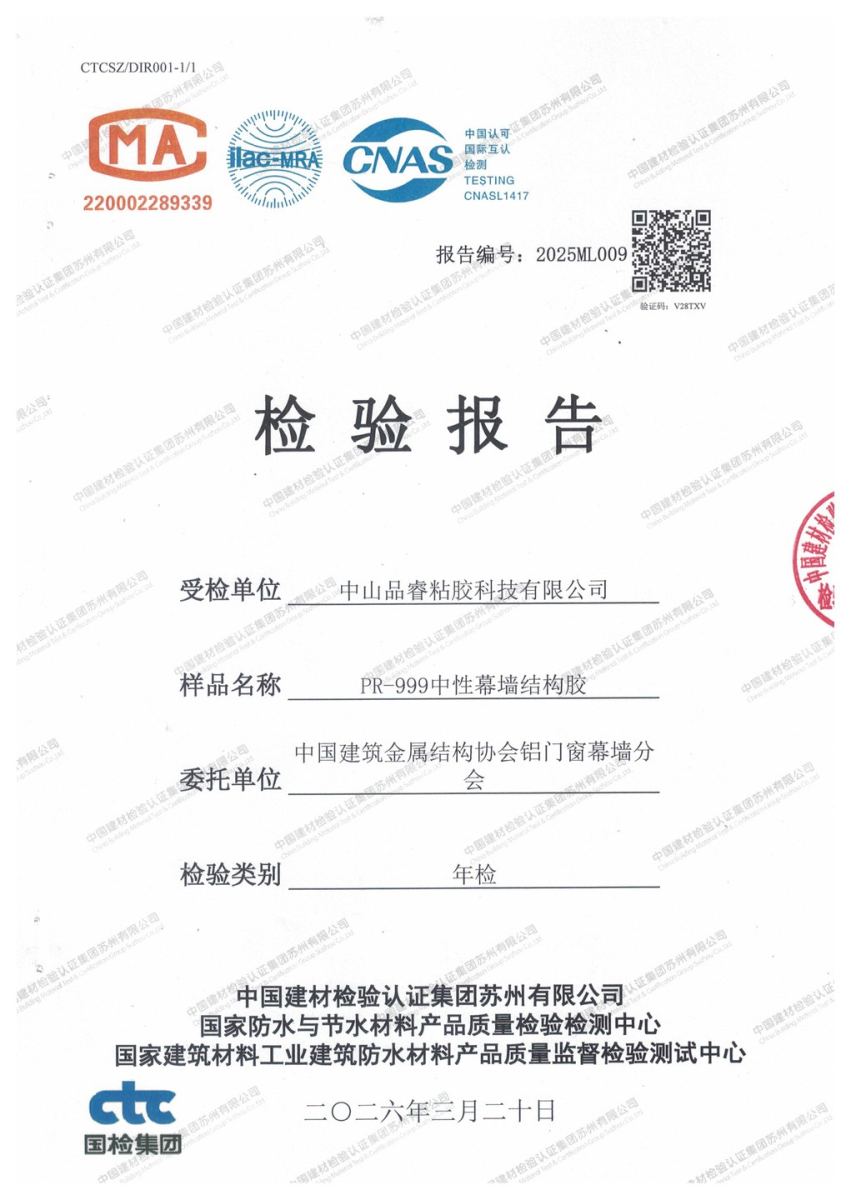
Then require the report itself. A datasheet extract is not evidence; a third-party CNAS / CMA accredited laboratory report on the batch is. Our structural report is CTC Suzhou No. 2025ML009, and how to read one is covered in the buyer’s guide to lab reports.
What the submittal package should contain
- Technical data sheet for the named model.
- Third-party test report against the specified standard, with the report number.
- Certificate of Analysis for the batch supplied — not a sample batch.
- Safety data sheet for the destination market.
- Certification — ISO 9001:2015 as a minimum, plus RoHS and REACH where the market requires them.
- Compatibility statement where a structural grade and a weatherseal are used in the same system.
Ask for all six at tender stage. A supplier who can produce them before the order is placed is a supplier who will still have them when the inspector asks.
Sample and approval: write it into the clause
The specification should require a substrate adhesion test on the actual materials before bulk supply, not after. That is what turns a chemistry decision from an assumption into evidence:
- Adhesion test on the actual profile finish, glass type or stone — not a generic panel.
- Staining test on the actual substrate where the material is porous or light-coloured.
- Sign-off on a cured physical sample for any specified colour. Approving colour from a screen guarantees a mismatch.
We run a free substrate adhesion and staining test on your own sample as part of the sampling stage.
Specifying and ordering from one manufacturer
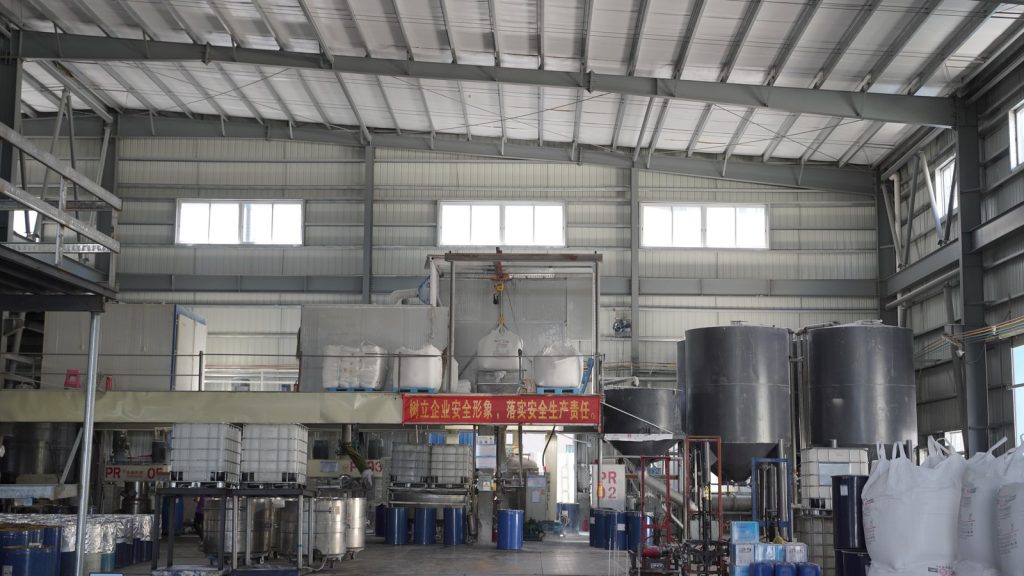
We are a silicone sealant manufacturer selling direct to importers, distributors and private label brands, with 17 models across four series and full batch traceability from raw material lot to sealed carton at our Zhongshan factory.
- MOQ — OEM and private label from 1,000 pcs per model; mixed-model trial orders from 3,000 pcs total; stock items from 500 pcs.
- Lead time — typically 15–25 days after artwork and sample approval.
- Documentation — test reports, Certificate of Analysis, FORM E and packing list with every shipment.
Send the draft clause and the joint detail, and our technical team will confirm whether the specified grade fits the substrate and the movement before the document is issued — it is faster to resolve on paper than after the material has been ordered.