The question “what is the best sealant for high UV exposure” has a short answer and a long answer. The short one: among the common construction sealants, silicone is the only polymer that is inherently UV stable, because its backbone is a silicon-oxygen chain rather than a carbon chain. The long answer is that “silicone” alone does not guarantee anything — a cheap silicone can still chalk, lose mass and crack its bond line within a few years under tropical sun, while a properly formulated one holds for decades.
This guide is about the difference between the two, and what to put in a specification before a facade goes up in a high-UV market.

Why UV exposure destroys most sealants
Ultraviolet light carries enough energy to break carbon-carbon bonds. That is why polymers built on a carbon backbone degrade under sun:
- Polyurethane — UV attacks the urethane linkages; the surface chalks, then the bead hardens and loses elasticity. It needs a topcoat or a UV-stable grade to survive long exterior exposure.
- Acrylic — designed for interior and painted surfaces; exterior acrylic sealants chalk and crack relatively quickly.
- Polysulfide — good chemical resistance but poor UV stability; normally used where it is not exposed.
- Silicone — the Si–O backbone is not broken by UV in the way carbon chains are, so a silicone sealant bead does not chalk or embrittle from sunlight alone. What it can still do is lose mass through continued curing and plasticiser migration, which is a formulation question, not a chemistry question.
So the practical rule is: in a high-UV market, specify a silicone sealant — then verify the formulation, because the failure mode that remains is mass loss and adhesion loss, not chalking. A polyurethane sealant or an acrylic sealant that is cheaper per cartridge will cost more over a decade, because both will need replacing while the silicone sealant is still in service.
The four numbers that predict UV performance
Sunlight alone rarely fails a silicone joint. What fails is the combination of UV, heat and movement, and each of those shows up as a number on a test report. This is also why the best sealant for high UV exposure is not the one with the highest headline claim, but the one whose report values hold up on all four:
| Number | What it tells you | Why it matters under UV |
|---|---|---|
| Mass loss rate | How much the bead volatilises away as it cures and ages | Higher loss means the bead shrinks, thins and loses its movement capacity. Our PR-888 reports 4.2% against a limit of 8%. |
| Elastic recovery | How completely the bead returns to shape after stretching | Heat plus UV slowly turns a bead into a permanently stretched one; recovery above 90% keeps the joint sealed. PR-888 reports 92% against a minimum of 80%. |
| Adhesion after water immersion | Whether the bond survives rain and standing water | UV degrades the surface, water then finds the weakened bond line. Our result: no failure. |
| Adhesion after cold-draw | Whether the bond survives movement at low temperature | High-UV climates still have cold nights; the joint moves both ways. Our result: no failure. |
These four are worth more than any claim about “UV resistance” on a brochure, because they are measured. Our article on weatherproof durability tests explains what each test actually predicts.
High UV does not mean only UV
Markets with the strongest sun usually combine it with something else, and the combination is what breaks joints:
- Tropical markets — UV plus humidity plus daily thermal cycling. Water ingress at a UV-weakened bond line is the usual failure path, and mould growth follows on the north face.
- Desert and Gulf markets — UV plus extreme surface temperature. A dark panel in direct sun runs 40–50 °C above ambient, so the joint sees movement the climate data alone would not predict.
- High-altitude sites — UV intensity rises with altitude, so a sealant that performs at sea level may age noticeably faster at 2,000 m.
- Coastal and marine exposure — UV plus salt. The salt attacks metal frames and fixings around the joint, even where the silicone itself is fine.
Where two of those combine, specify on the harder of the two conditions and confirm adhesion on the actual substrate rather than on a generic test plate.
What to specify, in order
- Polymer — silicone, neutral cure. Acid cure rules out metals and stone, which removes most facades.
- Movement class — sized from the actual thermal movement calculation, not from the last project. Our joint width and coverage calculator runs that calculation from panel material, length and temperature range.
- Mass loss and recovery figures — ask for the report values, not a pass/fail statement.
- Adhesion on your substrate — anodised aluminium, coated panel and glass each behave differently. A sample bonded to your actual profile is worth more than any datasheet.
- Colour and chalking expectation — a white bead in strong sun will show dirt and slight shade change over years; that is normal ageing, not failure. Setting the expectation early prevents warranty arguments later.
Grades that fit high-UV work
Two grades in our range are specified for exterior exposure in high-UV markets:
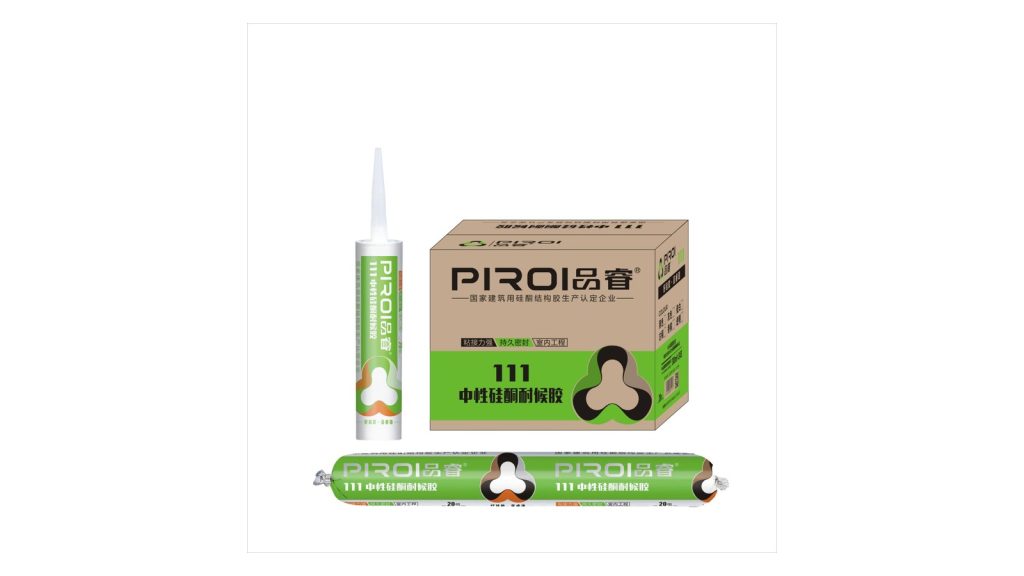
- PR-888 — premium neutral weatherproof, GB/T 14683-2017, mass loss 4.2%, elastic recovery 92%, adhesion intact after water immersion and cold-draw. See the premium weatherproof sealant.
- PR-333 — window and door weatherproof, JC/T 485-2007, elastic recovery 92%, modulus 0.7 MPa. See the window and door sealant.
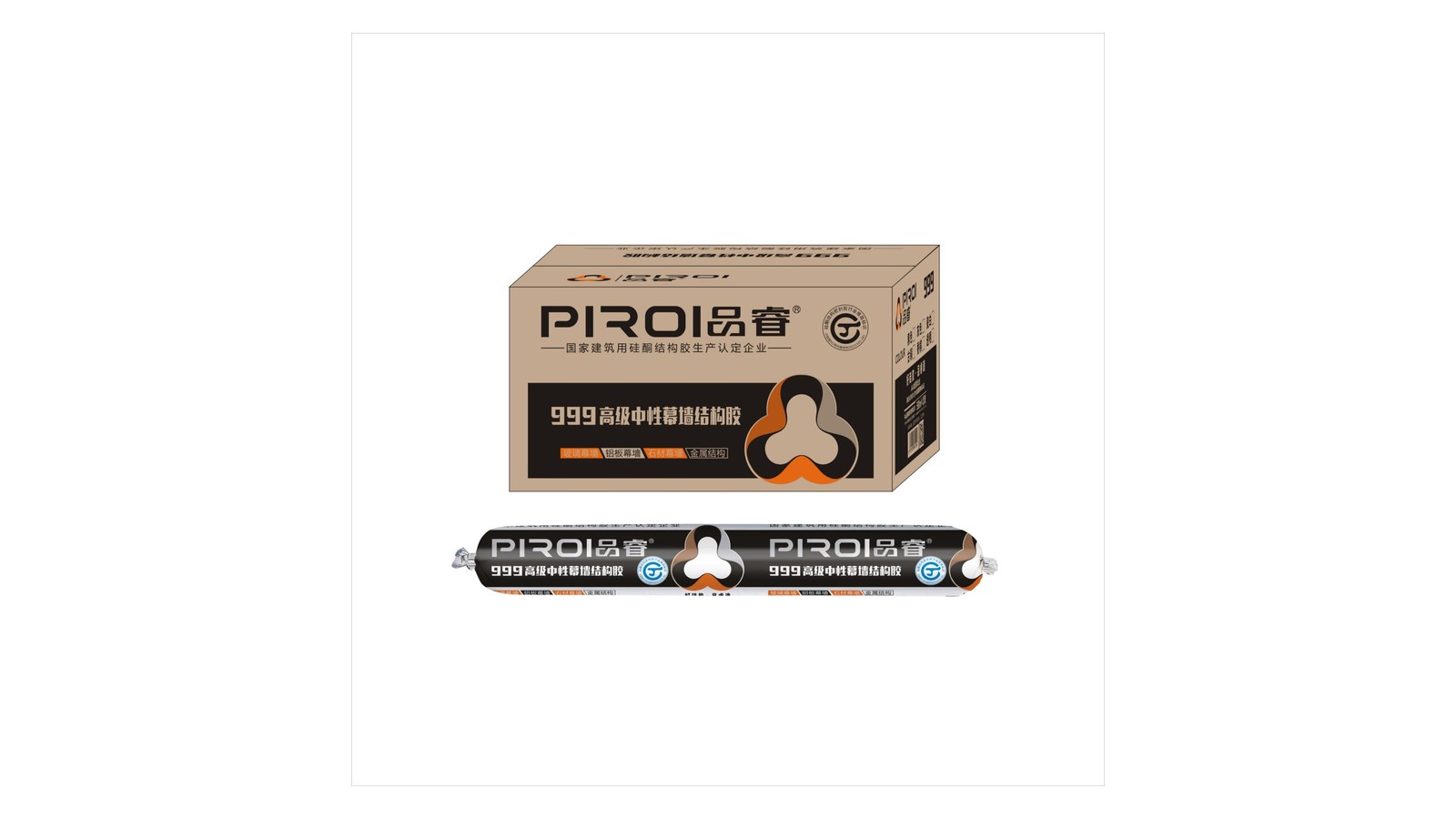
Both are neutral cure, supplied in 300 mL cartridges or 590 mL sausages, with a 12-month shelf life from production date and non-hazardous transport classification. The full family is grouped under the weatherproof product series.
Buying for a high-UV market
- MOQ — 1,000 cartridges per model for private label, with mixed-model orders from 3,000.
- Lead time — typically 15 to 25 days after artwork approval.
- Samples — supplied before mass production so the bead can be tested in your own climate rather than ours.
- Documentation — CoA per batch, archived for 18 months, plus the test report behind each figure.
- OEM support — formulation adjustment to your market’s standard, cartridge and label artwork, export paperwork in-house.
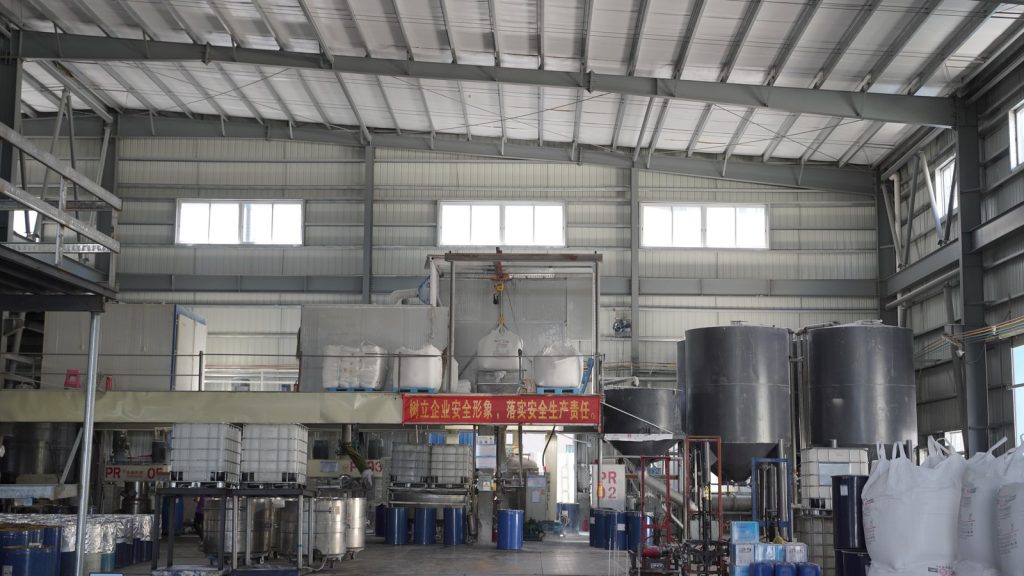
The commercial terms are set out in our guide to private label MOQ and lead time, the production detail is on the factory page, and the certificates are on the certifications page.
Send the climate data, the substrate and the joint size for your project, and our technical team will confirm which grade fits before pricing — or start from the PIROI site for the rest of the range.