A mirror is one of the few products where a poor sealant choice destroys the substrate itself. Mirrors are made of a glass sheet with a reflective silver or aluminium coating on the back. That coating is thin and chemically sensitive, and a sealant that reacts with it — or one that lets oil migrate into the edge — shows up as black spotting or edge corrosion around the mirror, usually weeks after installation.
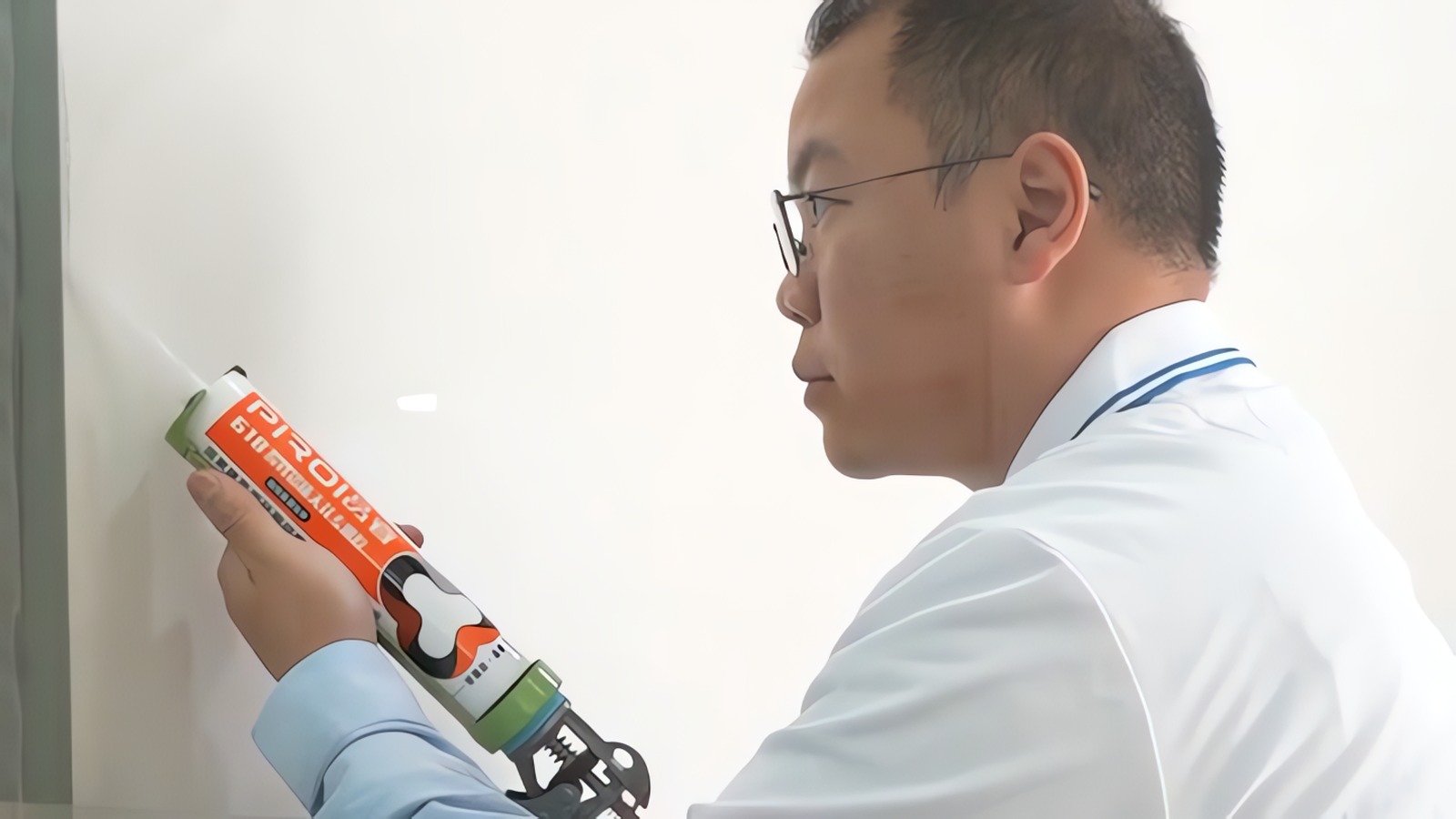
- Mirror backing coatings are attacked by acid cure chemistry. Acetic acid reacts with the silver layer.
- The sealant must be non-corrosive to the reflective backing, not simply strong.
- Wet-area work raises the adhesion bar, with moisture and cleaning chemicals hitting the joint every day.
- Neutral cure, low odour chemistry matters when the mirror is installed in an occupied interior.
- Edge sealing and face bonding are different jobs, and a mirror silicone sealant has to handle both.
Why mirror backing needs a non-corrosive silicone sealant
The silver layer behind a mirror is deposited on the glass and protected by a thin clear backing. Acid cure silicone sealant releases acetic acid as it cures. Where that acid vapour reaches the mirror backing — particularly along the edge, where the joint is thinnest and the sealant sits closest to the exposed silver — the reflective layer corrodes. The result is a black or grey halo that starts at the edge and creeps inward. Neutral cure silicone sealant has no acidic by-product, so it will not attack the mirror backing.
Face bonding and edge sealing are different jobs
- Face bonding — the mirror is bonded to a wall or substrate, so the joint has to hold the weight of the mirror over time. Tensile strength and low creep matter here.
- Edge sealing — the vulnerable area where the reflective backing is most exposed. The sealant must not wick or migrate into the edge, and must not discolour the glass line.
Our PR-228 mirror silicone sealant is formulated for both mirror installation and decorative glass work, and the mirror installation application page covers the fixing details. For wet-area mirror work in a bathroom, substrate preparation matters as much as the sealant choice — dry, clean, oil-free surfaces are what allow a neutral cure silicone sealant to achieve full adhesion.
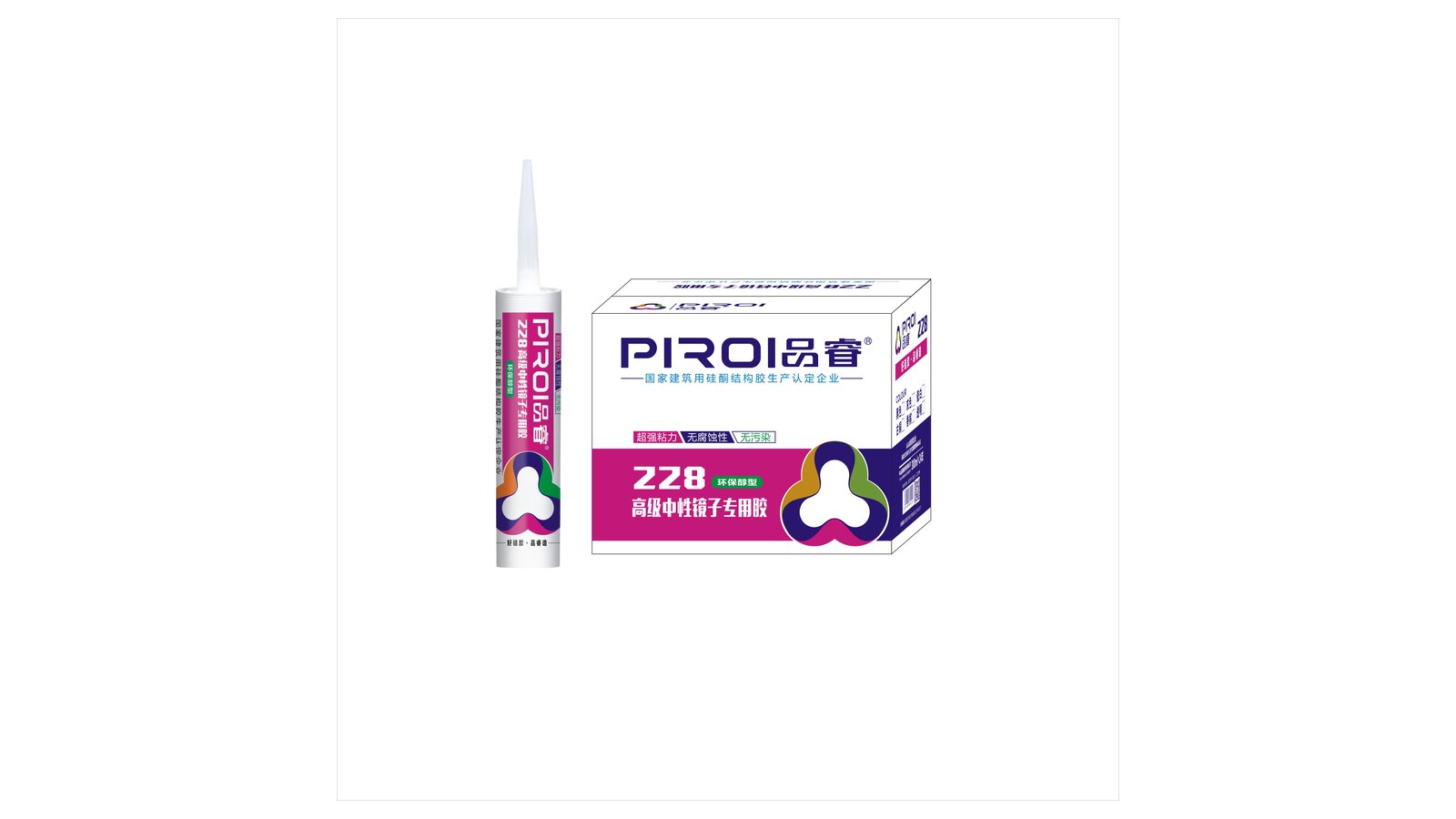
PIROI PR-228 mirror silicone sealant — specifications
A neutral cure, low odour silicone sealant for mirror installation, with good weather aging resistance.
- Non-corrosive to mirror backing coating
- Excellent adhesion to mirror, glass and tiles
- Neutral cure, low odour — suitable for occupied interiors
- Good weather aging resistance
- Safe for bathroom mirror installation
- Transport as non-hazardous goods
- Shelf life 12 months; 300mL cartridge packaging
- Classification: General Purpose
Typical applications
- Bathroom mirror installation
- Decorative mirror mounting
- Glass shelf and cabinet sealing
- Tile and glass decoration
Application notes
- Apply between 4°C and 40°C
- Not for oily surfaces
- Not for continuous water immersion
- For joint sealing — not for structural bonding
PIROI is a silicone sealant manufacturer in Zhongshan, China, producing neutral cure silicone sealant for facade, window and door, sanitary, industrial and specialty applications including mirror and appliance sealing. We support OEM and private label packing, sample testing before bulk orders, and full-container export. Mirror sealants are supplied with the relevant certifications and test reports, and each grade is supplied against its product standard. Contact us for the PR-228 data sheet, MOQ and lead time, or the frequently asked questions for ordering details.