Key Takeaways for Specifiers and Buyers
- A fire-rated sealant is not a firestop system. The sealant resists burning and maintains its seal in a fire; the surrounding assembly (mineral wool, backing, board) is what actually blocks the penetration. Approving one does not approve the other.
- The entire performance claim is compressed into one line on the test report. If you read only one thing, read the classification line — for our PR-238 it is SR FV-0 (3.0 mm).
- The maximum joint width in brackets is a tested limit, not a suggestion. A sealant rated at 3.0 mm has not been tested at 10 mm, and a specifier cannot assume it will perform there.
- Chinese, American and European standards are not interchangeable. GB/T 24267, ASTM E814 / UL 2079 and EN 1366-4 test different assemblies in different ways. Match the standard to the market you are shipping into.
- Ask for the classification line, the joint width, and the flame-time figures. A supplier who can produce those three things on request is a supplier who has actually tested the product.
“Fire-rated” is one of the most loosely used terms in the silicone sealant trade. It appears on datasheets, on Alibaba listings and in tender documents, and it very often means nothing more than “this product contains a flame retardant”. That is not the same as being tested, classified and certified for a fire-rated joint.
For a buyer or specifier, the difference matters for three reasons: fire safety approval, insurance, and liability. A building inspector who asks for the fire test report will not accept a datasheet claim. This guide explains what a fire-rated silicone sealant actually is, how to read its classification, and which numbers prove the claim.
1. What “Fire-Rated” Means for a Sealant
Three different things are commonly confused:
| Term | What it means | Evidence you should ask for |
|---|---|---|
| Flame retardant | The formulation contains additives that slow ignition and spread. It is a material property. | Formulation statement or a material test. Weakest of the three. |
| Fire-rated sealant | The cured sealant has been tested to a fire test standard and assigned a classification for a defined joint width. | A test report with a classification line, test standard and notified/accredited laboratory. |
| Firestop system | A complete assembly — sealant plus mineral wool, backing, board, collar or coating — tested together as a system. | A system approval referencing the assembly drawing and each component. |
The practical consequence: if your tender says “fire-rated joints at the curtain wall spandrel”, the correct deliverable is a classified sealant. If it says “firestop to penetrations”, the correct deliverable is a system, and the sealant is only one component of it.
Suppliers who blur the two are usually trying to sell a flame-retardant general-purpose sealant into a system specification. That is where projects get held up at inspection.

2. Reading the Classification Line
Everything you need to know about a fire-rated sealant is in one short line. Here is ours, for PIROI PR-238:
SR FV-0 (3.0 mm) 7.5P — classified under GB/T 24267-2009
Read it left to right:
- SR — product type. It identifies the product as a sealant for building joints (as opposed to, for example, an intumescent coating or a board product).
- FV-0 — the fire performance class. Class 0 is the most demanding of the classes in this scheme: the specimen must not sustain flaming, and flame time and afterflame are measured against tight limits.
- (3.0 mm) — the maximum joint width at which the product was tested and classified. This is the number buyers most often overlook.
- 7.5P — the movement and service designation assigned in the same test programme.
The bracketed width is the single most commercially important figure. A 3.0 mm classification means the sealant has been proven in a 3.0 mm joint. If your project has an 8 mm spandrel joint, that classification does not cover it — you need a product classified at that width, or a system that achieves the rating by other means.
3. The Three Standards You Will Be Asked to Meet
Fire test standards are regional. The same product may be classified under one and untested under another, and the results are not convertible.
| Market | Standard | What it tests |
|---|---|---|
| China | GB/T 24267 | Flame-retardant sealants for building joints — classification, flame time, afterflame, elastic recovery, mass loss. |
| USA / North America | ASTM E814 and UL 2079 | Through-penetration firestop systems and joint systems — the assembly is tested, with a time rating (F and T ratings). |
| Europe | EN 1366-4 with EN 13501-2 | Fire resistance of service installations — linear joint seals, with an EI classification and a declared maximum joint width. |
Note the structural difference. GB/T 24267 classifies the material’s fire behaviour in a defined joint. ASTM E814 and EN 1366-4 classify assemblies with a time rating in minutes (for example EI 120). This is why an American inspector asking for “the F rating” cannot be satisfied by a Chinese material classification, and vice versa.
If you are exporting, decide early which market the project is in and require the corresponding test evidence. Retrofitting a test programme after the tender is awarded is expensive and slow.
4. The Numbers That Prove the Claim
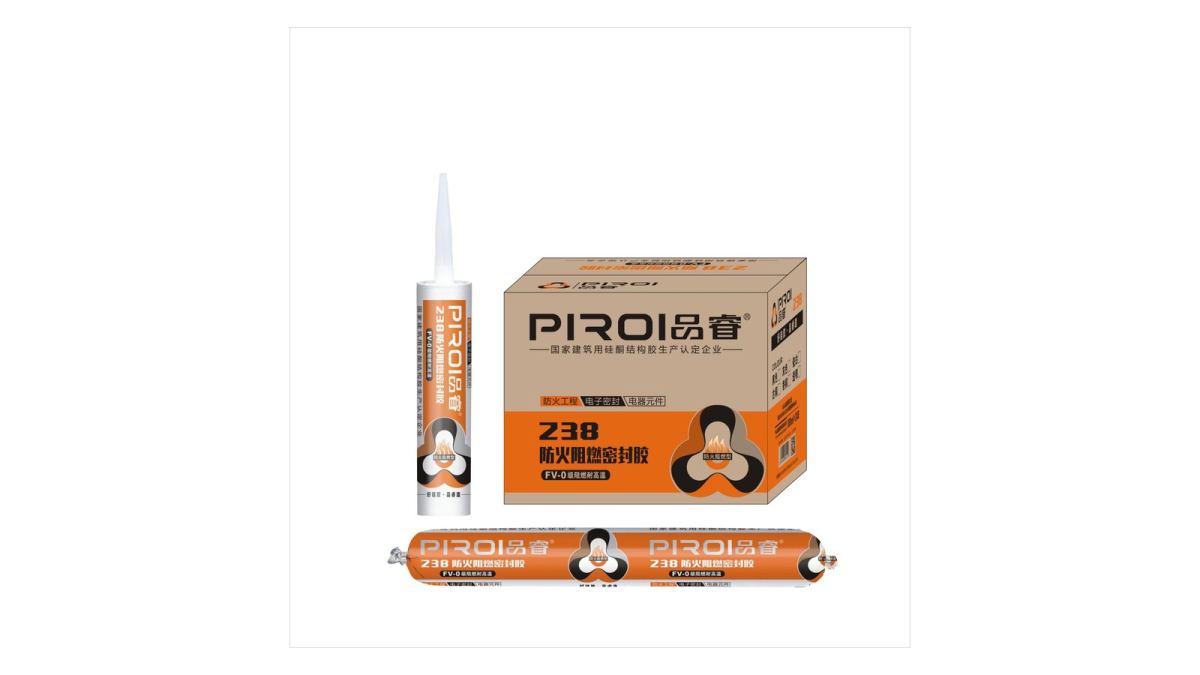
A classification line is a summary. The underlying test report contains the individual measurements, and those are what a rigorous buyer reviews. The table below is the actual test data for PIROI PR-238 under GB/T 24267-2009.
| Test item | Requirement | PR-238 result |
|---|---|---|
| Classification | — | SR FV-0 (3.0 mm) 7.5P |
| Flame time, total (5 specimens) | max. 50 s | 0 s |
| Afterflame after second application | max. 30 s | 0 s |
| Flame spread to clamp / dripping ignition | None | None |
| Sag resistance (vertical) | max. 3 mm | 0 mm |
| Elastic recovery rate | — | 88% |
| Elongation at break | min. 25% | 73% |
| Elongation at break after water immersion | min. 25% | 62% |
| Mass loss | max. 25% | 3% |
| Tack-free time | max. 3 h | 1.0 h |
| Extrusion rate | min. 80 mL/min | 374 mL/min |
Two of these deserve attention beyond the pass/fail comparison.
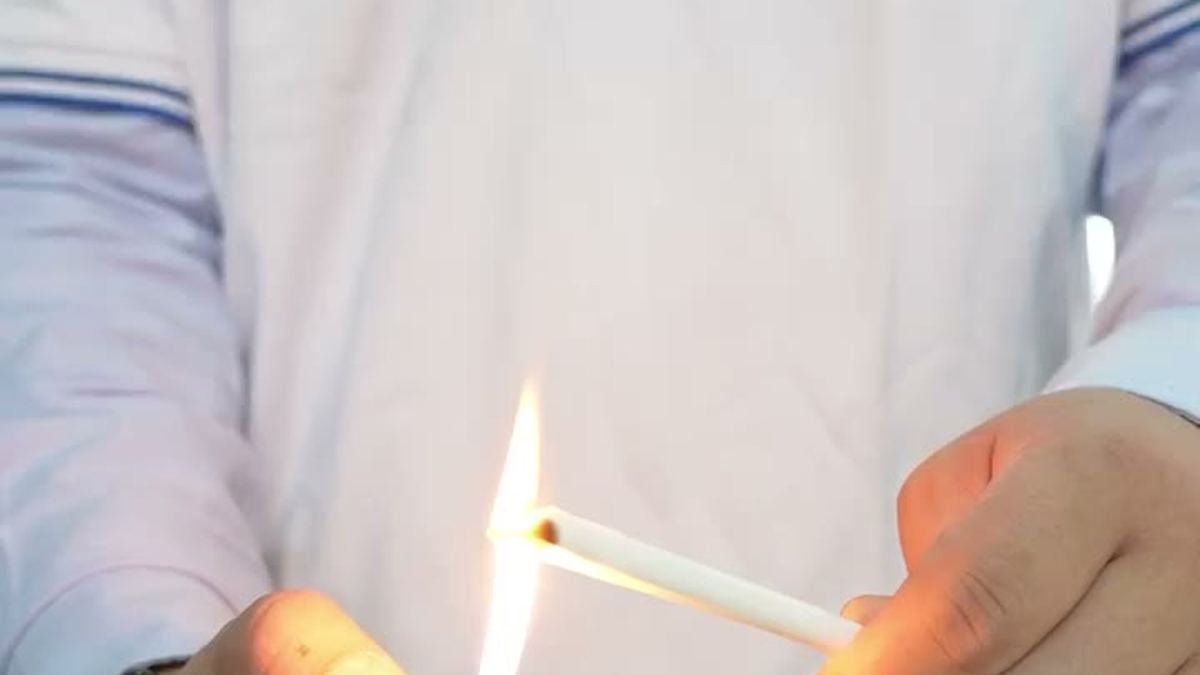
Flame time of 0 seconds. The limit is 50 seconds across five specimens. A result of zero means the specimens did not sustain flaming at all after the ignition source was removed. For a sealant in a fire-rated joint, this is the headline number — it is the difference between a product that resists fire and one that merely contains a flame retardant.
Elongation after water immersion. A sealant in an exterior fire-rated joint will be wet for part of its life. Testing elongation again after immersion checks that water exposure has not degraded the cured rubber. A drop from 73% to 62% — both comfortably above the 25% minimum — indicates the polymer network is stable in service. A product that passes dry but fails wet is a product that will crack in a monsoon climate.
5. Where Fire-Rated Sealant Is Required
Fire-rated silicone sealant is specified where a joint must both seal and resist fire. In practice this means:
- Fire door and fire window frames — the perimeter joint between frame and wall.
- Curtain wall spandrel and slab-edge joints — the joint between the floor slab and the facade, where a fire on one floor must not spread to the floor above.
- Cable and pipe penetrations — as part of a tested firestop system, not on its own.
- Expansion joints in fire compartment walls — where the joint is also a compartment boundary.
- Fire-rated glazing and internal partitions — perimeter sealing of rated glass assemblies.
It is not required — and should not be specified — for ordinary weatherseal joints, bathroom and sanitary joints, or general glazing. Adding a fire-rated requirement to those joints increases cost with no fire-safety benefit, because there is no rated assembly to protect.
6. How to Verify a Supplier’s Claim in Five Minutes
Most misrepresentation in this category is not fraud — it is vagueness. These five questions cut through it.
- “Send me the classification line, verbatim.” A real classification reads like SR FV-0 (3.0 mm) 7.5P. “Fire rated” or “flame retardant” on its own is not a classification.
- “What is the maximum tested joint width?” If the answer is not a number, the product has not been classified for a joint width.
- “Which standard, and which laboratory?” Ask for the report number and the laboratory name. Accredited laboratories are listed publicly and the report can be checked.
- “What is the flame time and afterflame figure?” These come from the report. A supplier who cannot quote them has not read their own report.
- “Is the sealant itself rated, or is it part of a tested system?” Both answers are legitimate — but they lead to different documentation, and you need to know which one your specification requires.
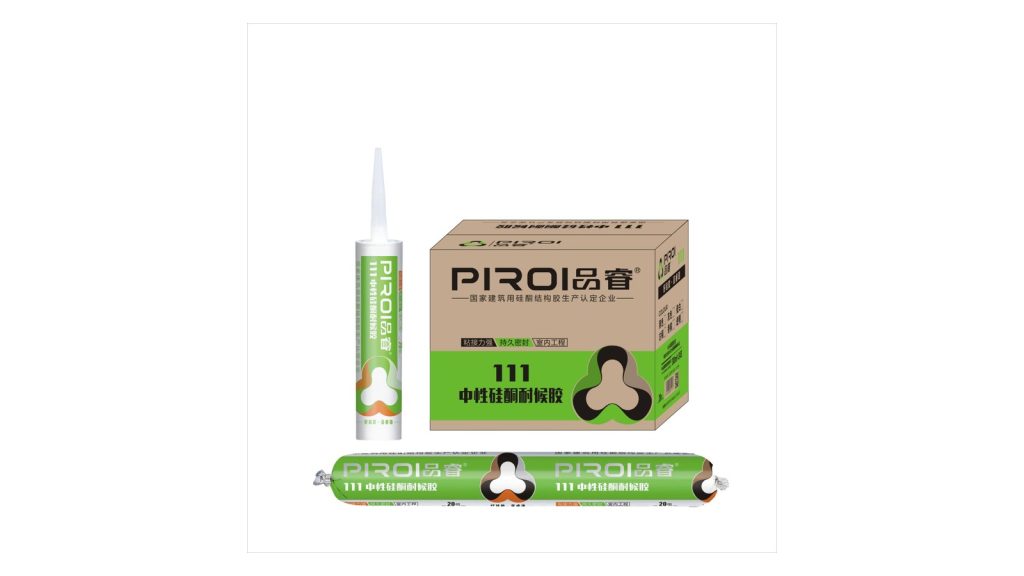
For reference, PIROI PR-238 is classified SR FV-0 (3.0 mm) 7.5P under GB/T 24267-2009, with a flame time of 0 s and a mass loss of 3%. The full report is available to specifiers on request.
7. Common Mistakes That Cost Money
Specifying a classification for the wrong joint width
The most frequent error. A product classified at 3.0 mm is offered for a 10 mm joint because nobody read the bracket. The correct fix is either a wider-classified product or a designed joint that brings the width within the tested range.
Treating a flame-retardant datasheet as a fire classification
A formulation containing a flame retardant will usually pass a horizontal burn test. That is not a fire classification for a building joint, and it will not satisfy an inspector.
Mixing standards across markets
A GB/T 24267 classification cannot be presented as an ASTM E814 rating. If the project requires the latter, budget for testing or source a product already classified to it.
Ignoring the wet-state and ageing data
Fire ratings are quoted from dry, as-cured specimens. In an exterior joint the sealant will also be rained on, UV-exposed and thermally cycled. Elongation after water immersion and mass loss are the two figures that tell you whether the fire performance survives service.
Frequently Asked Questions
Is a fire-rated sealant the same as a firestop sealant?
No. A fire-rated sealant is classified as a material for a defined joint width. A firestop is a complete tested assembly — sealant plus mineral wool, backing or board — that achieves a time rating such as EI 120. In a penetration, the sealant is one component of the system.
What does the “(3.0 mm)” in the classification mean?
It is the maximum joint width at which the product was tested and classified. Performance at wider joints has not been demonstrated and cannot be assumed.
Can a fire-rated sealant also be used as a weatherseal?
Often yes — PR-238 is a neutral-cure silicone sealant with 73% elongation at break and 88% elastic recovery, so it performs as a general exterior sealant as well. But the reverse is not true: a weatherseal is not automatically fire-rated. If the joint must be fire-rated, specify a fire-rated product and accept the cost difference.
How long does the fire rating last?
A classification is a statement about a tested specimen, not a warranty of service life. Durability in service is governed by the sealant’s ageing behaviour — mass loss, elongation after immersion, and UV resistance. Ask for those figures separately.
Do you supply the full test report?
Yes. Specifiers, contractors and consultants can request the GB/T 24267-2009 test report for PR-238, together with the product TDS and safety documentation, through our contact page.
Substrates, Fire Test Data and Ordering Reference
A fire rating is only valid for the assembly it was tested in. This section lists where the fire-rated grade applies, reproduces the numbers behind the classification, and sets out the commercial terms.
Substrates and joints this applies to
| Substrate | Suitability | What to watch |
|---|---|---|
| Concrete and masonry walls | Primary use | The tested substrate in the fire assembly |
| Steel pipe and conduit penetrations | Suitable | Classification covers a 3.0 mm annular gap |
| Gypsum board and shaft wall | Suitable | Check the tested board type and thickness |
| Ceramic and mineral wool insulation | Suitable | Mineral wool is the usual backing material |
| Stainless steel and coated metal | Neutral cure preferred | Adhesion proved on the actual coating |
| Anodised aluminium | Neutral cure only | Acid cure etches the anodised layer |
| Natural stone and marble | Neutral cure only | Acid reacts with calcium carbonate and stains |
| UPVC and PVC profiles | Neutral cure only | Protects the steel reinforcement in the chamber |
Performance data you can quote in a submittal
| Property | Tested value | Requirement |
|---|---|---|
| Classification | SR FV-0 (3.0 mm) 7.5P | GB/T 24267-2009 classification |
| Flame time (total, 5 specimens) | 0 s | Maximum 50 s |
| Afterflame after 2nd application | 0 s | Maximum 30 s |
| Flame spread to clamp / dripping ignition | None | No spread or ignition |
| Elastic recovery rate | 88% | Movement capability after fire exposure |
| Elongation at break | 73% | Minimum 25% |
| Elongation after water immersion | 62% | Minimum 25% |
| Mass loss | 3% | Maximum 25% |
| Sag resistance (vertical) | 0 mm | Maximum 3 mm |
What the cure chemistry does inside the joint
A neutral-cure silicone is a one-component RTV system: it crosslinks by reacting with atmospheric moisture, starting at the surface and working inward. The by-product is an alcohol or an oxime rather than acetic acid, which is why neutral grades can be used against concrete, mortar, natural stone, marble, anodised aluminium and the metal reinforcement inside a PVC profile without etching or staining the substrate. Cure depth is roughly 2–4 mm in the first 24 hours at 23 °C and 50% RH; a 6 mm joint therefore needs several days before it carries load, and a joint that is sealed and immediately loaded will fail at the interface rather than in the sealant.
Standards and documentation
PR-238 is classified SR FV-0 (3.0 mm) 7.5P under GB/T 24267-2009 — the Chinese standard for fire-rated building sealants — and the test report is available on request. The factory holds ISO 9001:2015 valid to 2029-01-25, and each batch ships with a Certificate of Analysis. Note that a fire rating applies to the tested assembly; changing the substrate, the gap width or the backing material invalidates it, so tell us the assembly you are sealing before you order.
Ordering reference
| Commercial term | What PIROI offers |
|---|---|
| MOQ | OEM & private label from 1,000 pcs per model |
| Trial order | Mixed-model trial orders from 3,000 pcs total; stock items from 500 pcs |
| Lead time | Typically 15–25 days after artwork and sample approval |
| Packaging | 300 mL cartridges and 590 mL foil sausage packs |
| Private label | Custom cartridge artwork and colour matching supported |
| Sample | Free substrate adhesion and staining test on your own sample |