
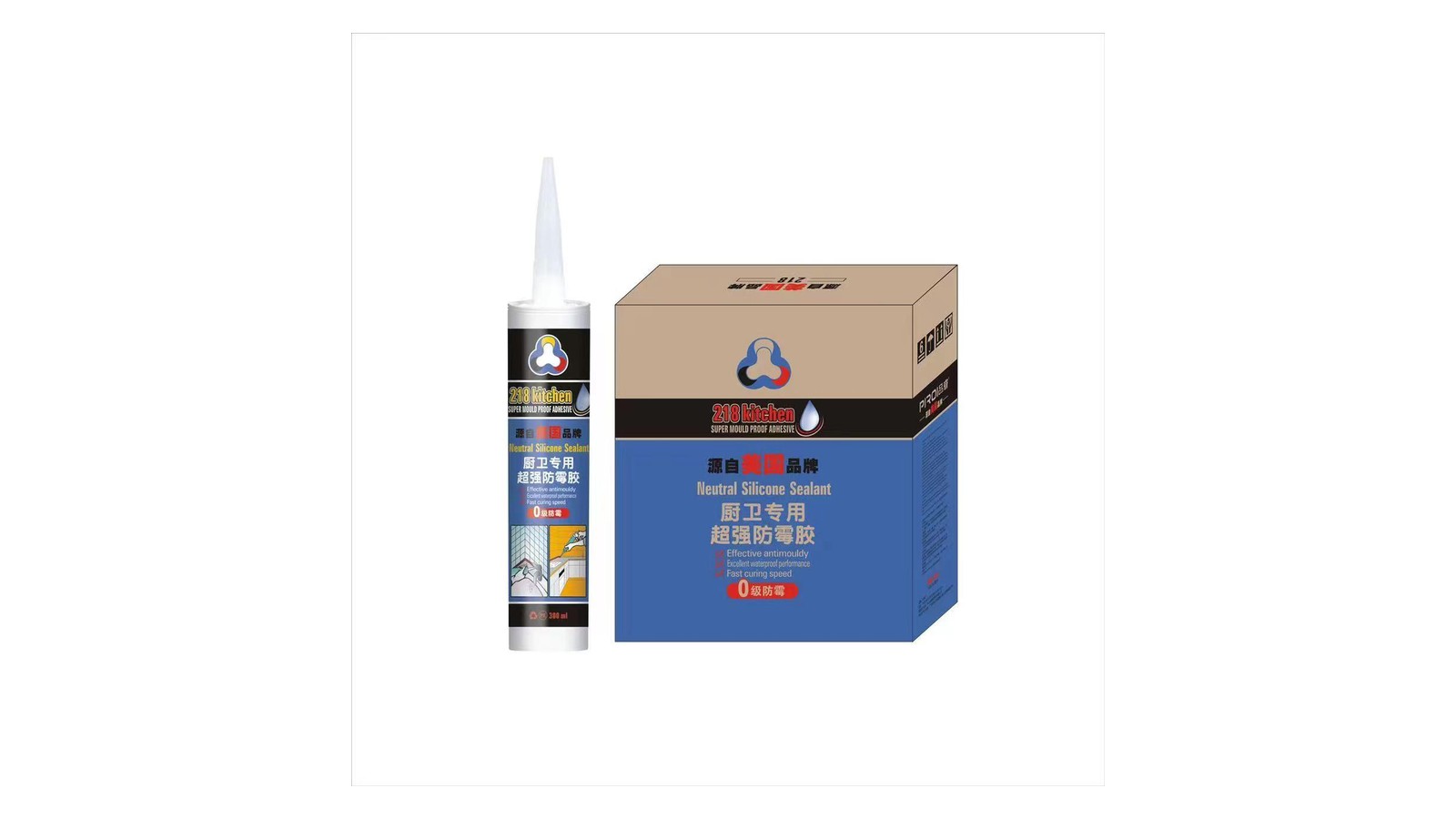
Anti-Mould Silicone Sealant for Bathroom & Kitchen
A bathroom joint is wet, warm and cleaned regularly with aggressive products. Standard sealant discolours and grows mould within a season — the joint itself is often still fine, but it looks like a hygiene problem to the end customer.
Why Bathroom Joints Turn Black
Mould on a bathroom joint is a chemistry and cleaning problem, not simply an adhesion failure.
- Mould Growth, Not Adhesion: The bead usually still adheres when it goes black. Mould grows on the surface and in the joint, fed by soap residue and condensation.
- Frequent Chemical Cleaning: Bathroom cleaners, bleach and descalers attack the sealant surface. A product that resists mould but not cleaning chemicals still has a short life.
- Mixed Substrates: Ceramic tile, glass, acrylic, chrome and enamel appear in one room. Acid cure attacks chrome and some enamel finishes, so neutral cure is safer.
- Small, Moving Joints: Movement between a bath and a wall is small but constant. A rigid bead cracks at the corners within a year.
How PIROI Solves It
A neutral cure sanitary silicone tested for mould resistance by an independent accredited laboratory, not just claimed on the label.
- Grade 0 Mould Resistance: Tested to JC/T 885-2016 Grade 0 — no mould growth at 50× magnification.
- Independent Laboratory Test: 28 days at more than 90% RH and 28°C against 9 strains including Aspergillus niger, by Guangzhou Institute of Microbiology (CNAS / CMA accredited).
- Neutral Cure: Safe on chrome, anodised trim, enamel and acrylic as well as tile and glass.
- Waterproof and Flexible: Stays elastic, so joints at bath and shower edges do not crack when the tub flexes.
- Related technical guides: sanitary silicone sealant supplier, preventing joint mold and mildew in tropical wet areas chemical resistance and standards, is silicone sealant toxic when cured — each covers the engineering behind the grade you are specifying.
Mould resistance is a test result, not a marketing claim. Ask for the grade and the laboratory name. Ours is Grade 0 to JC/T 885-2016, tested over 28 days at more than 90% relative humidity by a CNAS / CMA accredited institute.
Bathroom & Kitchen — Critical Engineering Parameters
Grade 0 Mould Resistance
No mould growth at 50× magnification after 28 days at more than 90% RH — the highest grade in JC/T 885-2016.
Tested Against 9 Strains
Includes Aspergillus niger and Penicillium species — the strains that cause black joint staining.
Independent Laboratory
Tested by Guangzhou Institute of Microbiology, a CNAS / CMA accredited laboratory.
Neutral Cure
Safe on chrome, anodised trim, enamel and acrylic as well as tile and glass.
Sealants for Bathroom & Kitchen
 Anti-Mold
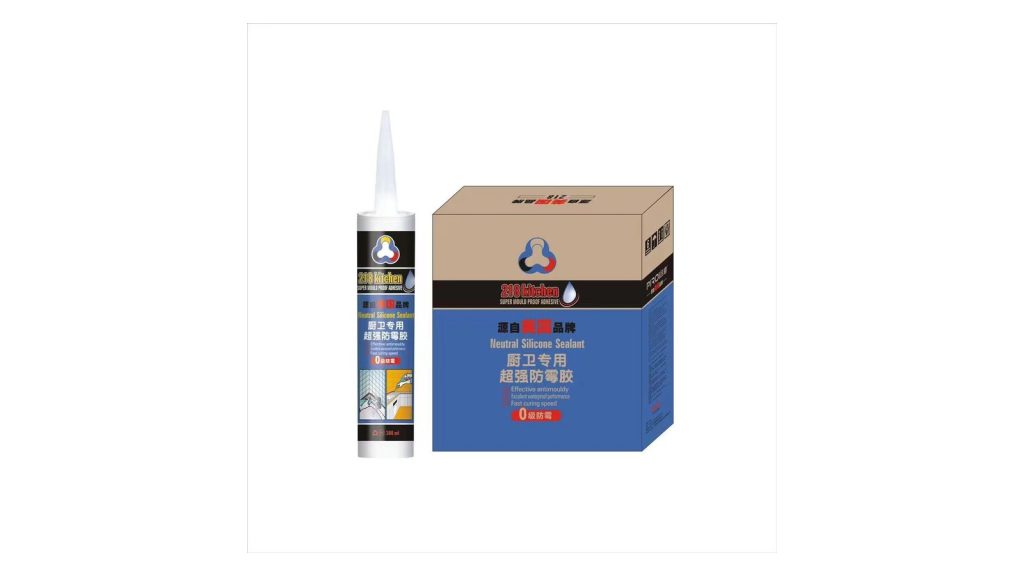
Sanitary Anti-Mold Silicone Sealant
Kitchen & bathroom neutral sealant with super mold-proof formula. Effective anti-mold, excellent waterproof, fast curing for healthy living spaces.
View Details Specialty
Mirror Silicone Sealant
Specialized sealant for mirror installation. Non-corrosive to mirror backing, excellent adhesion, safe for bathroom mirrors and decorative glass.
View DetailsMOQ, Lead Time & Private Label
Installation Protocol for Bathroom & Kitchen
Remove the Old Sealant Completely
New sealant will not bond over old, mouldy sealant. Cut it out and clean the joint back to the substrate.
Kill the Mould Before Sealing
Treat the joint with a suitable fungicidal wash, then let it dry fully. Sealing over live mould guarantees it comes back.
Dry the Joint
Silicone does not bond to wet surfaces. Let the joint dry completely — a hair dryer on a low setting helps in a humid bathroom.
Apply and Tool
Apply a continuous bead and tool it immediately with a silicone tool or a lubricated finger. Excess soap solution can leave a weak bond line.
Leave It Alone
Do not use the shower or bath for the full cure time. Water exposure during cure is the most common cause of early failure.
FAQs — Bathroom & Kitchen
Why does my bathroom sealant go black?
Mould grows on the surface and in the joint, fed by soap residue and condensation. It is usually not an adhesion failure — the bead is still attached, it just looks unsanitary. A Grade 0 mould-resistant sealant delays this, but cleaning routine and ventilation matter just as much.
What does Grade 0 mean?
It is the highest mould-resistance grade in JC/T 885-2016: no mould growth at 50× magnification after 28 days at more than 90% relative humidity. Our PR-218 is tested to that grade against 9 strains including Aspergillus niger.
Can it be used on chrome and acrylic?
Yes. It is neutral cure, so it does not attack chrome, anodised trim, enamel or acrylic. Acid cure sealants should be avoided on those surfaces.
How long before we can use the shower?
Wait for full cure, not just skin time. A typical bathroom bead takes around 24 hours at normal room temperature. Water exposure during cure is the most common cause of early failure.
What is the MOQ and lead time?
Standard OEM and private label MOQ is 1,000 pcs per model, with mixed-model trial orders from 3,000 pcs total and stock items from 500 pcs. Typical lead time is 15–25 days after artwork and sample approval.
Need pricing or a sample for Bathroom & Kitchen?
Tell us your substrate, joint dimensions and target market. We will come back with pricing, sample arrangements and the technical data sheet.
- Free adhesion & staining test on your own substrate sample
- OEM & private label from 1,000 pcs
- Typical lead time 15–25 days