
Silicone Sealant in Cold Weather: The 4°C Limit Explained
Every winter, the same question reaches our inbox: the joint is open, the weather app says 3°C, and the crew wants to know if the silicone sealant can go in. The answer on every PIROI data sheet is an application window of 4°C to 50°C surface temperature — and below that line the product will not perform as the TDS specifies. This page explains what the cold actually does to a silicone sealant joint, what crews do about it, and when the honest answer is to postpone.
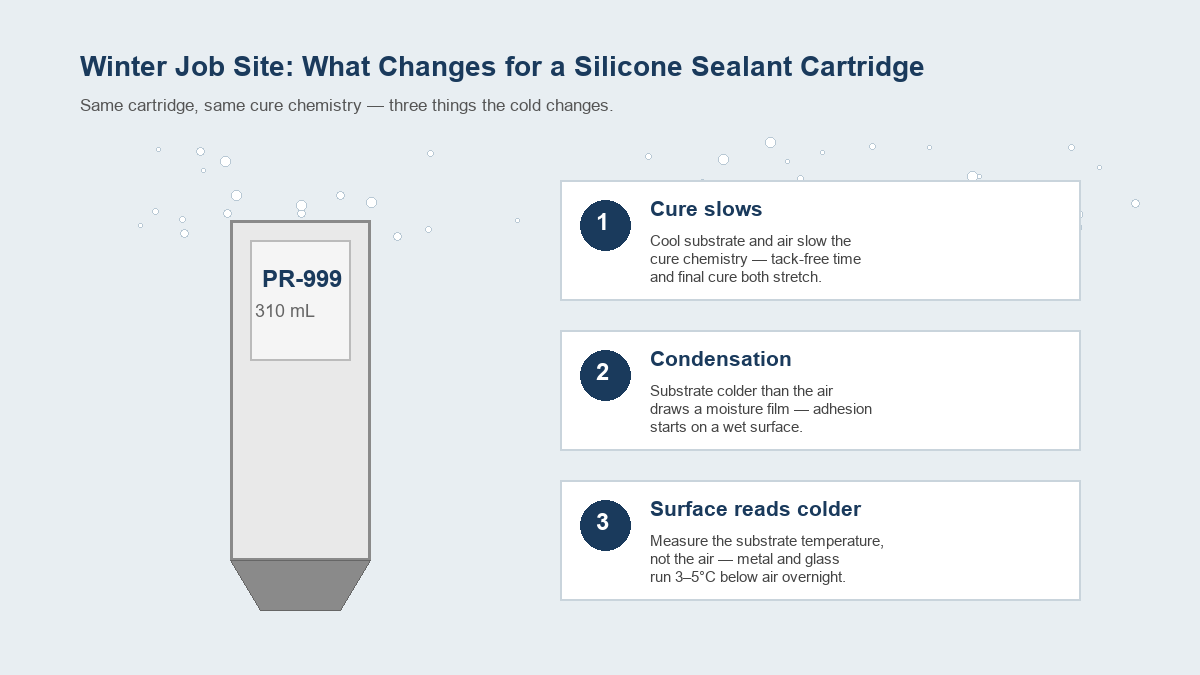
- Cure slows — the chemistry needs warmth; tack-free time and full cure both stretch
- Condensation forms — a substrate colder than the air carries a moisture film that breaks adhesion
- Surfaces read colder than the air — metal and glass run 3–5°C below the overnight low
Where the 4°C limit comes from
A silicone sealant cures by reacting with moisture in the air. That reaction has a temperature floor: below roughly 4°C on the substrate, the cure chemistry slows to the point where the joint may skin over but never reaches its specified tensile adhesion. The bead can look finished and still fail the pull test.
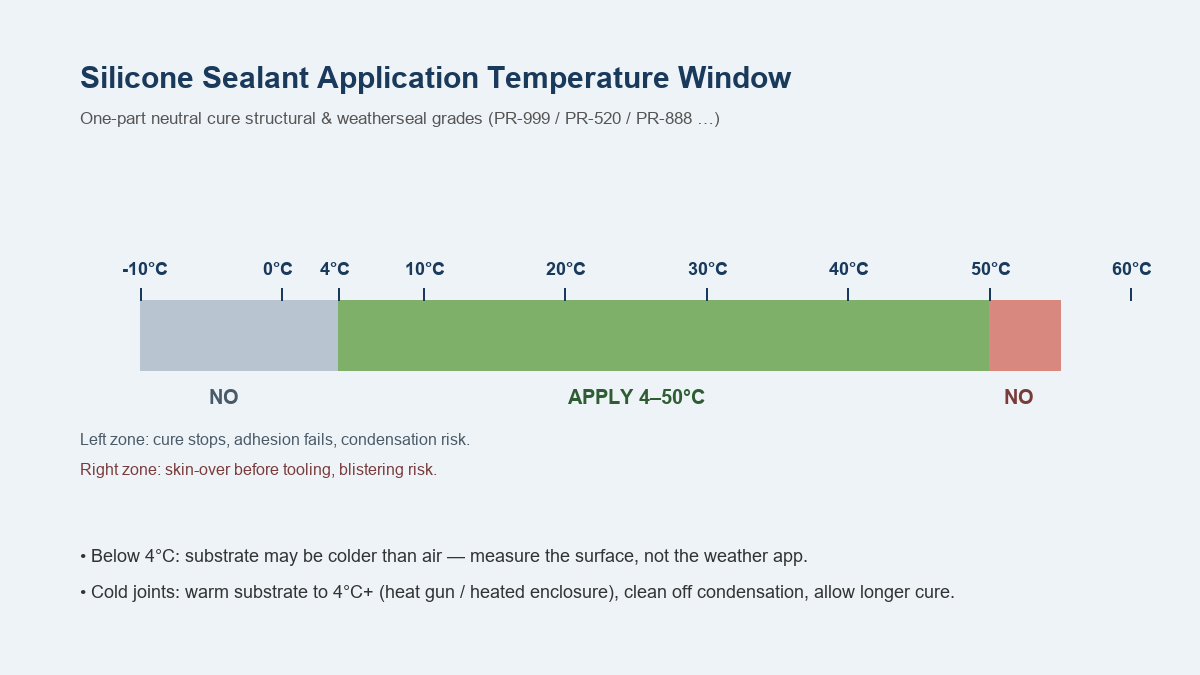
The limit is on the substrate temperature, not the air temperature. Metal and glass framing lose heat overnight and sit 3–5°C below the morning air — a 6°C afternoon reading can still be a 2°C joint at 8 a.m. Measure the frame with a surface thermometer before opening the cartridge.
What the cold does to the joint
What crews do inside the window
- Measure the surface, not the weather app. A infrared thermometer on the frame is the only reading that matters.
- Warm the substrate above 4°C — a heat gun at distance or a heated enclosure on the joint area.
- Clean off condensation with a dry, solvent-dampened wipe and let the solvent flash off before priming.
- Allow longer cure — a joint that takes one day to skin at 23°C needs several days at 5°C before it is safe to tool, clean or expose.
- Shelter the joint — a simple enclosure keeps the immediate area inside the window on a marginal day.
When the honest answer is to postpone
If the surface thermometer reads below 4°C and there is no way to warm the substrate, the joint should wait. A bead applied at 2°C may look perfect for a month and then release at the first thermal cycle — the failure shows up on the customer’s snag list, not on the day. For projects with a hard winter deadline, tell us the site conditions at enquiry stage; the product pages list each grade’s window, and the FAQ covers the specification questions that decide which grade and packaging fit the programme.
What we ship for winter programmes
All PIROI silicone sealant grades are neutral cure and carry the same 4°C application floor — we do not claim a freezing-temperature product, because the cure chemistry does not support it. What we do support is the paperwork and the planning: TDS with the exact window per model, samples to test on your actual substrate before the cold arrives, MOQ from 1,000 pcs per model for OEM and private label, and factory-direct lead times that let you schedule delivery around the weather rather than against it.