Key Takeaways for First-Time Buyers
- A trade show compresses weeks of supplier evaluation into two days — but only if you arrive with a written brief and leave with comparable data.
- Bring a one-page requirement sheet listing your target specifications, packaging format, MOQ range and delivery port. Handing it over saves twenty minutes per conversation.
- Ask every supplier the same six questions, and write the answers in the same grid. Comparable data is worth more than a folder of brochures.
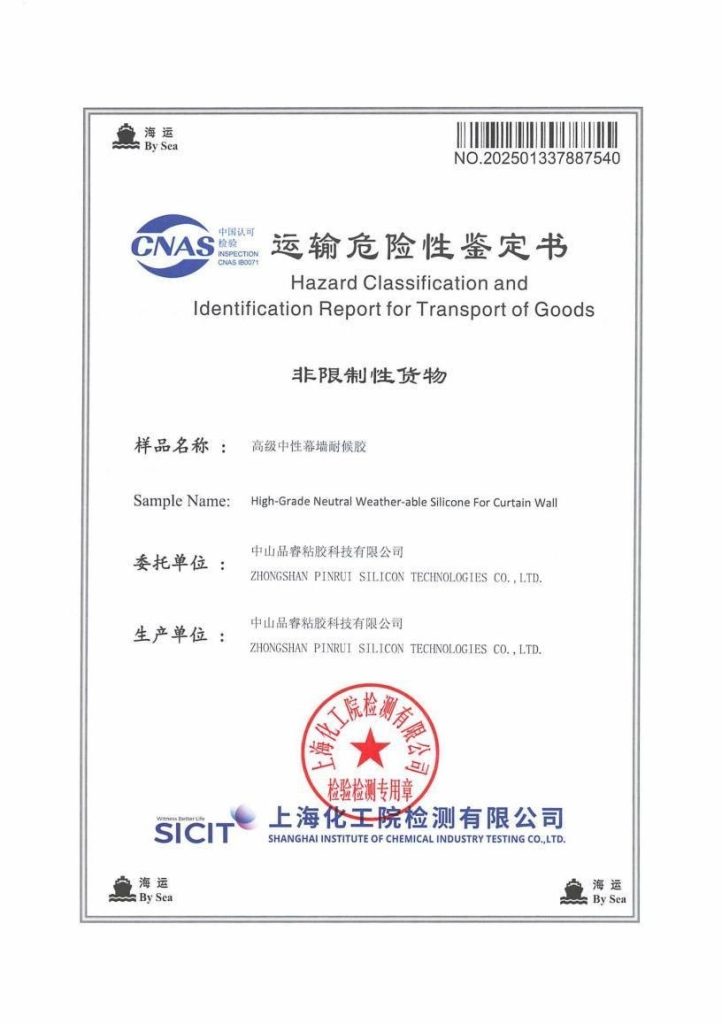
- Ask to see a test report, not just a certificate image. The report number, issuing laboratory and test standard are what your customer’s QA team will check.
- Sample requests placed at the show get priority. Take a business card from the engineer, not only from the salesperson.
- Budget half a day after the show to write up your notes. Notes taken on day three are worth a fraction of notes taken the same evening.
1. Why the Show Still Matters in a Digital Market
Almost everything about silicone sealant supplier sourcing can now be done remotely: video factory tours, live sample verification, instant messaging with engineers. So why do importers still fly to trade shows?
Because the things that decide whether a supplier relationship works are the things that are hardest to assess on a screen:
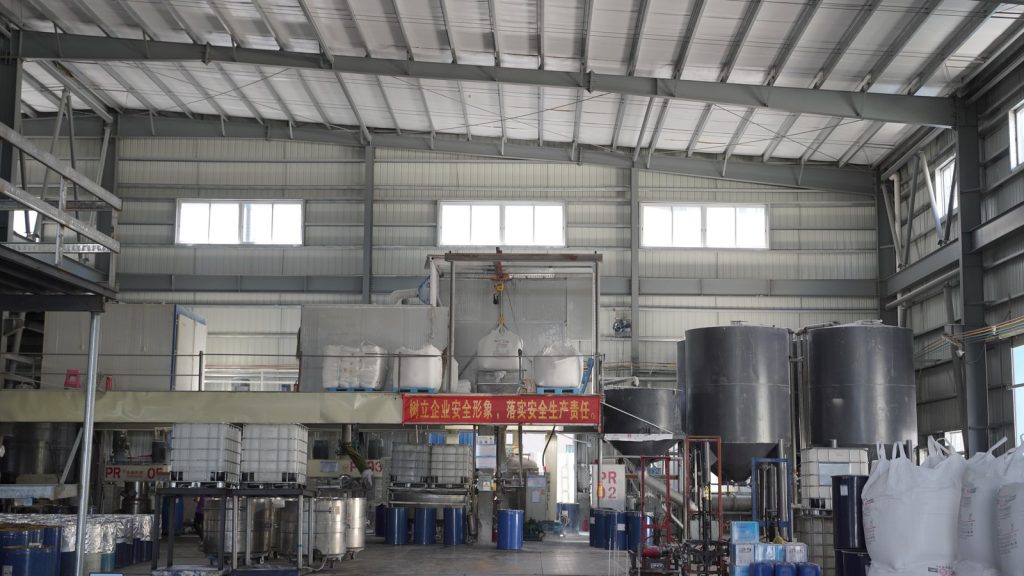
- Whether the factory is real. A show booth is not proof of manufacturing capability, but a supplier who can put their production manager in front of you and answer process questions without consulting anyone is a different proposition from one who deflects every technical question to “our engineer will email you.”
- Whether the people are the people. The engineer you meet at the show is likely the engineer who will handle your formulation questions for the next three years. Meeting them once changes how the relationship runs.
- Whether they understand your market. Five minutes of conversation reveals whether a supplier has actually shipped to your country and knows its documentation requirements — or is simply quoting from a generic export brochure.
- How they behave under pressure. Ask a difficult question about a limitation, a certification gap, or a previous quality issue. The response tells you more than any catalogue.
2. Before the Show: The One-Page Brief
Most silicone sealant buyers arrive at a show with a rough idea of what they need and leave with a bag of brochures they never read again. The fix is a single page prepared in advance.
Your brief should state, in numbers wherever possible:
- Product type and cure chemistry — for example, one-component neutral cure silicone sealant for window and door perimeter joints
- Target standard — for example, GB/T 14683-2017, ISO 11600 or ASTM C920, and the movement class you need
- Packaging format — 300 mL cartridge, 590 mL foil sausage, or both
- MOQ you can actually absorb — not the MOQ you wish you could get
- Annual volume estimate — even a range helps a supplier quote realistically
- Delivery port and Incoterms — FOB, CIF or DDP changes the whole cost conversation
- Labeling and language requirements — your market may require local-language text on the cartridge
- Certifications your customer requires — ISO 9001, RoHS, REACH, fire rating, whatever applies
Print twenty copies. Hand one over at the start of each conversation. This single habit converts a show from a browsing exercise into a structured evaluation.
3. The Six Questions to Ask Every Supplier
| # | Question | What you are really testing |
|---|---|---|
| 1 | Which test standard does this grade meet, and can I see the report number? | Whether the specification is real or a marketing claim. A supplier who can produce a report number on the spot is a supplier whose claims are documented. |
| 2 | What is the actual MOQ for a first order, and what does it become at repeat volume? | Whether they are quoting a catalogue MOQ or a workable one. First-order flexibility is a strong signal of a direct factory rather than a trading intermediary. |
| 3 | Can you produce this in our label, language and carton configuration? | Whether private label is a genuine in-house capability or something they subcontract. |
| 4 | What is the lead time from confirmed order to container loaded? | Whether they have production capacity or are queuing behind other customers. |
| 5 | Which documents can you supply for customs clearance in our market? | Export experience in your specific destination, not just general export experience. |
| 6 | What is the failure mode of this product, and where should it not be used? | The most revealing question of all. A supplier who answers honestly understands their own product. One who claims it works everywhere does not. |
Record the answers in a single grid — one row per supplier, one column per question. By the end of the second day you will have a comparison table that no amount of brochure reading could produce.

4. Reading a Booth in Ninety Seconds
You will walk past more booths than you can visit. A quick visual assessment helps you decide where to spend your time:
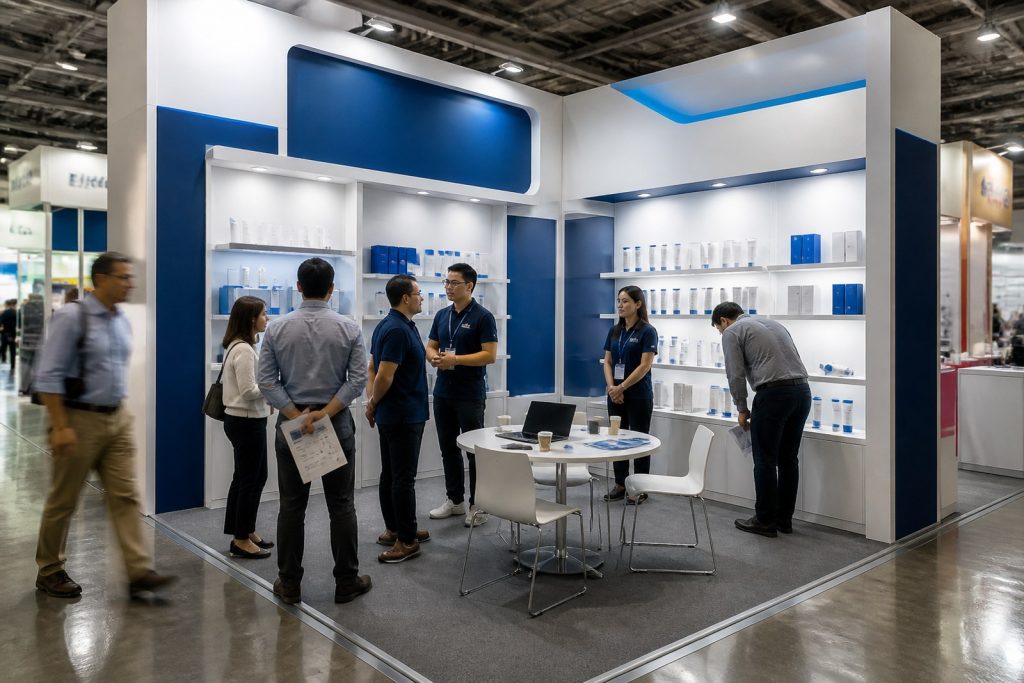
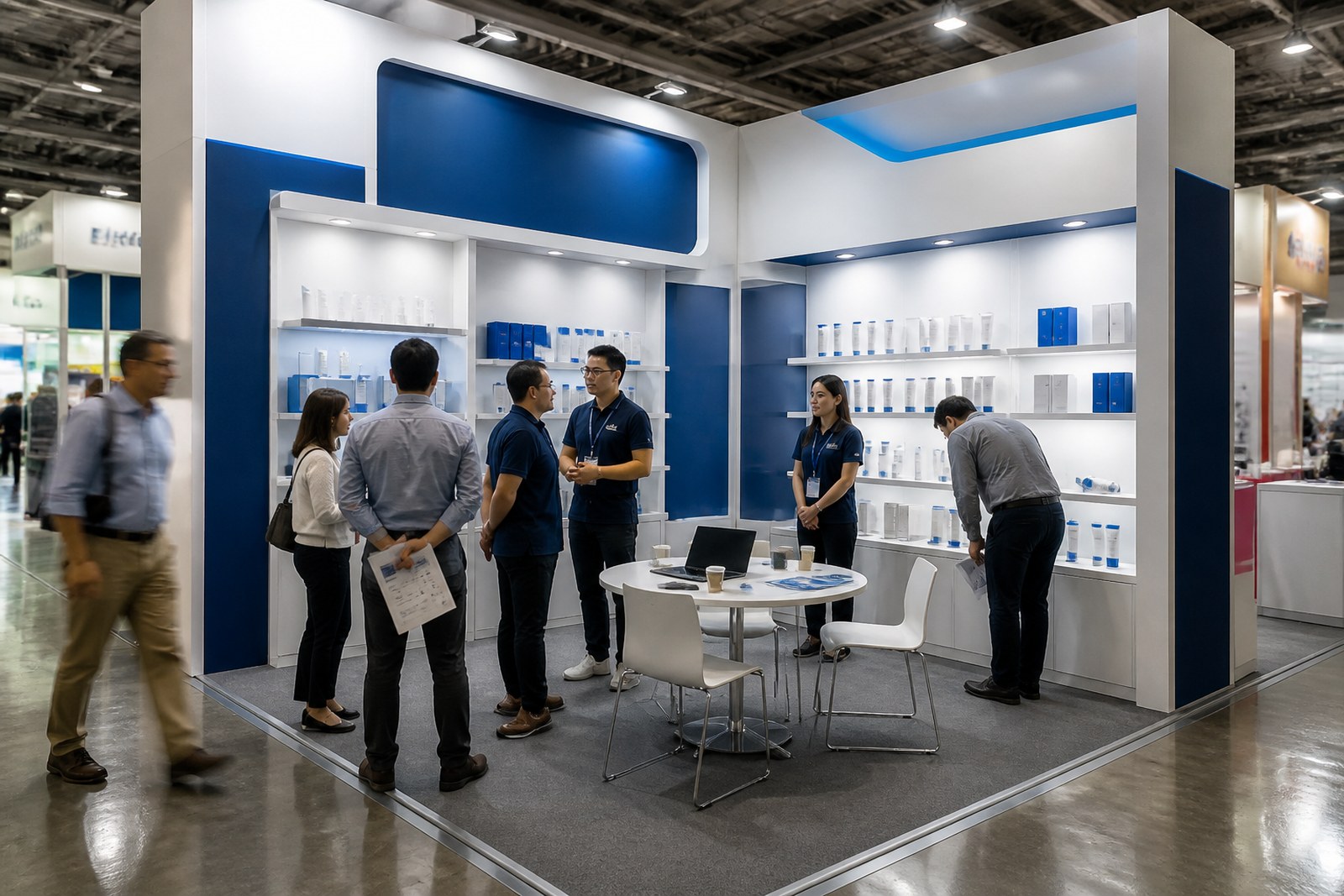
- Products you can handle. A supplier who displays physical cartridges, sausages and packaging — and lets you pick them up, squeeze them and read the label — is presenting real product. Booths with only printed panels are often trading companies.
- Technical staff present. Look for someone in a work shirt rather than a suit. Ask a process question and see who steps forward.
- Test reports on display. Reports with a visible laboratory name, report number and date. A wall of framed certificates with no report numbers is decoration.
- Who they are talking to. A booth with steady traffic from buyers in your region is a useful signal. A booth with nobody at it at 2 p.m. on day two is a signal too.
- How they handle your brief. If you hand over the one-page brief and they read it before answering, that is a good sign. If they talk over it, that is also information.
5. Samples: Get Them Right or Don’t Bother
A silicone sealant sample collected at a show and never tested is a wasted sample. Decide in advance what you will do with each one:
-
01
Request the exact grade, not a generic sample
Ask for the grade that matches your brief, with the batch number written on the cartridge. A generic sample tells you nothing about the product you would actually receive.
-
02
Confirm the test report number matches the sample
Cross-check the report number against the batch. If the silicone sealant supplier cannot link a report to a batch, you have learned something important about their quality documentation.
-
03
Test on your own substrate
Lab tests on standard panels are useful, but your project involves your specific aluminum alloy, your glass, your concrete. Apply the sample to offcuts of the real substrate and let it cure under your own climate conditions.
-
04
Photograph the labeling and packaging
Before you open the sample, photograph the cartridge label and carton. Your marketing and compliance teams will need to see exactly what the retail packaging looks like, and that evidence is easy to lose.
6. After the Show: The 48-Hour Rule
Trade show notes decay faster than almost any other kind of documentation. The conversation that is vivid on the show floor is half-forgotten by the time you clear the airport.
Write up your supplier grid within 48 hours, while you still remember who said what. Include:
- The comparison grid with all six questions answered for every supplier
- A one-line judgement on each: worth pursuing, worth a second conversation, or closed
- The name and direct contact of the technical person you spoke to, not just the sales contact
- Photographs of product displays, labeling and packaging
- Any commitment you made — sample request, drawing to send, specification to clarify
Then send a short follow-up to your top three within the same week. Suppliers prioritise buyers who follow up promptly, and a prompt follow-up moves you ahead of the buyers who are still working through their notes a month later.
7. Frequently Asked Questions
8. Conclusion
A trade show is a screening tool, not a purchasing decision. Arrive with a written brief, ask every supplier the same six questions, collect samples that you will actually test, and write up your notes within two days. Do those four things and a two-day show will save you months of remote supplier evaluation.
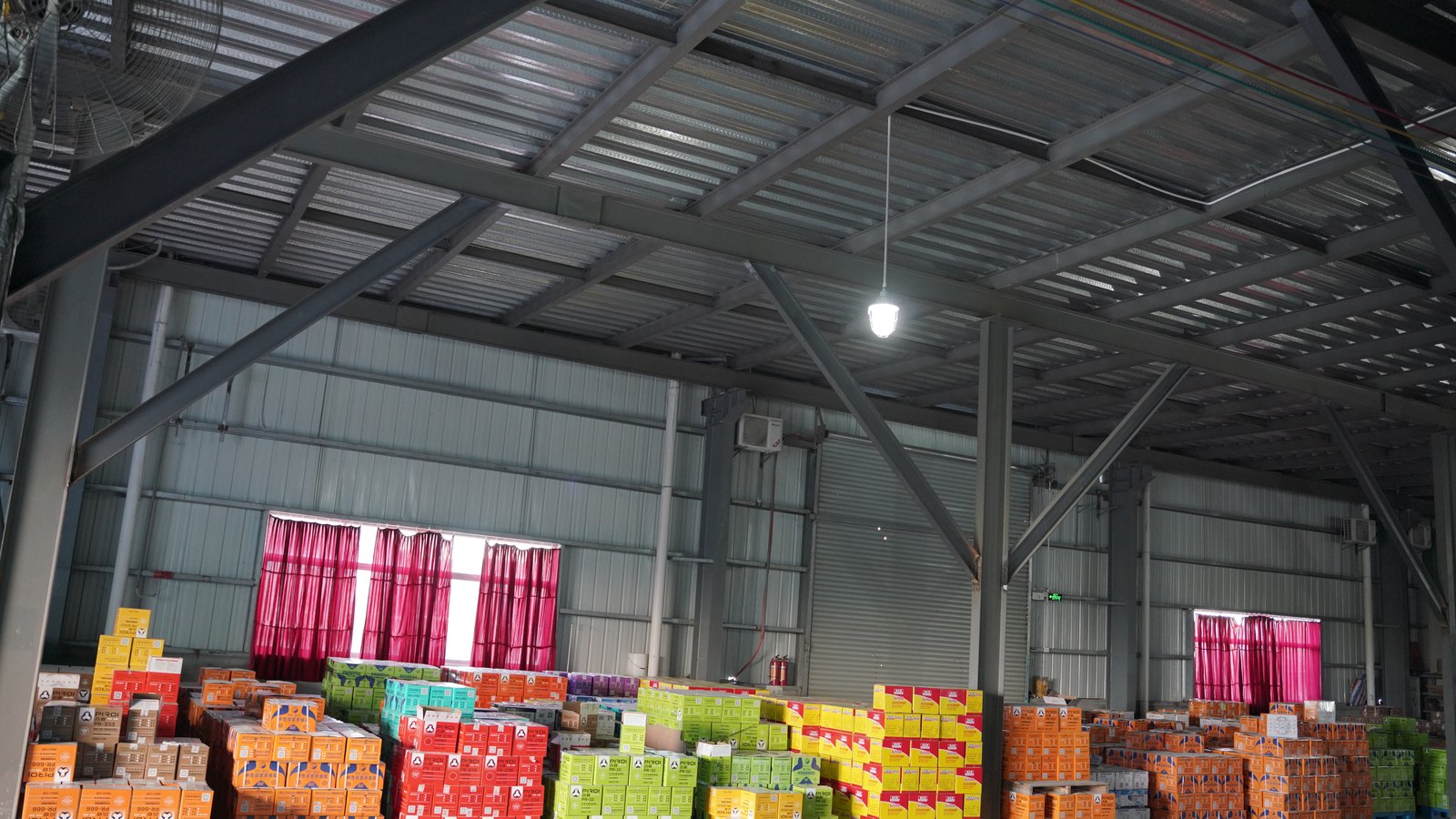
PIROI exhibits at international building materials and construction trade shows and welcomes buyer visits to our manufacturing base in Zhongshan, Guangdong. Our engineering team can walk through your substrate, climate and joint requirements in person, and prepare samples against your own specification. Contact us to arrange a factory visit or to be notified of our next exhibition.
What Buyers Ask About at the Stand — and the Data Behind the Answers
Most conversations at a trade show come down to the same four questions: what does it stick to, what does it test at, what standard is it certified to, and what is the minimum order. This section answers all four so the stand conversation can go straight to the commercial detail.
Substrates and joints this applies to
| Substrate | Suitability | What to watch |
|---|---|---|
| Glass and glazing | All grades | The substrate most buyers bring up first |
| Anodised aluminium | Neutral cure only | Acetic acid etches the anodised surface |
| Concrete, mortar and render | Neutral cure only | Alkaline substrate, acid cure unsuitable |
| Natural stone and marble | Neutral cure only | Acid stains the face at the bond line |
| UPVC and PVC window profiles | Neutral cure only | Protects the steel reinforcement inside the chamber |
| Stainless steel and coated metal | Neutral cure preferred | Adhesion test on the actual coating, not bare metal |
| Ceramic and sanitary ware | Anti-mould sanitary grade | Grade 0 mould result for wet areas |
| Timber and engineered board | Neutral cure | Movement is large; recalculate the joint width |
Performance data you can quote in a submittal
| Property | Tested value | Requirement |
|---|---|---|
| Tensile adhesion (structural grade) | 0.85 MPa at 23 °C | Minimum 0.60 MPa |
| Elongation at max. tensile strength | 205% | Minimum 100% |
| Elastic recovery (weatherproof grade) | 92% | Keeps a moving joint closed |
| Extrusion rate (fast-cure grade) | 2,076 mL/min | Minimum 150 mL/min |
| Sag resistance (vertical) | 0 mm | Maximum 3 mm |
| Shelf life | 12 months (9 months for acetoxy) | Printed on every carton |
What the cure chemistry does inside the joint
A neutral-cure silicone is a one-component RTV system: it crosslinks by reacting with atmospheric moisture, starting at the surface and working inward. The by-product is an alcohol or an oxime rather than acetic acid, which is why neutral grades can be used against concrete, mortar, natural stone, marble, anodised aluminium and the metal reinforcement inside a PVC profile without etching or staining the substrate. Cure depth is roughly 2–4 mm in the first 24 hours at 23 °C and 50% RH; a 6 mm joint therefore needs several days before it carries load, and a joint that is sealed and immediately loaded will fail at the interface rather than in the sealant.
Standards and documentation
Certificates and test reports are available at the stand and by email afterwards: GB 16776-2025 for the structural grade, GB/T 14683-2017 for weatherproof grades, JC/T 885-2016 for the sanitary grade and GB/T 24267-2009 for the fire-rated grade. ISO 9001:2015 is valid to 2029-01-25. Buyers who want to audit the factory are welcome — we ask for five working days notice so samples and staff can be arranged.
Ordering reference
| Commercial term | What PIROI offers |
|---|---|
| MOQ | OEM & private label from 1,000 pcs per model |
| Trial order | Mixed-model trial orders from 3,000 pcs total; stock items from 500 pcs |
| Lead time | Typically 15–25 days after artwork and sample approval |
| Packaging | 300 mL cartridges and 590 mL foil sausage packs |
| Private label | Custom cartridge artwork and colour matching supported |
| Sample | Free substrate adhesion and staining test on your own sample |